Category: Operations

  • From Panic to Predictable: Mastering Seasonality in Cash Flow Forecasting

    From Panic to Predictable: Mastering Seasonality in Cash Flow Forecasting

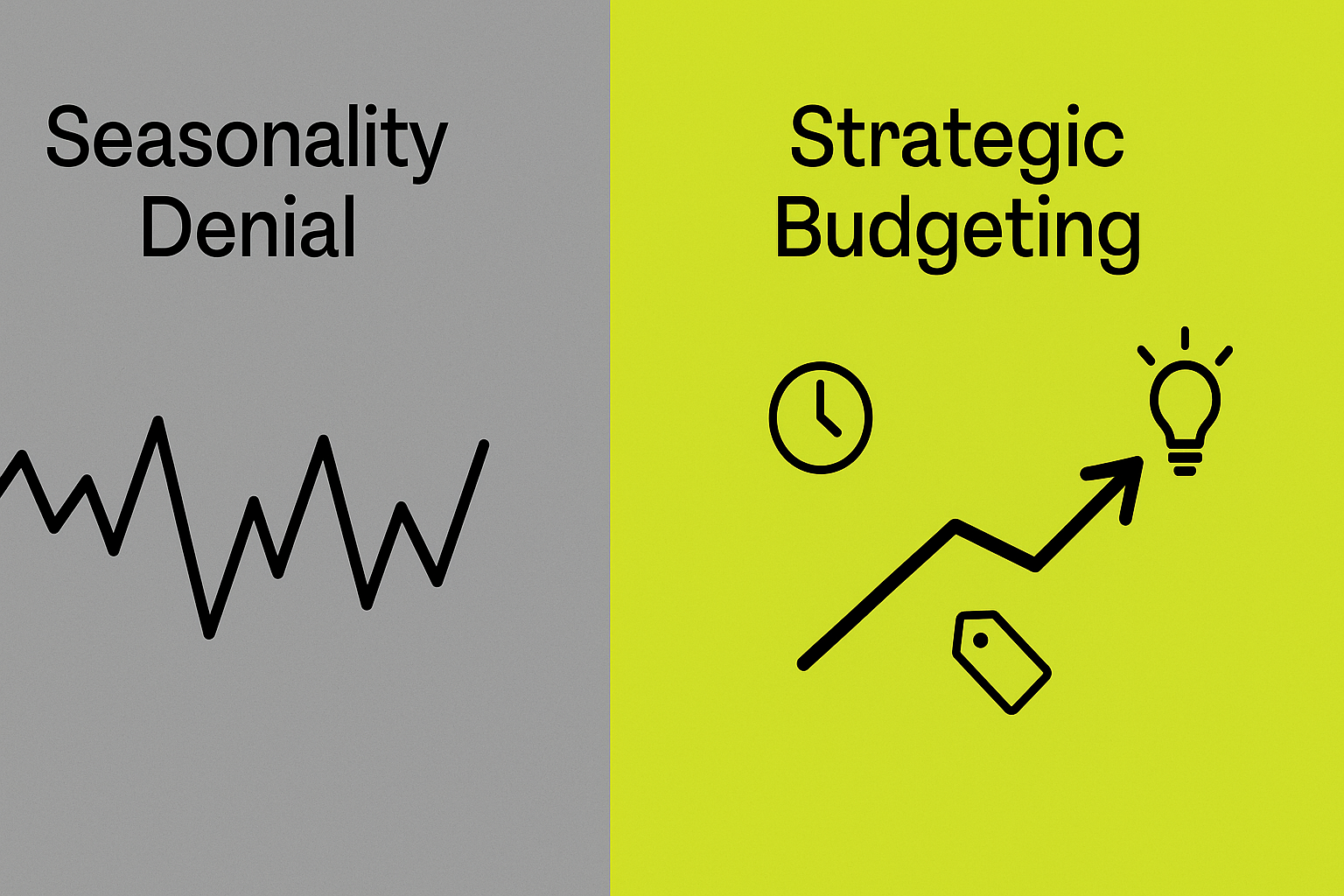
    The Myth of the Linear Year

    Most founders plan as if every month will look the same. Revenue is assumed to arrive in steady increments, costs are spread evenly across twelve months, and cash flow is expected to follow a straight line. On a spreadsheet, this version of reality looks comforting. It feels stable and predictable. Yet any CFO who has worked through a financial year knows that business rarely follows such a tidy rhythm. Sales spike, clients delay payments, campaigns launch in bursts, and costs appear in clusters. Seasonality is not the exception, it is the rule.

    The real problem is not that businesses experience seasonality, but that so few plan for it. Many founders quietly acknowledge that some months are stronger than others, but they treat it as an inconvenience rather than a structural feature of their business. They budget as if their operations are linear, then act surprised when their forecasts start to unravel. When we ignore seasonality, we are not simplifying finance; we are distorting it. A forecast built on flat assumptions quickly loses credibility, and a business that does not plan for quiet months ends up reacting to them in panic.

    The truth is that seasonality does not make a business weaker. It simply makes it human. Every company, from e-commerce to SaaS to hospitality, operates within cycles. Understanding those cycles and building a plan around them is what separates reactive businesses from strategic ones.

    Why Seasonality Is Inevitable (and Not a Bad Thing)

    Every business has its rhythm. Some industries, like retail or hospitality, have obvious peaks and troughs tied to holidays or weather. Others, like B2B services or SaaS, experience quieter patterns driven by client budgets, project cycles or the summer slowdown. The details differ, but the pattern is always there. The problem is that too many founders treat seasonality as something to be ignored or outgrown. They want to believe that steady growth month after month is a sign of maturity. In reality, it is rarely how business works.

    Recognising seasonality does not mean accepting weakness; it means accepting truth. When founders refuse to acknowledge the natural ebb and flow of their operations, they lose the opportunity to plan around it. Cash flow surprises appear, marketing spend gets mistimed, and teams find themselves overstretched one quarter and underutilised the next. At Quantro, we often meet businesses that know their busy months and quiet ones instinctively, yet avoid reflecting that reality in their budgets. It feels safer to plan for consistency. The irony is that this illusion of stability is what creates volatility.

    When you build a forecast that embraces seasonality, something powerful happens. You move from reacting to your business to leading it. You can anticipate when cash will be tight, when to build reserves, when to hire and when to slow down. You stop seeing the quiet periods as threats and start using them as strategic windows for investment and improvement. Seasonality does not need to be eliminated; it needs to be understood.

    The Cost of Ignoring Seasonality

    When businesses fail to recognise seasonality, their financial plans become fiction. Budgets are built on smooth averages rather than real patterns, and forecasts that once looked solid quickly fall apart. Founders are left wondering why cash reserves vanish faster than expected or why operating expenses feel harder to meet in certain months. The answer is simple: they are planning for a world that does not exist. When revenue and costs are treated as constant, even small fluctuations can trigger big problems: delayed payments, rushed borrowing, and unnecessary stress across the organisation.

    Ignoring seasonality does more than distort the numbers; it erodes trust in the forecasting process. Teams start to see budgets as irrelevant and adjust spending on instinct rather than insight. Over time, this creates a reactive culture where financial control is lost and planning becomes a cycle of surprises. A forecast that ignores seasonality is not just inaccurate; it is misleading. It hides the true rhythm of the business, leaving leaders to make decisions with incomplete information.

    Understanding and integrating seasonality brings the opposite effect. When the peaks and troughs are visible, leaders stop being caught off guard. They can time their decisions, investing during quiet months, holding reserves when cash is strong, and scaling up only when demand is real. At Quantro, we see it often: once businesses start forecasting with seasonality in mind, financial anxiety turns into confidence. Predictability is not about making the numbers smooth; it is about making them honest.
    Learning from the Past: The Predictable Cycles

    Seasonality always leaves a trace. You can see it in the data if you take the time to look: the same months where revenue slows, the same periods when costs rise, the same clients who pay later than expected. These patterns matter, but they are not the full story. The past can show you what has happened before, but it does not decide what comes next. It is a guide, not a guarantee.

    For a CFO, the value lies not in following history but in learning from it. Historical data provides context; strategy creates direction. If August is usually quiet, that is not a limitation but a signal. It is a time to plan campaigns, strengthen systems or invest in process improvements while others wait for activity to return. If Q4 is typically a strong period, it is a chance to prepare early, build liquidity and ensure your team is ready to deliver at scale.

    This shift from observing the past to designing the future is what defines effective financial leadership. The best CFOs do not rely on luck or repetition; they use patterns to make deliberate choices. A business that understands its rhythm can plan, adapt and thrive through every cycle. When you treat seasonality as insight rather than inconvenience, forecasting becomes more than a financial exercise. It becomes a tool for growth, resilience and control.

    The CFO’s Mindset Shift

    For many finance leaders, the turning point comes when they stop viewing seasonality as a nuisance and start treating it as a strategic signal. The role of a CFO is not simply to acknowledge that the business has ups and downs; it is to design the financial systems, budgets and decision frameworks that turn those patterns into an advantage. Predictive finance is built on this shift in perspective, from reacting to fluctuations to planning for them with precision and intent.

    When a CFO builds seasonality into their forecasting, they move from uncertainty to foresight. They can see when to build liquidity, when to pull back on discretionary spending and when to double down on growth initiatives. This is where strategic timing becomes a competitive edge. The ability to make confident decisions in advance of the cycle, rather than in response to it, is what sets apart strong financial leadership.

    A seasonal view also changes how a business measures success. Instead of chasing unrealistic month-on-month consistency, finance leaders can define performance by how well the company manages its rhythm. Strong quarters become opportunities to invest, and slower ones become moments for optimisation. As a result, the business stops riding its cycles and starts steering them.

    Seasonality will never disappear, but its impact can be transformed. For a modern CFO, the goal is not to eliminate variability but to harness it; to understand when to act, when to prepare and when to wait. When this mindset takes hold, finance stops being a reactive function and becomes a source of stability and foresight.

    If you are ready to turn seasonality from a source of stress into a strategic advantage, we would love to help. Book a meeting with our team to explore how Quantro can build a forecasting model tailored to your business; one that anticipates cycles, strengthens cash flow and gives you the clarity and confidence to plan every season with intent.

  • The Hidden Cost of Late Reporting: Why Timing is Everything in Finance

    The Hidden Cost of Late Reporting: Why Timing is Everything in Finance

    Most founders think of late reporting as a minor inconvenience. If the numbers arrive a week or two after month-end, what’s the real harm? After all, as long as sales are growing, the business must be on track, right? In reality, the timing of financial reporting can mean the difference between having the cash to seize an opportunity and stalling out due to liquidity gaps.

    At Quantro, we’ve seen this blind spot play out repeatedly. One client was excellent at their craft but consistently struggled with cash flow. Because their reporting lagged, they didn’t notice that they were paying suppliers early while their own customers were dragging their feet on invoices. The result? A business that looked profitable on paper but was constantly short on liquidity. Late reporting didn’t just delay insights, it actively created cash problems that could have been avoided.

    For startups and small businesses especially, timing is everything. Unlike larger organisations with deeper reserves, early-stage companies don’t have the luxury of waiting weeks to understand their financial position. Late reporting doesn’t just make you slower; it narrows your options and makes every decision riskier. The hidden costs are not abstract, they show up in missed investments, eroded cash positions, and lost growth momentum.

    The Cash Flow Trap

    On paper, a business can look profitable while struggling to keep the lights on. This paradox is almost always tied to cash flow visibility, and late reporting is often at the root. When reporting lags, founders don’t see the actual movement of money in and out of the business until it’s too late to react.

    Take the case of a client who consistently paid suppliers ahead of schedule while failing to enforce timely collections from customers. Without up-to-date reporting, they had no visibility into how these mismatched payment terms were draining liquidity. The outcome was predictable: the business ran into recurring cash shortfalls, despite showing steady revenue growth. In practice, money was going out faster than it was coming in; a classic case of being “profitable but broke.”

    The real danger here is that cash tied up unnecessarily can’t be deployed into growth. For this client, the shortfall meant they couldn’t invest in marketing campaigns with proven ROI, missing a critical chance to scale. Late reporting didn’t just delay their awareness of the issue, it directly cost them opportunities to grow. In startups, where every euro of liquidity counts, this is more than a nuisance. It’s a survival threat.

    The Hidden Cost of Missed Opportunities

    One of the biggest hidden costs of late reporting is the opportunity you never get to take. On the surface, a delay of a few weeks might not seem significant, but in practice it can mean the difference between doubling down on a winning strategy and missing your chance altogether.

    We saw this first-hand with a client who, on paper, looked healthy enough to ramp up their marketing spend. But because their reporting lagged, they didn’t realise that most of their available cash was already locked up in unpaid invoices. They went ahead with their plans, only to pull the plug halfway through when liquidity ran short. By the time their updated reports revealed the gap, the high-ROI campaign was dead, and so was their growth momentum in a key market.

    In another case, a founder wanted to secure funding to expand operations. But their reporting delays meant they couldn’t show a clear picture of receivables, payables, and runway. Investors didn’t walk away because the business was bad. They walked away because the numbers weren’t ready. A late report became a late conversation, and a missed opportunity to raise capital when it mattered most.

    When the company brought Quantro on board, we rebuilt their reporting process from the ground up. Instead of relying on spreadsheets that lagged weeks behind, we implemented automated dashboards that connected directly to their accounting system and bank feeds. Within weeks, the founder had real-time visibility over cash, liabilities, and burn rate. More importantly, they had the confidence to walk into investor meetings with accurate, up-to-date numbers. The result? A funding round that had previously stalled was back on track, this time with stronger investor trust and faster decision-making.

    For startups, opportunities rarely come twice. Late reporting doesn’t just blur the financial picture, it actively robs you of the agility to invest, pitch, and grow when the timing is right. By the time the numbers catch up, the moment is usually gone.

    The Technology Gap

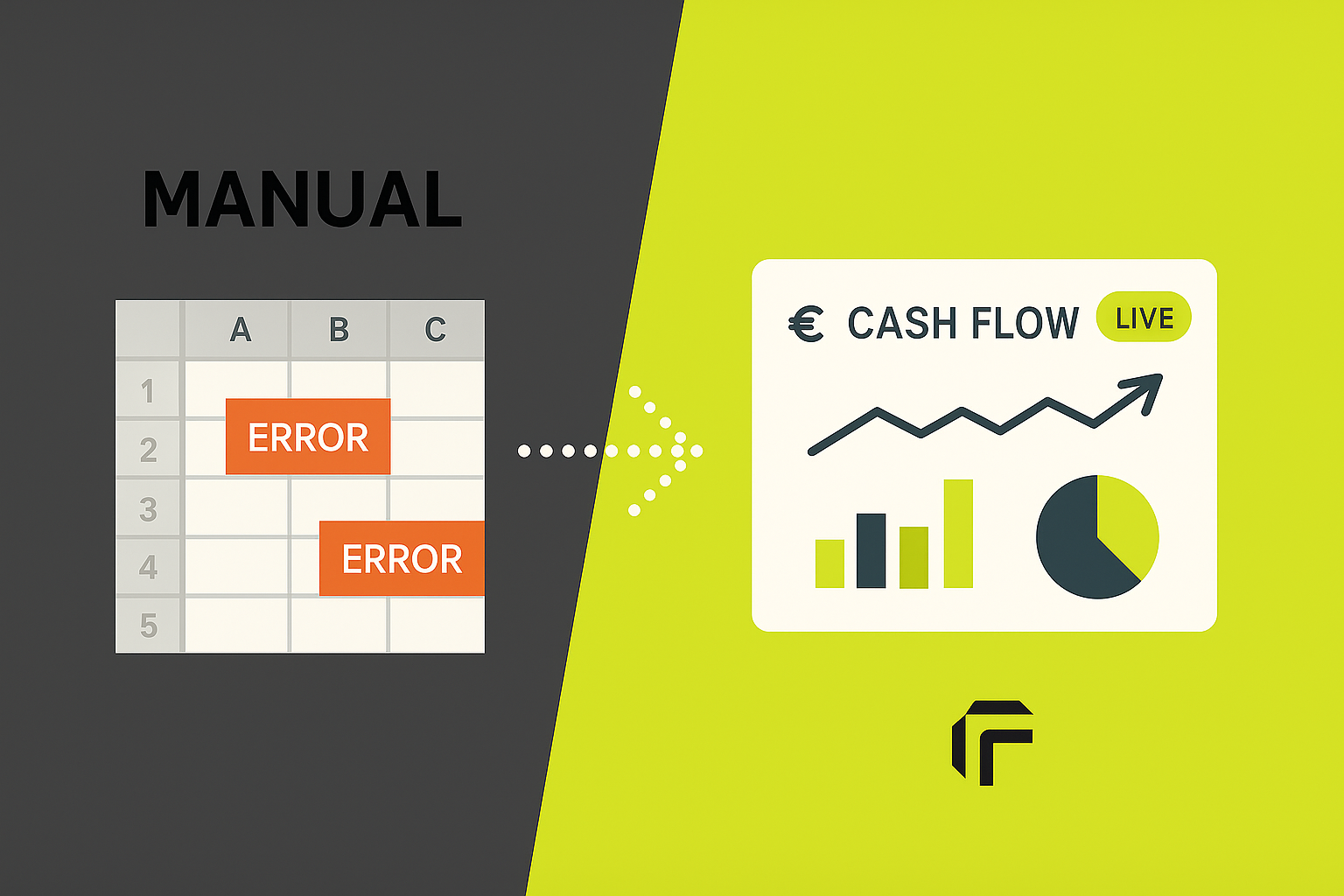
    If late reporting is the problem, outdated tools are usually the cause. Too many startups still rely on manual spreadsheets, disconnected systems, and workflows that depend on human inputs at every step. The result is predictable: numbers that are incomplete, error-prone, and always late. Finance teams spend their time chasing data instead of analysing it, and founders are left making decisions on yesterday’s picture of the business.

    The good news is that better tools already exist, and they don’t require a corporate-sized budget. We’ve seen founders transform their reporting cycles by adopting dynamic spreadsheets that pull data automatically, BI dashboards that update in real time, and bank APIs that connect accounts directly to live reporting. The difference is night and day: instead of waiting weeks for a static report, leaders can open a dashboard and see the business as it is right now.

    One client who made this switch went from struggling with constant reporting delays to having a live view of receivables, payables, and cash at hand. What once took days of reconciliation now takes minutes, freeing the finance team to focus on strategy instead of admin. More importantly, it gave the founder confidence to act quickly; whether negotiating supplier terms, greenlighting marketing spend, or engaging investors.

    Technology alone doesn’t solve every finance problem, but it does eliminate the biggest excuse for late reporting. With the right tools, startups can replace uncertainty with clarity, and reaction with proactivity.

    The “What If” Future

    Imagine opening a dashboard and instantly seeing a live snapshot of your company’s financial health, cash in the bank, receivables, payables, and runway; all in real time. No waiting for month-end closes, no reconciling spreadsheets, no chasing numbers across departments. Just clarity at your fingertips. For founders, this isn’t a luxury, it’s the difference between reacting late and acting early.

    We’ve seen how powerful this shift can be. One client, after moving to live dashboards, no longer had to second-guess whether they could invest in growth. The numbers were always there, updated by the minute, giving them the confidence to make bold decisions without hesitation. Instead of waiting weeks to discover cash flow issues, they could adjust spending instantly, renegotiate supplier terms, or accelerate collections; turning finance from a rear-view mirror into a GPS for growth.

    This is the future of reporting: finance that works at the speed of your business. When startups embrace real-time visibility, they don’t just avoid late reporting, they unlock agility, credibility with investors, and a competitive edge that slower rivals can’t match.

    Conclusion

    Late reporting is more than an operational inconvenience — it’s a strategic risk. For startups and small businesses, where every euro of liquidity and every week of momentum matters, delays in reporting can quietly drain cash, block investments, and erode growth potential. What looks like a small gap in timing often compounds into missed opportunities and costly surprises.

    The solution isn’t just “faster reports”. It's building a reporting system that works in real time. With the right tools, founders can move from uncertainty to clarity, from hesitation to confidence. Finance stops being a lagging function and becomes a driver of strategy.

    At Quantro, we’ve seen how this transformation changes businesses: the founder who no longer worries about cash shortfalls, the team that can double down on ROI-positive campaigns without hesitation, the startup that wins investor confidence with timely, accurate numbers. The principle is simple: in finance, timing really is everything.

  • Can One Finance Leader Do It All? CFO vs. Controller, what your business needs?

    Can One Finance Leader Do It All? CFO vs. Controller, what your business needs?

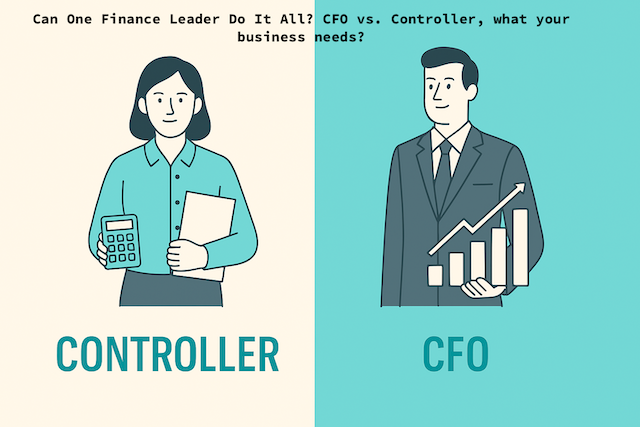
    Finance roles are often misunderstood—especially in growing businesses. It’s common for founders to blur the lines between a Controller and a Chief Financial Officer (CFO), assuming they’re just different labels for the same function. But this misconception can quietly hold a business back. While both roles are essential to financial health, they serve very different purposes, require distinct mindsets, and most importantly—drive very different outcomes.

    Getting this right isn’t about semantics—it’s about strategy. Hiring a Controller when you really need a CFO means optimising for control instead of growth. And the reverse—expecting a CFO to manage day-to-day accounting—wastes resources and dilutes impact. Let’s unpack the real differences between these two critical roles, when you need each, and how hiring the right person at the right time can transform your business from financially functional to financially powerful.

    Understanding the Role of a Controller

    A Controller is the backbone of your internal finance function. Their role is primarily operational—focused on maintaining accurate financial records, ensuring compliance, managing reporting, and enforcing internal controls. They make sure the numbers are clean, the processes are tight, and the business stays on track with regulatory requirements. In short, they keep the house in order.

    Controllers are detail-oriented doers. They’re fluent in accounting standards, comfortable with spreadsheets and ERP systems, and excellent at spotting discrepancies before they become problems. Their priority is accuracy and discipline, not commercial strategy. If your business needs someone to run payroll, close the books, manage invoices, and prepare monthly reports, a Controller is the right fit. But if you’re expecting them to guide high-level decisions or lead your growth plan—you’re likely expecting too much from the wrong role.

    Understanding the Role of a CFO

    A Chief Financial Officer (CFO) operates on an entirely different level. Their role is not about looking backwards—it’s about looking ahead. A CFO provides strategic financial leadership, helping the business make informed, data-backed decisions that support sustainable growth and long-term value creation. While they understand the numbers, their real power lies in knowing what to do with them.

    A strong CFO—whether full-time or fractional—will focus on forecasting, scenario planning, investment strategy, and working capital optimisation. They work hand-in-hand with leadership teams across the business, aligning financial strategy with commercial objectives. From marketing campaigns to sales hires, from funding rounds to CAPEX planning, the CFO plays a key role in prioritising what will drive the highest return with the lowest risk. They don’t just manage costs—they help the business scale with confidence.

    Why Mindset Matters: The Growth Enabler (CFO) vs. the Gatekeeper (FC)

    The biggest difference between a Controller and a CFO isn’t just what they do—it’s how they think. A Controller’s mindset is rooted in protection: safeguarding the business through accuracy, compliance, and cost control. They’re there to maintain order, keep things tidy, and ensure nothing slips through the cracks. That’s incredibly valuable—but when it becomes the dominant voice in a growing business, it can unintentionally hold the company back.

    A CFO’s mindset is geared towards growth. Their default is not “How do we cut costs?” but “Where should we invest for the best return?” They embrace calculated risk, advocate for strategic spending, and help leadership prioritise initiatives that will drive real commercial impact. Where a Controller might be inclined to say “no” to preserve the budget, a CFO asks “how” to make the numbers work for the opportunity ahead. That shift in perspective—from guarding the business to growing it—is what separates operational finance from strategic finance.

    The Ideal Timeline: When to Hire Each One

    The timing of when to bring in a Controller versus a CFO can make a significant difference in how efficiently—and how confidently—your business scales. It’s not just about the size of your business, but about its complexity and ambition.

    As soon as your business starts to gain traction, you’ll need someone who can keep your financial house in order. This is when a Controller or strong finance manager should come in. They’ll ensure that bookkeeping is clean, data is timely, and reporting is accurate—because without a solid foundation, even the best strategy will fall apart. And no, outsourcing bookkeeping to an accountancy practice isn’t enough. Bookkeeping isn’t just about compliance—it’s about building trust in your numbers so you can use them to make informed decisions.

    Once you pass the €1M revenue mark and you have serious growth aspirations, that’s when you should consider bringing in a fractional CFO. Even on a part-time basis, a CFO can instantly add strategic value, helping you with financial planning, capital allocation, working capital optimisation, and guiding big-picture decisions. It’s one of the smartest investments a scaling business can make—long before you’re ready to hire a full-time CFO.

    Can One Person Do Both Jobs?

    In theory, yes. In practice? Rarely—at least not effectively. While it might seem efficient to hire one person to handle both the financial operations and strategic planning, the reality is that Controller and CFO roles demand completely different skill sets and mindsets. Expecting one person to excel at both can result in one of two outcomes: overstretching a strategic leader with administrative tasks, or relying on an operational manager for high-level financial decisions they’re not equipped to make.

    For early-stage businesses, a more sustainable (and cost-effective) structure is to have an in-house Controller managing the day-to-day finance function, while engaging a fractional CFO to lead on strategy. The Controller ensures data integrity, process discipline, and compliance. The fractional CFO brings experience, commercial insight, and future-facing leadership. Together, they form a finance function that is both solid at the core and sharp at the edge—able to maintain control while pursuing growth.

    Real-World Impact: What Happens When You Get It Right (or Wrong)

    Hiring the wrong financial role for your stage of growth can quietly stall your progress. One common mistake? Hiring a Controller and expecting them to act like a CFO. What often happens next is predictable: strategic decisions are delayed, growth opportunities are missed, and the business becomes focused on maintaining the status quo instead of pushing forward. The result? A financially compliant company that’s structurally sound—but strategically stuck.

    On the flip side, when you get the mix right, the results are transformative. We’ve seen it first-hand at Quantro. In one case, a business with no financial visibility was making decisions purely on gut. Once we implemented a live dashboard with dynamic KPIs and paired it with strategic guidance, they saw 297% revenue growth, a 200%+ profit increase, and doubled their cash on hand—all within 18 months. That growth didn’t come from cutting costs. It came from using finance to unlock smarter, faster decisions.

    Two Roles, One Goal – Smarter Growth

    A Controller and a CFO serve very different purposes—but together, they provide the foundation and fuel for sustainable growth. The Controller ensures the business is built on accurate, timely financial data and solid internal processes. The CFO takes that foundation and uses it to drive the business forward—allocating capital strategically, guiding decision-making, and positioning the company for scale.

    Understanding the difference isn’t just helpful—it’s essential. Hire a Controller when you need control. Hire a CFO when you want growth. Get both in place at the right time, and you turn finance from a support function into a strategic advantage. At GrowthCFO, we help businesses build that kind of financial leadership—fit for scale, built for results.

    💬 Want to explore which one your business needs right now? Book a call with us today.

  • quote-to-cash: How Finance Turns Revenue into Predictable Cash Flow

    quote-to-cash: How Finance Turns Revenue into Predictable Cash Flow

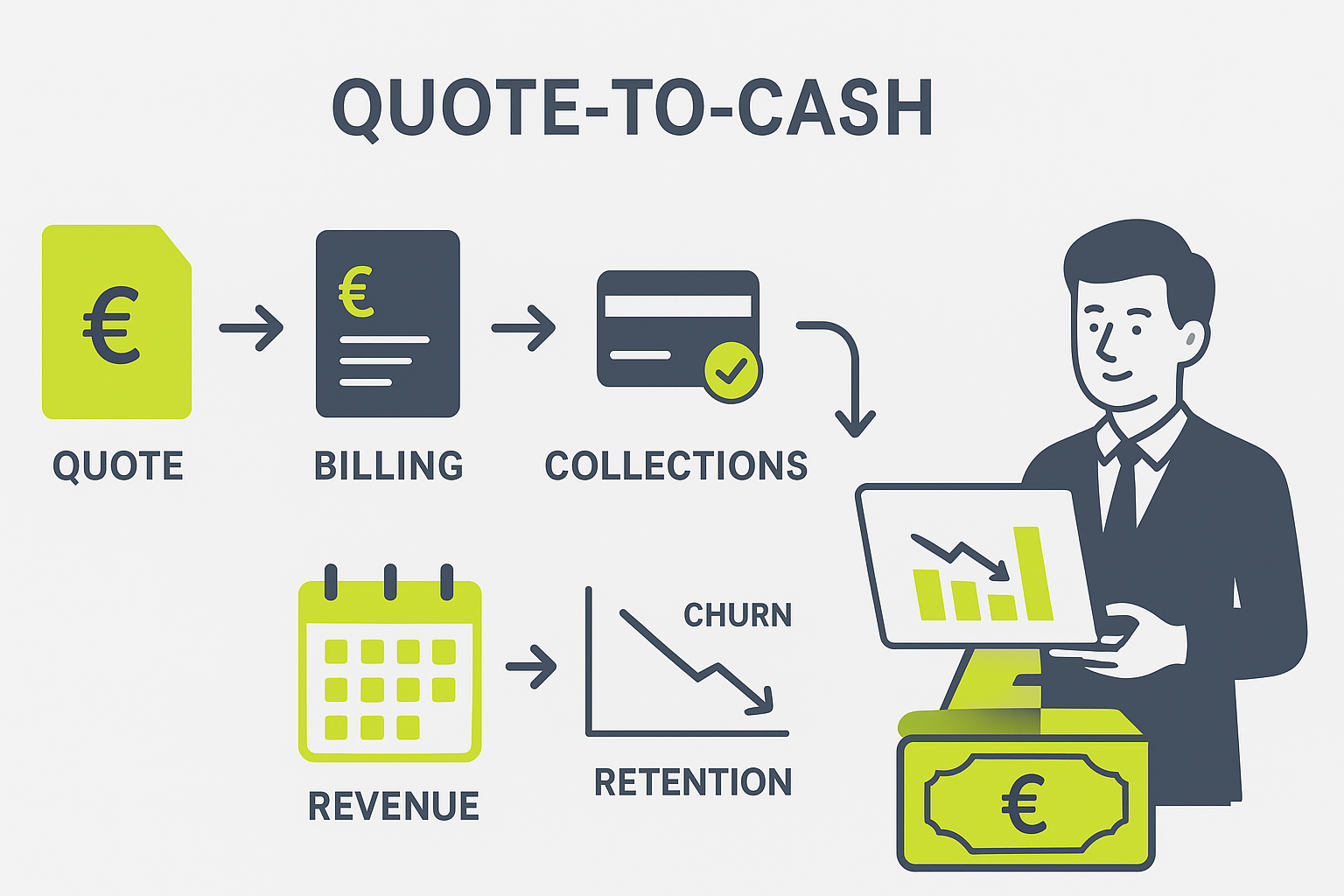
    Most founders look at revenue and assume it automatically translates into cash. After all, if sales are growing, the business must be healthy — right? In reality, the path from a signed deal to actual liquidity in the bank is more complex. Each step in the quote-to-cash cycle — from pricing and discount governance, through billing, collections, revenue recognition, and churn — has a direct impact on cash flow.

    At Quantro, we see this disconnect often: a business might appear profitable on paper but still struggle to meet payroll or fund growth because cash inflows lag behind reported revenue. This is why understanding and managing the quote-to-cash process is not just an operational concern — it’s a financial survival skill.

    We’ve written previously about the importance of reporting cadence and how timely insights help leadership teams make better decisions. Quote-to-cash goes one step further: it links day-to-day commercial actions directly to cash visibility and predictability. For growing companies, especially those in SaaS, e-commerce, or services, mastering this cycle is the difference between riding growth momentum and stalling out due to liquidity gaps.

    Pricing & Discount Governance

    Discounting is often seen as purely a sales lever, a way to close deals faster or clear stock. But from a finance perspective, discounts are much more strategic: they directly affect liquidity, working capital, and the cash runway.

    At Quantro, we always start by asking: what does the business need most right now margin, liquidity, or growth? The answer determines how discounts should be used.

    Take e-commerce as an example. Inventory sitting unsold for months is not just a storage problem; it’s cash locked away in stock. In one client case, we recommended clearing slow-moving items even at cost or below purchase price. The result? Liquidity was freed up and redeployed into high-margin inventory and targeted marketing campaigns that delivered a 3x ROI. By taking a short-term hit on paper, the client generated more profitable growth and improved cash flow.

    In another case, a service business struggling with liquidity needed faster access to working capital. Instead of focusing on list prices, we structured early-payment discounts to incentivise customers to pay quickly. The accelerated inflows allowed the business to reinvest in growth initiatives and stabilise its cash position.

    The principle is simple: discounting isn’t about generosity; it’s about aligning commercial decisions with financial strategy. With the right modelling, discounts can become one of the most effective tools for unlocking liquidity.

    Billing Structures & Invoicing Discipline

    One of the most overlooked cash levers is billing. Many businesses, even SaaS companies, still rely on monthly invoices with 30–60 day payment terms. On paper, revenue looks steady. In reality, cash lags far behind, creating a mismatch between reported performance and available liquidity.

    We’ve seen this first-hand. A SaaS client of ours was invoicing every month and waiting for transfers to clear. Not only did this create delays in cash inflows, but it also generated an unnecessary admin burden, with finance teams spending time chasing invoices and correcting errors. Worse, we discovered missed invoices amounting to significant revenue that had to be billed retroactively, which risked client trust and strained the business’s cash position.

    Our solution was simple but transformative: we introduced payment cards via Stripe, connected directly to recurring subscriptions. Instead of sending invoices and waiting weeks for payment, the business now renews automatically each month. The result was:

    • Cash arriving on time, every time,
    • Elimination of missed invoices,
    • Reduced admin load, freeing finance teams to focus on value-added tasks.

    This is why we often say: billing isn’t an administrative process; it’s a cash discipline. Choosing the right structure (upfront billing, auto-renewals, card payments) determines whether you’re funding growth with predictable inflows or constantly waiting on receivables.

    We covered the importance of short-term visibility in our article on the 13-week cashflow. Billing practices are one of the most direct levers that determine whether that forecast is accurate or whether it becomes an exercise in wishful thinking.

    Collections & Receivables Management

    If pricing sets the rules and billing defines the structure, then collections are where everything is tested in practice. It doesn’t matter how strong your contracts or invoices are if customers don’t pay on time, your business starves of cash.

    At Quantro, we always remind founders: the goal is to make it as easy as possible for clients to pay. That may mean adjusting payment methods, simplifying invoicing, or restructuring terms altogether. But beyond convenience, it requires discipline.

    Our approach is simple and consistent. Every Monday, we review a weekly AR ageing report for each client. This report shows which invoices are current, which are overdue, and by how long. From there, we assign actions to the right team members ensuring someone is responsible for following up. It’s this rhythm that prevents overdue balances from snowballing into liquidity problems.

    The benefit is twofold:

    • Cash comes in faster, improving predictability.
    • Client relationships stay healthier, since follow-ups happen promptly and professionally.

    Collections metrics, such as DSO (Days Sales Outstanding) and AR turnover, deserve a place on KPI dashboards alongside growth and profitability. After all, there’s little value in booked revenue if it never makes it into the bank.

    Revenue Recognition Basics

    Revenue recognition is one of those topics that can feel overly technical, but it doesn’t have to be. The principle is simple: revenue should be recognised when the service is delivered, not when the cash is received.

    Two elements matter:

    1. Value of the service, and
    2. Timeframe of delivery.

    For example, imagine a client pays €1,200 upfront in January 2025 for a 12-month service. Even though the full amount is in the bank immediately, finance doesn’t record €1,200 as January revenue. Instead, it is spread across the service period: €100 per month from January through December.

    The impact of this becomes clear over the long run. If you treat the entire €1,200 as January revenue, you might feel “flush with cash” and spend too aggressively in the early months. But by mid-year, if new customers haven’t been added, you’ll still have six months of costs to cover without any fresh revenue coming in. This disconnect can create liquidity squeezes that catch founders by surprise.

    It also distorts performance reporting. Imagine your monthly costs are €100:

    • With proper recognition, January shows €100 revenue and €100 costs → break-even. February, with €50 revenue, shows a €50 loss.
    • Without proper recognition, January would appear to show €1,100 profit, while February would show a €50 loss. Neither figure reflects reality, and both mislead stakeholders.

    That’s why accurate revenue recognition matters: it keeps your financial picture grounded in economic reality. It protects cash runway, ensures profits are measured consistently, and avoids overstating performance in one month only to show unexpected losses in the next.

    Churn & Retention → Cash Predictability

    If revenue recognition shows you the timing of revenue, churn tells you whether that revenue will actually keep coming in. For subscription or recurring revenue businesses, churn is one of the most powerful drivers of cash predictability.

    At Quantro, we build churn directly into our clients’ forecasting models. The structure is straightforward:

    • Revenue: carried forward from the previous month.
    • New Revenue: net new sales added in the current month.
    • Churned Revenue: a percentage reduction based on average historical churn rates.

    By layering these three elements together, we create a revenue forecast that reflects both growth and decay. That forecast is then linked directly to cash flow: receivables days determine when the forecasted revenue actually lands in the bank, week by week.

    The impact is twofold:

    1. Founders get a realistic picture of whether growth is net positive or simply covering churn.
    2. Cashflow forecasts become more reliable, because future inflows are stress-tested against customer retention, not just top-line optimism.

    We’ve previously explored cash flow forecasting for startups, where we stressed the importance of accuracy in short-term planning. Factoring churn into the model is what keeps those forecasts grounded in reality, ensuring that projected inflows don’t collapse when customers leave faster than expected.

    Readiness Checklist

    To test whether your business is truly cash-ready, we use a simple diagnostic framework at Quantro. If you can tick these boxes, you’re well on the way to aligning your revenue engine with your cashflow reality:

    • Discounts aligned with cash strategy: Do you treat discounts as a working capital lever, not just a sales tool?
    • Billing terms designed for liquidity: Are you using structures (like card payments or upfront billing) that accelerate inflows, instead of relying on slow invoice cycles?
    • Collections discipline in place: Do you review AR ageing weekly and assign actions for follow-up?
    • Revenue recognition understood and applied: Do you separate cash in the bank from revenue over time, so your forecasts and performance reporting remain realistic?
    • Churn integrated into forecasts: Do your models include churn as a reduction line, so cashflow projections don’t rely on wishful thinking?

    This readiness checklist isn’t just a health check it’s a foundation. Businesses that get these right have a cash engine that fuels growth rather than constrains it.

    KPI Tree – Connecting Revenue Levers to Cash Flow

    One of the most powerful tools we use with clients is the KPI tree a way to visualise how operational levers cascade into financial outcomes. Here’s a simplified version for quote-to-cash:

    • Pricing & Discounts → Gross Margin → Liquidity runway
    • Billing Terms → Days Sales Outstanding (DSO) → Cash Conversion cycle
    • Collections Discipline → % of receivables paid on time → Operating cash inflows
    • Revenue Recognition → Deferred Revenue → Cash visibility & runway accuracy
    • Churn & Retention → Net Revenue Retention (NRR) → Forecasted inflows predictability

    The key point: these are not isolated metrics. Each connects directly into cash. By treating KPIs as part of a system rather than standalone numbers, you move from firefighting liquidity gaps to proactively managing financial health.

    From Revenue Engine to Cash Engine

    The quote-to-cash process isn’t just about administrative efficiency or ticking compliance boxes. It is the hidden engine that determines whether a business can sustain growth, meet its obligations, and reinvest with confidence.

    When pricing, billing, collections, revenue recognition, and churn are managed in isolation, founders risk liquidity gaps, distorted performance reporting, and short-term decisions that undermine long-term stability. But when those elements are connected and actively governed through a finance lens, the business gains something far more powerful than revenue: predictable, investable cash flow.

    At Quantro, this is where we step in. We bring clarity, structure, and discipline to the quote-to-cash cycle, ensuring that every euro earned translates into liquidity you can actually use to fuel growth. The companies we work with don’t just scale revenue they scale confidence in their financial future.

  • Service at Scale: Crafting a Scalable Future for Service Businesses

    Service at Scale: Crafting a Scalable Future for Service Businesses

    Scaling your business operations successfully is not just about growth—it's about evolving to enhance your capabilities without compromising the quality that brought your business initial success. For service-oriented enterprises, from digital agencies to consultancy firms, scaling involves a careful balancing act. It requires integrating new processes, technologies, and strategies while maintaining the core values and service excellence that clients have come to expect.The challenge is significant because unlike product-based businesses, service businesses hinge on the quality of human interaction and the bespoke nature of solutions provided. As such, scaling too quickly can dilute customer experience, while moving too slowly may cause missed opportunities and stagnation. Recognising when and how to scale, therefore, becomes crucial. 

    Recognising the need for Scale

    Determining the right moment to scale your service business is an art and a science. It involves reading the signs in your operational capabilities and market opportunities while aligning with strategic objectives. The decision to scale should be driven by clear indicators that your business is ready to handle the complexities of growth without compromising service quality. Key signs include consistent over-delivery of your current capabilities, feedback from clients pushing for more comprehensive services, and internal metrics that suggest operational stability and financial health.One major indicator is the consistent surpassing of goals with existing resources, suggesting that your current setup is optimised and underutilised. This can manifest as turning away potential new clients due to capacity limits or noticing that your team is handling current workloads easily, indicating readiness for new challenges. Another sign is having a steady and predictable cash flow that gives you the financial confidence to invest in expansion. This financial cushion is crucial for covering the upfront costs associated with scaling, such as hiring, training, and the potential integration of new technologies. If these elements align, your business might just be ready to leap into its next growth phase—scaling operations to meet demand and drive forward to new heights of success.

    Operational Challenges and Adoptions

    Scaling a service business is not just about increasing the size of your team or client list; it's about rethinking and reshaping your operational model to suit a larger scale. This transformation involves addressing significant challenges and making strategic adaptations to maintain efficiency and quality. A typical scenario involves transitioning from a small, possibly over-extended team to a structured, multi-layered organisation capable of handling increased volumes without sacrificing service quality.One of the main challenges during this transition is communication. As your business grows, the simplicity of direct, informal communications fades, requiring more formal and structured communication channels. Ensuring that everyone from the sales team to operations understands and adapts to these changes is crucial. For example, sales teams need to align with the new operational capabilities and pricing strategies, while operations teams must adjust to potentially new service delivery protocols. To manage this, it’s essential to have regular training sessions and update meetings to keep all staff aligned with the new business model. Moreover, adapting your tech stack to support these changes, as an example, we implemented a new scheduling and resource management tool for one of our clients (digital marketing agency), leading to industry standards deliverable success, which is critical for managing client expectations and prioritising tasks effectively.Another significant adaptation is the pricing structure as you scale. With greater capabilities and potentially higher service levels, reviewing and adjusting your pricing to match the enhanced value you provide can help ensure profitability while remaining competitive. This requires careful cost analysis, market conditions, and client expectations. Implementing tiered pricing models or value-based pricing can be an effective strategy to meet diverse client needs and maintain financial health as you grow.

    Leveraging Technology for Efficient Scaling

    Technology plays a pivotal role by enabling efficiency and supporting growth. Key tools like scheduling and resource allocation software are essential for managing increased workloads effectively. These technologies ensure that resources are judiciously allocated, align team capabilities with client demands, and improve the accuracy and timeliness of service delivery.An example of effective technology implementation is the transition from manual to automated scheduling systems. This change not only streamlines operations but also ensures that all tasks are completed on schedule, significantly enhancing client satisfaction. Moreover, utilising data analytics tools can transform vast amounts of operational data into actionable insights, helping to refine service offerings and better meet customer needs. For example, in one of our clients, we made some iterations to their operational model based on the operational data we got from data and KPIs, which led to an increased Employee Happy Index KPI by 50%.By integrating these technological solutions, service businesses can maintain high performance while scaling, ensuring that growth is sustainable and aligned with enhancing customer value. 

    Ensuring Quality Customer Experience During Growth

    As service businesses scale, maintaining a high-quality customer experience becomes both a challenge and a priority. Growth should not come at the expense of the personalised service that likely contributed to a company's initial success. Therefore, it's crucial to adopt strategies that preserve and even enhance customer satisfaction throughout the scaling process.Specialisation within service teams is one effective approach. By creating specialised units focused on particular aspects of service delivery, businesses can maintain high standards of quality and expertise. For example, a digital marketing agency might have dedicated teams for SEO, content creation, and client communications. This allows each team to hone its specific skill set, leading to better service outcomes and more satisfied customers. Additionally, implementing robust customer relationship management systems can help manage this complexity by ensuring that all customer interactions are tracked and leveraged to deliver personalised experiences at scale.Account management plays a pivotal role in this structure. Account managers act as the bridge between clients and the specialised teams (as they usually are more technical and not necessarily relationships people), ensuring that communications are clear and that client needs are continuously met. This role is critical in preventing service breakdowns as the business grows and becomes more complex. Through regular feedback loops and proactive service adjustments, account managers can help align client expectations with the company's evolving capabilities, thereby enhancing overall client satisfaction and retention.

    Team Management and Organizational Culture

    Effective team management and robust organisational culture are crucial for successfully scaling service businesses. As a company grows, its internal structures and roles must adapt to accommodate increased complexities, which can significantly impact team dynamics and morale.The key to managing this transition is investing in your team’s development and well-being. Offering stock options or performance bonuses can align individual goals with the company's objectives, fostering a sense of ownership and motivation. Additionally, managing workloads to ensure a healthy work-life balance is vital; for instance, capping billable hours can help prevent burnout and maintain a positive work environment. A practical example was when we implemented for a handful of our clients a 70% billable hours, which allows 30% for holiday/sick leave, training and development and admin work. Leading to increased productivity and happiness levels.Leadership also needs to evolve; moving from a hands-on approach to one that empowers middle management and delegates effectively is essential as the team grows. Providing regular training and developing leadership skills among team members can help them manage new responsibilities and maintain high performance despite the challenges of scaling.

    Utilising Key Performance Indicators (KPIs)

    In any business similar to a scaling one, it is essential to utilise Key Performance Indicators (KPIs). These metrics not only measure the success of scaling efforts but also provide data-driven insights that can inform strategic adjustments. Focusing on the right KPIs ensures that a business can monitor its growth accurately and make informed decisions that align with long-term goals.Revenue per employee is a critical KPI in assessing how effectively a business is scaling. This metric helps determine if increased staff numbers are correlating with proportional increases in revenue, indicating efficient scaling. Another vital KPI is client satisfaction, which can be measured through regular feedback surveys and net promoter scores. This KPI helps gauge the impact of scaling on service quality and client retention. Lastly, the capacity utilisation rate—measuring how much of your team’s potential output is being realised—can indicate whether resources are being used efficiently or if there are bottlenecks hindering performance.By regularly reviewing these KPIs, a business can adjust its strategies to address areas of concern, optimise processes, and ensure that scaling efforts are both effective and sustainable. 

    The Essence of Scaling Service Businesses

    Scaling a service business requires a strategic approach to improving operational efficiency, adopting new technologies, and ensuring customer satisfaction. As you scale, it's crucial to manage changes in team structure and organisational culture to support your expanding operations.Remember, successful scaling is about continuous adaptation. Stay agile and responsive to changes in the market and within your business. Regularly review KPIs to gauge your progress and refine your strategies.View scaling as an ongoing journey that enhances your business's capacity and maintains its core values. This proactive approach ensures that your business grows not only in size but also in capability and reputation.

    *Thumbnail image from April 17, 2024

  • How To Brand Data With Operations, Finance, and HR

    How To Brand Data With Operations, Finance, and HR

    One thing we’ve learned working with businesses providing services over the years is how important data is to finding sustainable success and profitability. We’ve always been very data-focused, but we’ve taken it a step forward by truly branding data within operations, finance, marketing, and HR systems. 

    Our data strategy allows us to have an understanding of companies current health at all times – we’ve built reports that show us how our clients are doing at a glance. But having a good system to manage and learn from your data also allows you to look at the future and make predictive decisions. 

    Data and Operations

    Agencies are people businesses, so at all times you should grasp where you are with your team’s capacity and make sure you have enough people to service your clients – even when you are growing quickly. Not only do you need the right amount of people, but you also need to ensure you have adequate skills within the team to deliver for your clients and do it on time. 

    A big part of that is Projected Capacity. As you look to the future, do you have the capacity to fulfill your growth? Fast growth isn’t sustainable or profitable long-term if your projected capacity doesn’t match it and churn happens because of it. 

    You should also look at your Client Profitability. You should have a budget for each client and project, and should know if you follow it, your financial margins will be solid. This KPI shows your efficiency and shows your billables vs non-billables utilization.

    An extremely important KPI you should pay a lot of attention to is your Churn. This KPI is shared across all teams because they’re involved in doing a great job for your clients. Obviously, this one illustrates your client retention and is extremely important to your success.

    Data and Finance

    Main finance KPI should be your bottom line but there are other data points you should look at to see your efficiency and overall financial health. These aren’t all we look at, but they’re very important metrics:

    Revenue Per Head: this one is important because, at a glance, you can see how many people you have and how much revenue each of them produces – independently of if they directly or indirectly contribute to your top line. 

    Personal Cost as a percentage: another necessary ratio because it shows how much it costs for the whole team with everything included (payroll, taxes, pension, etc.) against your revenue. The benchmark for this KPI should be around or under 60% – it shows your financial efficiency. 

    Debt and Debt Margin are what you use to keep track of your debt integrity and make sure this ratio is healthy at all times. 

    As a cash flow business, Receivables are huge for any business too and the benchmark is that 80% should be paid on time, which illustrates your cash ability to pay your team and the investments you need to make. 

    Contribution per Department is another data point you should look at that falls under the finance engine. This helps you make sure all the departments have the relevant resources, but that they don't maintain the contribution that you need for the business to cover their fixed cost.

    Data and HR

    HR is a key system that should supports your growth, and you should leverage data to measure how your team is doing and how your can best support them. These are some of the KPIs we look at:

    Employee Happy Index: this includes a variable of data points that tells you how your team is overall feeling and feedback on what you can do to improve. 

    Time To Hire: this helps you understand how long it’s going to take you to source a position from the time we know you need to hire. 

    Absent Days: encourage your team to use their sick days whenever they need them. If at the same time, the number crosses a regular threshold for the team, which is around 4%, you know that there are deeper problems with your team’s happiness you need to figure out. 

    How to update and review data for better forecasting

    The past doesn’t foresee the future, but using good data helps us forecast for it. Accurate forecasting isn’t easy, it’s only as good as your assumptions – and they are often not necessarily tied to your data but to your ambitions. 

    For your forecasting to be as real as possible, I recommend having a thorough process of updating all your databases and making sure the data isn’t skewed. 

    For example, I look at  cash flow data on a daily basis and all other financial data on a weekly basis. You also should have a monthly presentation to the board where you present all your financial data, your YTD performance, your monthly performance, your high-level KPIs, and your forecasts. Then present the same findings to your management team internally and the same format should shared annually with your shareholders. These all help keep your finances healthy and accurate. 

    On the operations side, you should also look at and update all the KPIs every week. On a weekly basis you should rectify some actions as needed like your utlisation capacity and other short-term KPIs. At the end of every month, you should present all findings to the management team and inform the heads of department if they need to pay attention to something.

    And on the HR side, you should update your KPIs monthly through Disco on Slack, which anonymously collects all feedback from your team and automatically produces your Happiness Index we discussed before.

    That’s what works for most of our clients in terms of updating and reviewing their data – I think you have to find your own cadence and process but it’s very important to have a good process for this so you can leverage it best. 

    2 Real Life Examples of Using Data to Make Decisions:

    One way we leveraged the data and brand it with all the systems within our client's was their hiring process. In 2019 we’re still finding iterations and improving it as the client was growing. Here’s the gist of it: 70-80% capacity is a trigger to start the recruiting process because we use historical data to know how much time we need to hire. 

    Another example: the KPIs above showed us that, in the first four weeks of working with a client, we tend to have a load period where we over-service them. It’s normal – our team is getting to know the client, building the foundation, creating reports, etc. To help our clients at the level they need while also remaining financially efficient, learning from that data made us change our pricing policy and illustrate that extra allocation. 

    * Thumbnail image February 20, 2024