Category: Growth Plan

  • Why Every Business Needs a CFO—Just Not a Full-Time One

    Why Every Business Needs a CFO

    Why Finance is More Than a Back-Office Function

    Many founders believe that finance is purely an administrative function—a necessity for bookkeeping, tax compliance, and reporting, but not something that actively contributes to growth. This mindset often leads them to delay hiring financial leadership, thinking they can manage without it. However, this couldn’t be further from the truth. A CFO is not just a number cruncher—they are a strategic partner who ensures that financial decisions are data-driven, investments are optimised for growth, and the business has the liquidity to scale sustainably.

    For many businesses, hiring a full-time CFO isn’t feasible or necessary—especially when revenue is low. This is where a CFO on demand (also known as a fractional CFO) becomes an invaluable asset. A CFO on demand provides the same level of financial expertise and strategic leadership as a full-time CFO but on a flexible, cost-effective basis. They help businesses gain financial visibility, optimise cash flow, and make smarter investment decisions, all without the overhead of a permanent hire but what a CFO on demand does, when businesses should consider hiring one, and how they drive business growth.

    What Does a CFO on Demand Do?

    A CFO on demand brings the same financial expertise and strategic leadership as a full-time CFO—but with greater flexibility and cost-efficiency. Their role is not just about managing financial reports but about steering the business towards sustainable growth through data-driven financial decisions. Instead of operating reactively, a fractional CFO proactively identifies opportunities, mitigates risks, and ensures the financial health of the company.

    Here are some of the key responsibilities of a fractional CFO:

    📌 Strategic Financial Leadership – They go beyond number-crunching, providing actionable insights that align financial strategy with business objectives. Whether it’s planning for expansion, securing funding, or optimising profitability, they ensure financial decisions support long-term success.

    📌 Forecasting & Planning – A fractional CFO helps businesses predict financial performance and prepare for different scenarios. They build detailed financial models to assess growth opportunities, anticipate cash flow needs, and prevent financial surprises.

    📌 Investment Prioritisation – Every business has limited capital—a fractional CFO ensures that money is allocated to the highest ROI initiatives. By focusing on fast payback periods and data-backed investments, they help businesses grow efficiently.

    📌 Cash Flow & Working Capital Optimisation – Many businesses struggle with cash shortages despite being profitable. A fractional CFO optimises working capital, ensuring that businesses always have liquidity for operations, growth, and financial stability.

    📌 Financial Visibility & KPI Tracking – Instead of relying on gut feeling, a fractional CFO builds dashboards and tracks dynamic KPIs to provide a clear, real-time picture of the business’s financial performance. This ensures that leadership teams can make decisions based on data, not assumptions.

    📌 Unbiased, Politics-Free Decision-Making – In many businesses, internal politics can influence financial decisions. A fractional CFO is an external expert who provides objective recommendations, ensuring financial strategy is based purely on what’s best for the business, not internal pressures.

    A fractional CFO doesn’t just keep a business financially stable—they turn finance into a growth engine. By implementing strong financial systems, optimising cash flow, and ensuring every financial move is strategic, they help businesses scale with confidence.

    When Do You Need a Fractional CFO?

    Many businesses hesitate to bring in financial leadership because they assume a CFO is only necessary for large corporations. In reality, a fractional CFO can add significant value to businesses at various stages, particularly those that are growing, facing financial challenges, or needing strategic guidance. The key indicator of when to hire a fractional CFO isn’t just business size—it’s financial complexity.

    Here are clear signs that your business needs a fractional CFO:

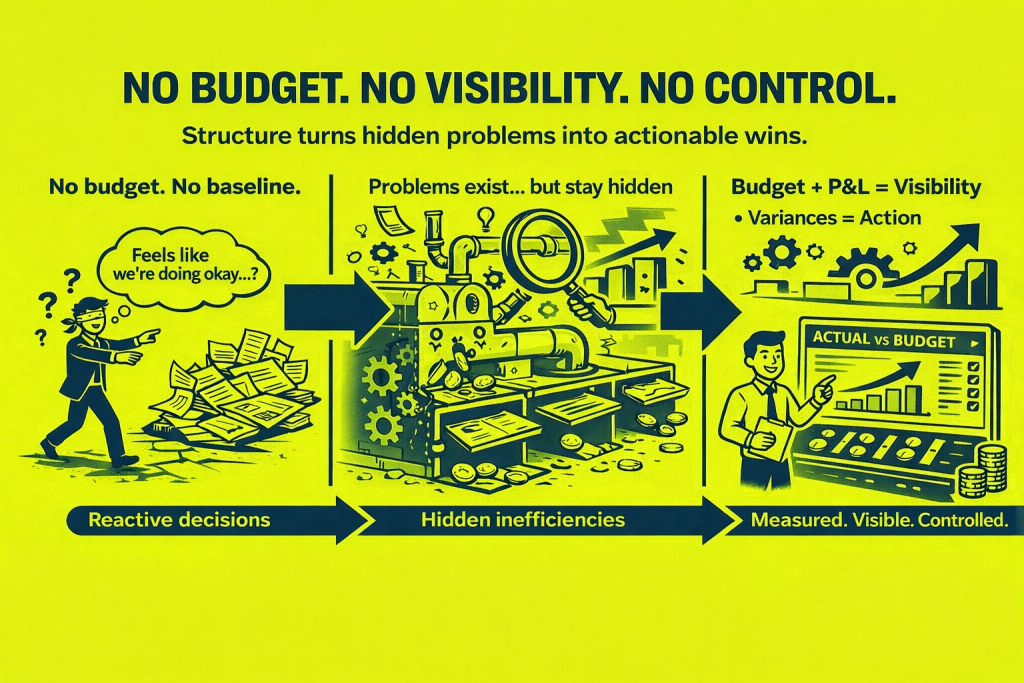
    📌 You’re Flying Blind Without Clear Financial Visibility – Many founders don’t truly understand their profitability, cash flow, or financial health. Without structured reporting and KPIs, they’re making decisions in the dark. A fractional CFO brings clarity, real-time financial dashboards, and strategic forecasting to ensure informed decision-making.

    📌 You’re Scaling Fast But Lack Financial StrategyGrowth without financial structure can be dangerous. If revenue is increasing but cash flow remains tight, margins aren’t optimised, or the business lacks a long-term financial roadmap, a fractional CFO helps build a financial strategy that supports sustainable scaling.

    📌 You Need to Secure Funding or Credit Facilities – Whether a business is raising investment, applying for loans, or negotiating credit terms, a fractional CFO ensures financial statements are investor-ready and funding is structured optimally. They also use their network to unlock better financing opportunities.

    📌 You’re Making Investment Decisions Without ROI Analysis – Many businesses spend money without truly evaluating returns. A fractional CFO ensures every investment decision is backed by data, prioritising high-ROI, fast payback initiatives that accelerate growth without putting the company at financial risk.

    A fractional CFO isn’t just for struggling businesses—they’re a strategic partner for any company looking to build a solid financial foundation, scale efficiently, and maximise profitability. By bringing in the right financial leadership at the right time, businesses can avoid costly mistakes, optimise growth, and make financial decisions with confidence.

    Real-World Impact: How a Fractional CFO Transforms Businesses

    Hiring a fractional CFO isn’t just about financial oversight—it’s about unlocking business potential through strategic finance. Many companies operate without clear financial visibility, leading to cash flow struggles, inefficient investment decisions, and missed growth opportunities. Here are two real-world examples of how fractional CFO leadership drove transformational results.

    📌 Case Study 1: Unlocking Growth with Real-Time Financial Visibility
    One of our clients was scaling fast but had no structured financial reporting. They didn’t fully understand how profitable they were, what was driving their margins, or how much cash they had available to reinvest. Decisions were being made reactively, and the leadership team was operating without a clear financial strategy.

    To solve this, we built a live dashboard with dynamic KPIs, integrating real-time P&L and balance sheet insights. This gave the business full transparency into its financial health, enabling better planning, data-driven decision-making, and smarter capital allocation. The result? 297% revenue growth in 18 months, over 200% profit increase, and 100%+ growth in cash on hand.

    📌 Case Study 2: Fixing Cash Flow & Strengthening Financial Processes
    Another company was facing severe cash flow issues—they had strong sales, but their financial structure was disorganised, leading to delayed receivables, unpredictable cash cycles, and strained operations. They needed a structured approach to financial management to avoid liquidity issues and stabilise growth.

    We tackled this by:
    Using our network to secure credit facilities, providing immediate breathing room.
    Optimising receivables, implementing a structured collections strategy for faster cash inflows.
    Restructuring invoicing & payment terms, ensuring predictable, steady income streams.
    Implementing a quarterly-reviewed budget, keeping financial discipline while allowing for growth.

    Within months, the business stabilised its cash flow, improved liquidity, and created a structured financial plan that supported long-term scaling.

    💡 The Key Takeaway? A fractional CFO transforms finance from an administrative function into a growth engine. By improving financial visibility, cash flow management, and strategic decision-making, they help businesses scale with confidence and financial stability.

    When to Transition from a Fractional CFO to a Full-Time CFO

    While a fractional CFO provides immense value, there comes a point in a company’s growth where a full-time CFO becomes necessary. The decision isn’t about industry—it’s about complexity. The financial needs of a business evolve, and at a certain stage, having a dedicated in-house CFO delivers a higher return on investment.

    📌 Revenue Exceeds €30M
    Once a company crosses the €30M revenue threshold, financial operations become more complex. At this stage, businesses typically require daily financial oversight, sophisticated forecasting models, investor relations, and deeper financial planning that justifies a full-time hire. The effort required exceeds what a fractional CFO can provide within a part-time engagement.

    📌 The Business Requires Ongoing CFO-Level Involvement
    If financial decisions are becoming more frequent and intertwined with daily operations, a full-time CFO can provide faster decision-making and deeper integration within the company. This is particularly crucial when a company is scaling aggressively, acquiring businesses, or preparing for an IPO.

    The ROI of a Full-Time CFO Becomes Positive
    Hiring a full-time CFO is a significant investment, but when the value they provide outweighs their cost, it makes financial sense. If a CFO can optimize cash flow, secure strategic funding, and drive efficiencies that directly impact profitability, the business can justify the cost of a full-time leadership role.

    A fractional CFO is the best choice for businesses scaling under €30M, but once financial operations demand full-time strategic leadership, transitioning to an in-house CFO ensures continued growth, stability, and long-term success.

    A Fractional CFO as a Growth Accelerator

    A fractional CFO is more than just financial oversight—they are a strategic partner for growth. By providing financial visibility, cash flow optimisation, and data-driven decision-making, they help businesses scale efficiently without the cost of a full-time CFO.

    For most businesses under €30M, a fractional CFO is the best solution. However, as financial complexity increases, transitioning to a full-time CFO becomes necessary. The key is knowing when to scale financial leadership to sustain growth.

    💡 The Takeaway? A fractional CFO turns finance into a business accelerator, ensuring smarter decisions, stronger cash flow, and sustainable profitability.

    At Quantro, we help businesses gain financial clarity, improve profitability, and scale with confidence. If you're ready to leverage finance as a true growth driver, book a call with us today and see how we can help your business thrive.

    *Image from April 15, 2026

  • The CFO Playbook for Investor Ready Reporting and Exit Preparation

    The CFO Playbook for Investor Ready Reporting and Exit Preparation

    Preparing a business for an exit is often seen as something that happens at the end. A founder decides it is time to sell, the data room is opened, and the scramble begins. In reality, exit readiness starts long before the first conversation with a potential buyer. The foundation for a successful sale is built quietly in the background through clean reporting, consistent processes and a financial narrative that investors can trust. When these disciplines are in place, everything from valuation to deal speed improves. When they are not, even strong businesses struggle to convince buyers that their success can be repeated.

    Investor ready reporting is not simply a higher standard of accounting, it is a different way of running a business. It requires clarity in how value is created, transparency in how performance is measured and a commitment to showing the underlying economics of the company long before due diligence begins. Done well, this preparation does more than support an exit. It strengthens leadership decisions, improves operational discipline and creates a business that is easier to run and easier to buy. Exit readiness is ultimately about confidence. Buyers need to believe the future cash flows are stable and predictable, and leadership needs to believe they can explain them with clarity.

    What Investors Actually Look For.

    Most founders believe investors care primarily about growth. They highlight top line performance, market opportunity and the potential of the product. But when buyers begin their assessment, they look for something very different. They want evidence that the numbers are real, repeatable and supported by a financial system that can withstand scrutiny. Investor ready reporting is not about presenting impressive figures, it is about demonstrating control. Clean accounting, consistent policies and clear documentation give buyers confidence that what they see is what they are buying.

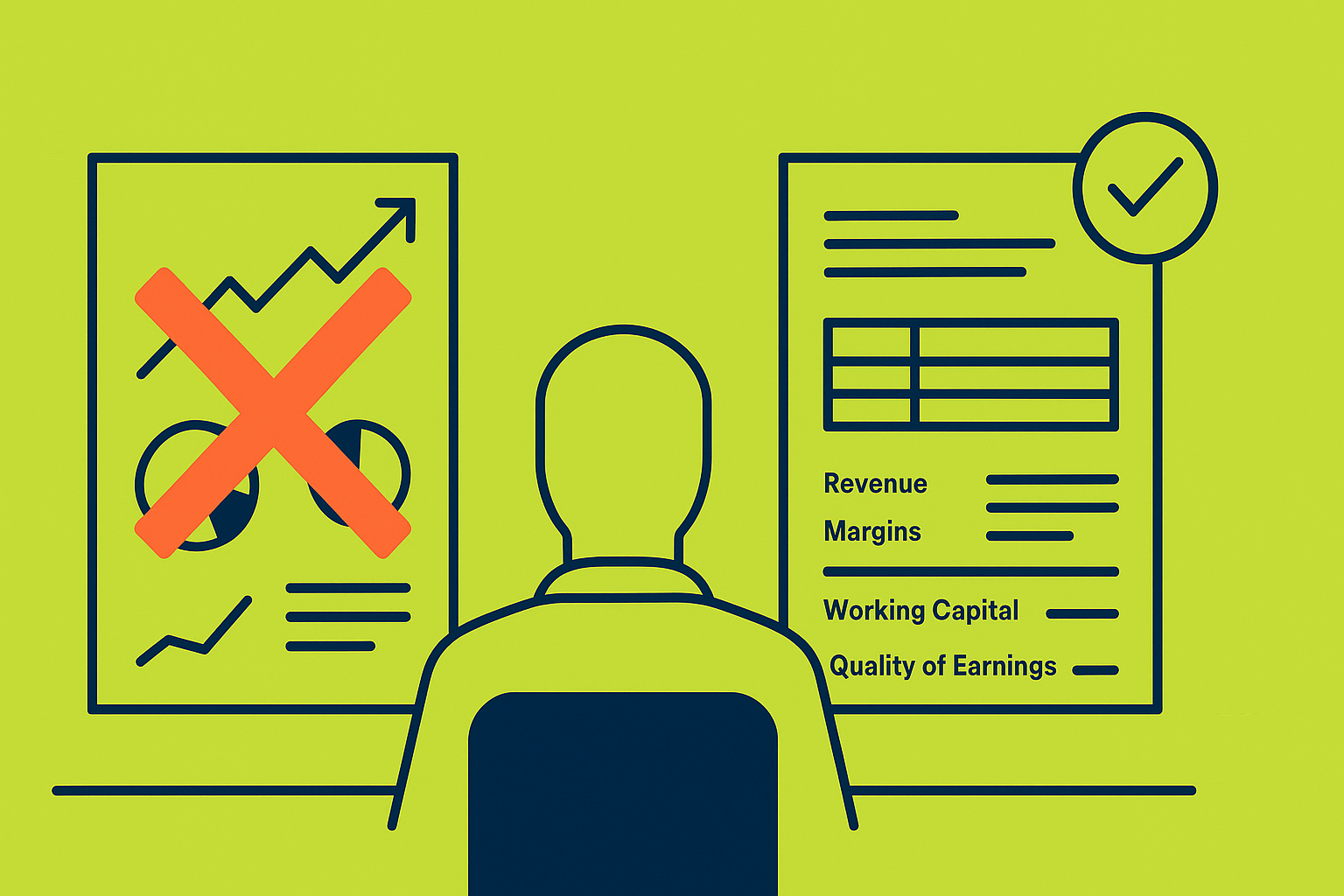
    This is why most deals are not won on ambition, they are won on predictability. Buyers are looking for a business that can produce reliable future cash flows, and they examine every detail to determine whether those flows are at risk. They review revenue quality, margin stability, working capital movements and the integrity of financial processes. The more a company can explain, the stronger its position becomes. When reporting is fragmented or assumptions are unclear, buyers begin to apply discounts to protect themselves. Valuation becomes a reflection of uncertainty rather than potential.

    For many companies, the gap between founder expectations and buyer priorities becomes visible only when the deal is already under way. By that stage, it is often too late to correct issues that have been years in the making. Investor ready reporting closes this gap early. It ensures the business can tell a clear story about how it earns money, how it grows and how it manages risk. With this foundation in place, buyers do not just see a business with potential, they see one they can trust.

    The First Red Flag: Black Box Unit Economics

    The earliest sign that a company is not investor ready is surprisingly simple. It is the moment a founder cannot explain how the business makes money at a unit level. Many companies present impressive revenue charts and confident forecasts, yet struggle to articulate the basic mechanics behind profitability. When a founder cannot show how customer acquisition cost compares with lifetime value, or how these metrics improve with scale, investors immediately see a black box. Growth without economic clarity does not build confidence. It creates uncertainty about whether the business can scale without consuming ever increasing amounts of capital.

    Investor ready companies can break down their economics line by line. They can show how much it costs to acquire a customer, how long it takes to recover that cost and why lifetime value reliably exceeds it. More importantly, they can explain how investment will strengthen these economics rather than simply fuel expansion. Investors are not looking for parallel growth lines. They want to see a model where efficiency improves over time and where the unit economics become stronger as the business scales. When these fundamentals are missing, even impressive top line growth becomes difficult to trust.

    Clear unit economics turn a story of growth into a story of scalability. They show investors that the business is more than a set of projections. It is a system that leadership understands and can control. That clarity is often what separates companies that raise capital or exit successfully from those that struggle to justify their valuation.

    The CFO’s Core Pillars of Investor Grade Reporting

    Investor grade reporting is not about having perfect numbers, it is about having a financial foundation that buyers can rely on. The first pillar is clean and consistent accounting. This means monthly closes that are accurate and timely, revenue and cost recognition that follows clear policies, and reconciliations that tie every figure back to evidence. When financial statements are built on discipline rather than last minute adjustments, investors can immediately see that the business operates with control. Predictability begins with process, and process is what separates an investor ready company from one that relies on assumptions.

    The second pillar is the way a company presents and understands its revenue. For many businesses, correcting revenue recognition under standards such as IFRS fifteen is one of the quickest ways to strengthen valuation. When annual contracts are smoothed into monthly recurring revenue and deferred properly, the financial story becomes clearer and more dependable. Buyers pay a premium for revenue that is predictable and visible. They are far less interested in one off spikes that inflate short term performance but hide the true rhythm of the business. A refined revenue model does not just change the numbers, it changes the narrative behind them.

    Finally, investor grade reporting requires consistency in how the future is forecasted and measured. A company that can show several quarters of accurate forecasting sends a powerful signal. It demonstrates that leadership understands the levers of the business and can manage performance with intention. Variance analysis becomes a mark of credibility rather than a technical exercise. When a business can explain both the past and the future with clarity, investors begin to see not only stability but capability. That is what turns reporting into trust.

    Governance, Legal and Operational Infrastructure

    Strong governance is often overlooked during day to day operations, yet it becomes one of the first areas buyers examine. Clean corporate records, documented board decisions, clear employment agreements and well structured cap tables signal that the business has been managed with care. When these documents are incomplete or inconsistent, deals slow down and buyer confidence weakens. The operational reality is that governance work done early saves months of friction during due diligence. It also protects value, because uncertainty in legal or structural matters often results in buyer discounts.

    Legal and contractual hygiene is equally important. Investors want to see that intellectual property is properly assigned, that commercial agreements are signed and stored, and that key customer and vendor relationships are documented rather than informal. For companies in markets where informal agreements are common, this becomes even more critical. A clean legal house tells a buyer that the risks are known and controlled. When it is not clean, the burden sits with them to uncover what may be hidden. That lack of clarity becomes a valuation issue, not just an administrative one.

    Operational readiness ties all of this together. Buyers want to understand how the business runs beyond the founder, whether processes are documented and whether the organisation can sustain performance through a transition. When operations rely heavily on a few individuals or undocumented knowledge, buyers see dependency risks rather than scalability. Governance, legal discipline and operational clarity work together to show that the business is resilient, structured and ready for external scrutiny.

    The Non Negotiable Rule: Operate in a Perpetual Due Diligence State

    If a company plans to exit within the next two years, there is one rule that matters above all others. Operate as if due diligence has already begun. This mindset transforms how the business organises information, documents decisions and monitors performance. Instead of building a data room in a rush, the company maintains a live and structured repository of everything a buyer will eventually request. Financial statements, contracts, tax filings, governance documents and operational policies are updated continuously. Nothing is missing, and nothing requires last minute reconstruction.

    This perpetual state of readiness does more than reduce administrative work. It prevents deal fatigue, a common reason transactions fall apart. When buyers are forced to chase documents or wait for clarification, momentum slows and confidence erodes. A company that can respond quickly and accurately keeps the process moving and maintains control of the narrative. In competitive processes, this can be the difference between securing a premium valuation and losing the interest of a serious buyer.

    Adopting this discipline creates value even without a planned exit. It brings structure to the business, reduces risk and provides leadership with a clear view of its own operations. The companies that succeed in an exit are rarely the ones that start preparing when the opportunity appears. They are the ones that have been ready for months, sometimes years. Operating in a perpetual due diligence state is not about expecting a sale, it is about building a business that is always prepared for one.

    The Exit Timeline

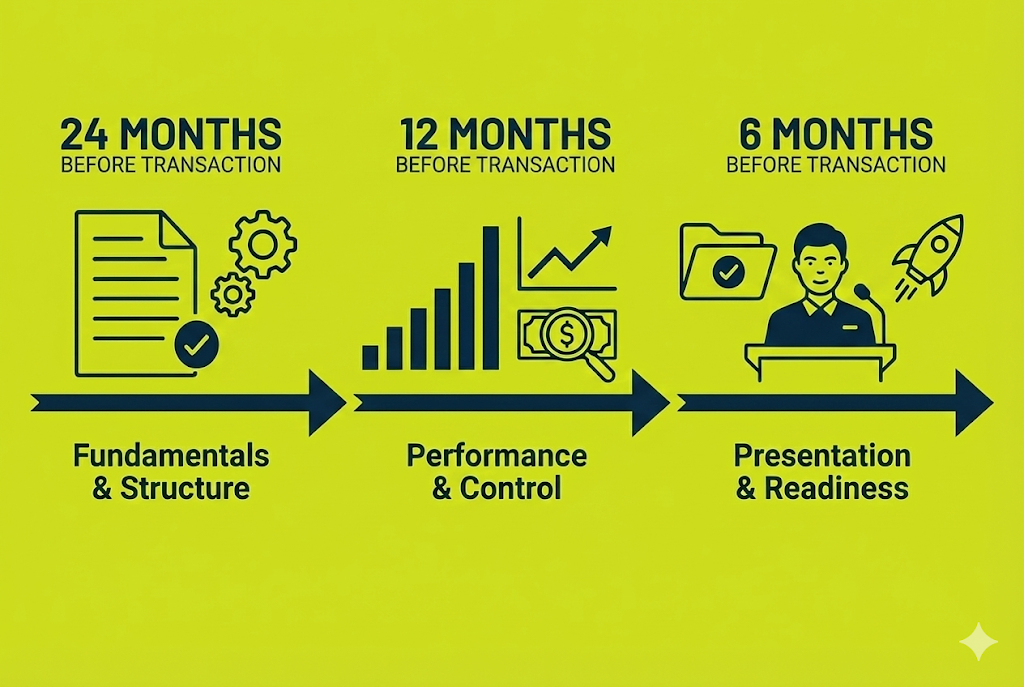
    Exit readiness is not a single project, it is a sequence of disciplines that build on one another over time. The companies that achieve the smoothest transactions begin preparing long before they appoint advisors or engage with buyers. The first stage typically begins around twenty four months before a planned exit. At this point, the focus should be on strengthening the fundamentals: formalising accounting policies, defining KPIs, building clean datasets and establishing reliable reporting cycles. This is also the period to address structural issues such as cap table clarity, contract organisation and intellectual property assignments. Early preparation creates the foundation that later valuation will depend on.

    Twelve months before a potential transaction, preparation shifts from structure to performance. Forecast accuracy becomes essential, working capital movements must be well understood and margins need to be stable and explainable. Many companies also choose to conduct an internal quality of earnings review at this stage. Doing so uncovers the issues a buyer would find and allows time to correct them. This period is also when leadership must demonstrate control. Investors want to see consistent performance and a narrative that shows how the past connects to the future.

    The final six months are about presentation rather than construction. The data room should already be live and complete, the forecast should reflect current performance and financial statements should be audit ready. The focus turns to clarity: refining the equity story, ensuring documentation is accessible and preparing the team for buyer discussions. Companies that reach this stage in a state of readiness enter the market with confidence. They are not reacting to buyer questions, they are leading the conversation. When a business reaches this point, the exit process becomes smoother, faster and far more likely to achieve a premium outcome.

    The Fractional CFO Advantage and the Path to a Confident Exit

    A successful exit is rarely the result of last minute preparation. It comes from years of building discipline into the business, strengthening its reporting, refining its metrics and creating an operation that can withstand scrutiny. This is where the fractional CFO becomes a powerful partner. With experience across multiple industries and transactions, a fractional CFO brings the structure, clarity and independence that most growing companies need. They help leadership see blind spots early, build credible forecasts, formalise financial processes and maintain the investor grade reporting that buyers expect. Above all, they ensure that when the opportunity to exit appears, the business is already prepared for the conversation.

    In many cases, the greatest value a fractional CFO provides is confidence. Confidence for the founder, who knows the story is clear and the numbers are defensible. Confidence for internal teams, who rely on structured processes rather than reactive decision making. And confidence for buyers, who see a business that is transparent, consistent and well managed. When these strengths come together, the exit process shifts from uncertainty to opportunity. Instead of trying to convince buyers of potential, the business can demonstrate readiness, resilience and value.

    Exit readiness is not only about selling a company. It is about building one that is strong enough to choose its own path. Whether the goal is a future acquisition, a funding round or long term stability, operating at investor grade elevates every part of the business. It brings clarity to leadership, discipline to operations and trust to every conversation. With the right financial foundation, an exit becomes not an aspiration, but a natural outcome of well managed performance.

    If you are ready to prepare your business for a confident exit, we would love to help. Book a meeting with our team to explore how Quantro can build the investor grade reporting, forecasting and financial structure your company needs. Not just to complete a transaction, but to build clarity, control and confidence at every stage of the journey.

  • Scaling Pains: When to Upgrade from Bookkeeping to Strategic Finance

    Scaling Pains: When to Upgrade from Bookkeeping to Strategic Finance

    The Hidden Limits of Bookkeeping

    For most growing businesses, bookkeeping feels like enough. The numbers are clean, the accounts reconcile, and reports arrive on time. It creates a sense of order, a comfort in knowing that the financials are under control. But beneath that surface, a quiet problem begins to grow. Bookkeeping tells you where your money went, not where it should go next. It is reflective, not predictive. The moment a company begins to scale, that distinction becomes critical.

    At Quantro, we see this pattern every day. Founders invest in excellent bookkeepers who keep their accounts organised, yet still find themselves unsure about cash flow, margins, or investment timing. The numbers are technically right but strategically incomplete. That is because traditional bookkeeping was never designed to guide decisions, only to record them. When a business starts growing faster than its financial insight, bookkeeping alone stops being a safety net and starts becoming a blindfold.

    Why Bookkeeping Stops Working as You Scale

    Bookkeeping is essential for every business. It records transactions, ensures compliance and keeps financial data organised. For early-stage companies, that foundation is enough; it provides clarity and structure. But as a business grows, the limits of bookkeeping become clear. Recording what happened in the past no longer provides enough information to guide the future.

    The problem is that bookkeeping is reflective, not predictive. It explains where the money went but not what to do next. When revenues rise, costs spread and operations expand, the financial picture becomes more complex. Founders may see growth on paper but still struggle to understand cash flow, profitability or investment timing. These are strategic questions, and bookkeeping alone cannot answer them.

    Many growing businesses try to solve this by improving their systems or hiring more bookkeepers, but the real issue is not the data, it is the absence of analysis. Numbers must be connected, interpreted and projected into future scenarios. That is where strategic finance begins. It transforms financial information into insight, helping leaders plan, prioritise and grow with confidence.

    What Strategic Finance Really Means

    Strategic finance begins where bookkeeping ends. It takes the same financial data that once sat quietly in ledgers and turns it into a forward-looking decision-making tool. Instead of asking what happened last month, it asks what might happen next quarter, and what actions will shape that outcome. It connects financial understanding to business planning, allowing leaders to see the cause and effect of their choices with far greater clarity.

    At its core, strategic finance is about alignment. It aligns numbers with strategy, cash flow with growth, and ambition with capability. It gives decision-makers not only visibility over the current financial position but also the ability to model different futures. This means moving beyond the traditional reports and building tools that allow for forecasting, scenario planning and performance tracking in real time. It is a shift from recording facts to influencing direction.

    At Quantro, this process begins with simplification. We take control of a client’s financial data, clean it, and transform it into a format that is both structured and meaningful. From there, we build insights that help founders focus on what truly drives their business. We show them where they are strong, where they are exposed, and what changes will have the most significant impact on growth. The result is not just a clearer picture of the business, but a plan of action that connects day-to-day operations with long-term goals.

    When done well, strategic finance becomes part of every major decision. It informs hiring plans, pricing strategies, market expansion, and investment choices. It brings the future into every financial conversation, turning uncertainty into structure and instinct into strategy. For growing businesses, this is the difference between reacting to numbers and leading with them.

    The Signs You’ve Outgrown Bookkeeping

    At some point, every growing business reaches a stage where bookkeeping alone no longer provides the clarity it once did. The reports are accurate, but they stop being useful for decision-making. You can see what happened last month, yet you cannot tell why it happened or what will happen next. When financial data becomes purely descriptive rather than strategic, the business has already outgrown bookkeeping.

    One of the most common signs is recurring cash flow pressure despite profitability. Bookkeeping shows profit, but not timing. Without a forward-looking view of payments, costs and collections, even a profitable company can struggle to manage liquidity. This is where strategic finance adds value, linking financial information to business reality and helping founders anticipate challenges before they occur.

    Complexity is another clear signal. As a company expands into multiple products or markets, the data multiplies and simple systems begin to strain. Spreadsheets become slow, errors creep in and financial management turns reactive rather than proactive. When that happens, it is time to move from keeping records to managing the future. Strategic finance brings structure, rhythm and foresight; the tools every scaling business needs to stay in control.

    The Middle Ground — The Rise of the Fractional CFO

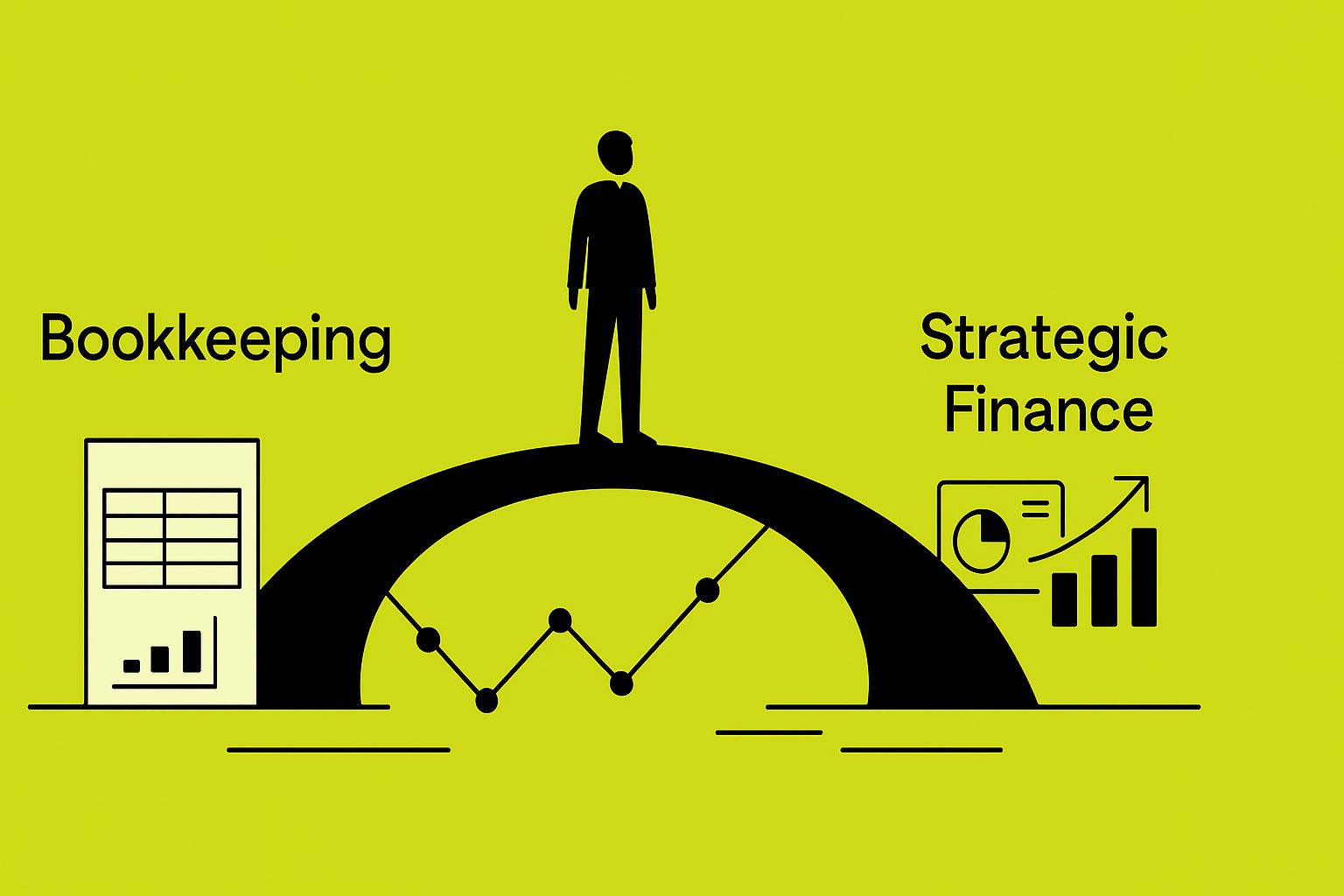
    Between the limits of bookkeeping and the cost of hiring a full-time Chief Financial Officer, there is a valuable middle ground. This is where the fractional CFO comes in. For many growing businesses, it offers the ideal balance between strategic insight and affordability. A fractional CFO provides the same level of financial expertise as a full-time executive but on a flexible, scalable basis that adapts to the pace of growth.

    At Quantro, we find that this model works best for companies entering their next stage of expansion. They have reliable bookkeeping and basic reporting in place but need guidance on how to plan ahead, manage cash flow and invest with confidence. We step in to translate data into strategy, building financial models, forecasts and performance dashboards that help leadership make informed decisions. The founder can stay focused on operations while knowing that the financial direction is sound.

    The advantage of a fractional CFO is that it bridges the gap between control and strategy. It turns raw numbers into insight, provides clarity where there was uncertainty, and creates a rhythm for reviewing and refining performance. Most importantly, it gives growing businesses access to the same strategic finance capabilities as larger organisations, without the full-time cost. For many founders, it is the first real step towards financial maturity.

    ​​Real Impact: From Numbers to Decisions

    The value of strategic finance becomes clear when numbers start driving real change. At Quantro, we often work with companies that are profitable on paper but still face monthly cash flow challenges. The issue is rarely about revenue; it is about timing, structure and visibility. Without a clear understanding of how money moves through the business, even successful companies can find themselves short of liquidity when they need it most.

    By taking a deeper look at their financial data, we uncover patterns that bookkeeping alone cannot show. We analyse payment cycles, supplier terms and spending behaviour, then translate those insights into action. Sometimes that means renegotiating contracts, improving credit terms or adjusting pricing strategy. Other times, it is about helping leadership decide where to invest or when to hold back. The goal is always the same: to turn financial data into meaningful decisions that improve performance.

    For many of our clients, these adjustments have a visible impact within months. Cash positions stabilise, costs reduce and planning becomes more confident. With the right strategy in place, the numbers start to tell a different story: one of control, not uncertainty. Strategic finance transforms financial management from an administrative task into a driver of growth.

    It’s Never Too Early

    Many founders wait too long to bring strategy into their finances. They see CFO support as something for later, when the business is larger or more complex. In truth, the benefits of strategic finance begin long before that stage. Having the right financial insight early allows a company to grow with intention rather than reaction. It ensures that every decision, from pricing and hiring to expansion and investment, is grounded in data, not instinct.

    At Quantro, we have seen how transformative this can be. Businesses that once struggled with cash flow, confidence or direction often find stability within months of introducing a fractional CFO. They gain visibility over their numbers, clarity around their priorities and confidence in their next steps. The result is not just better financial control, but better leadership. Strategic finance turns uncertainty into structure and transforms growth from something that happens to the business into something it actively drives.

    If you are ready to move beyond bookkeeping and bring strategic clarity to your finances, we would love to help. Book a meeting with our team to explore how Quantro can design a tailored financial strategy for your business; one that gives you not just data, but direction, focus and the confidence to grow.

  • Forecasting Beyond the Numbers: How to Build Confidence in Your Financial Plan

    Forecasting Beyond the Numbers: How to Build Confidence in Your Financial Plan

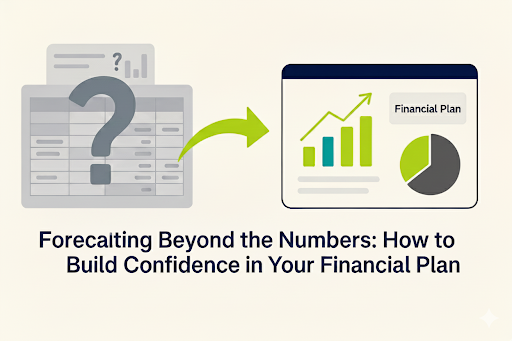
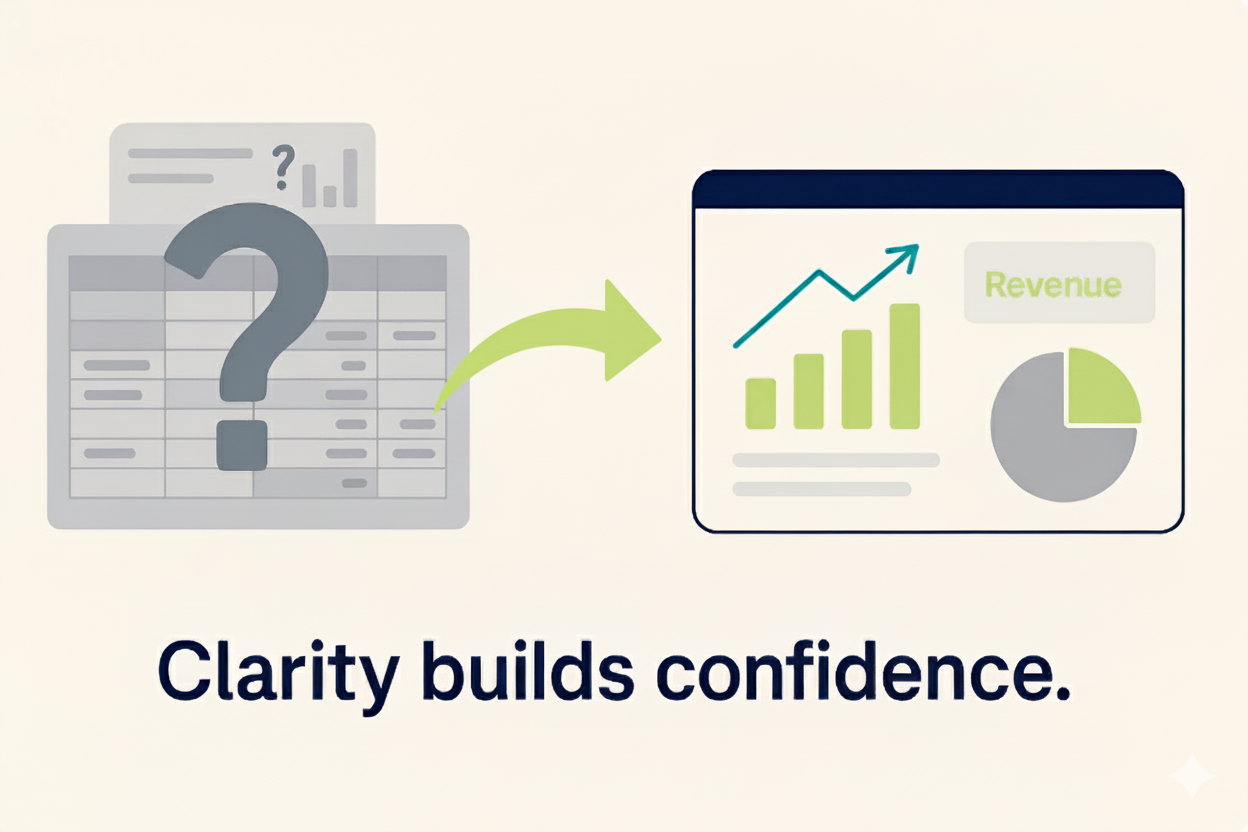
    Forecasting is one of those things every business does, but few truly use well. In many companies, it sits in a spreadsheet, updated once a year and quietly forgotten until something goes off track. It is treated as a technical task rather than a strategic tool. The problem is, when forecasting is done this way, it rarely builds confidence. It tells you what the numbers might look like, but not what they really mean; or how to act on them.

    When forecasting is done properly, everything changes. The process forces you to look closely at what is working, what is not and what challenges are likely to appear in the year ahead. You build a plan that connects numbers to real business decisions; hiring, product development, market entry, marketing spend; and gives leadership a clear view of the road ahead. Done well, forecasting stops being a box-ticking exercise and becomes the foundation for confident decision-making. It is not just about predicting the future, it is about preparing for it with clarity and control.

    Why Numbers Alone Aren’t Enough

    Most forecasts fail not because the maths is wrong, but because the meaning is missing. A spreadsheet full of precise figures can look impressive, yet still fail to tell a useful story. Numbers alone cannot explain why performance looks the way it does or how a business can influence the outcome. Without context, even the most accurate forecast becomes little more than an estimate.

    A strong financial plan begins with conversation, not calculation. It requires the CEO, CFO, management team and finance department to sit down together and build the forecast line by line. Each number should have a story behind it; whether that is a new client pipeline, a cost-saving initiative or a market trend. When stakeholders see that every assumption is supported by data and logic, their confidence grows. They can challenge, question and understand how each figure connects to the bigger picture. That shared understanding turns a forecast into a tool that leadership can rely on, not just report on.

    The False Comfort of “Thin-Air Forecasts”

    Many companies believe they already forecast, but a closer look often tells a different story. Their numbers are built on optimism, not evidence. Growth projections are pencilled in without reference to past performance, customer acquisition costs, or conversion data. Budgets are approved with confidence, yet no one can clearly explain where the figures come from. These “thin-air forecasts” create the illusion of control while quietly eroding trust.

    We saw this first-hand with an e-commerce client whose forecasts looked strong on paper but had little connection to reality. Together, we built a model that linked every stage of the customer journey; from ad spend (€) and cost per click to website visitors, engaged sessions, add-to-cart rates, completed orders and average order value. By grounding the forecast in real data, we could clearly show how each euro spent on marketing translated into traffic, engagement and ultimately sales. The result was not just a more accurate forecast, but a model the team could actually believe in; one that turned guesswork into measurable insight.

    The problem is that when forecasts are not backed by data, the people who build them stop believing in them. Teams begin to re-budget mid-year, adjusting plans as reality catches up; a practice so common it feels normal, yet it defeats the purpose of forecasting altogether. At Quantro, we have seen that the moment a forecast becomes data-driven, everything changes. When every sales target, cost reduction or marketing spend is supported by real numbers and logical assumptions, the plan stops being an exercise in hope and becomes a foundation for decision-making. Forecasts are not just about being accurate; they must also be credible. Only then can they guide a business with confidence.

    What makes this process powerful is that it is not just about data, it is about defining the right metrics. We build tailored KPIs that reflect how each business truly operates, rather than relying on generic benchmarks. For one client, that might mean tracking cost per engaged session; for another, the ratio of repeat orders to ad spend. These bespoke indicators turn a forecast into a living management tool; one that tells the real story of performance and gives leaders the confidence to act.

    Data, Process and Discipline

    A forecast is only as good as the data and process behind it. Without reliable inputs and a consistent structure, even the most sophisticated models produce noise instead of insight. Many companies underestimate how much forecasting depends on discipline. It is not about building a single spreadsheet once a year; it is about creating a repeatable process that collects, tests and refines information over time. When your data is clean and your process is clear, your forecast becomes something the entire organisation can trust.

    Data quality is not just a technical matter; it is a cultural one. Everyone involved, from sales and marketing to operations and finance, must understand their role in maintaining it. Forecasting should sit at the centre of business performance, linking strategic planning, budgeting and reporting. When leadership treats forecasting as an ongoing management tool rather than a compliance task, accountability naturally follows. People start owning the numbers, not just producing them. Over time, this builds a forecasting culture where confidence is not assumed but earned, one accurate, transparent update at a time.

    Communicating Forecasts to Build Trust

    Numbers on their own rarely inspire confidence; it is how you communicate them that makes the difference. A forecast should not only show what the future might look like, but why and how you expect to get there. When stakeholders understand the reasoning behind the numbers, they are far more likely to believe in them. This is why storytelling is just as important as data. Clear visuals, transparent assumptions and a concise narrative turn a spreadsheet into a conversation.

    At Quantro, we find that the best forecasts don’t overwhelm with detail; they focus attention. A few well-chosen charts, a dashboard tailored to the right audience, and a story that connects financial outcomes to strategic choices; that is what builds trust. When you can walk an investor, a board member or a department head through the logic of your forecast and they can see the links for themselves, you move from reporting numbers to leading decisions. The goal is not just accuracy; it is belief.

    Conclusion: Forecasting for Confidence, Not Compliance

    Forecasting is not about predicting the future with perfect accuracy — it is about building the confidence to act in the face of uncertainty. When forecasts are treated as strategic tools rather than accounting exercises, they become a source of alignment across the business. The process itself creates value: teams debate assumptions, test ideas and understand the “why” behind every number. The result is a plan that people believe in, because they helped build it.

    The businesses that forecast best are not the ones with the most complex models, but the ones that use their forecasts to make better decisions. They connect data with insight, numbers with narrative, and plans with people. Whether it is a founder deciding when to hire or a CFO planning for growth, confidence comes not from having all the answers, but from knowing your assumptions are sound. A good forecast does not just measure progress; it gives you the clarity and courage to move forward.

    If you are ready to turn your forecasts into a tool for confident decision-making, we would love to help. Book a meeting with our team to explore how Quantro can build a model tailored to your business; one that gives you not just numbers, but clarity, control and confidence.

  • From Metrics to Meaning: How to Prioritise the KPIs That Really Matter

    From Metrics to Meaning: How to Prioritise the KPIs That Really Matter

    The KPI Paradox

    Most businesses today are swimming in data. Dashboards, trackers, and reports arrive with clockwork precision; yet the clarity they’re meant to bring often remains elusive. The irony is hard to miss: the more metrics we have, the less we seem to know what really matters. In a world obsessed with numbers, many teams mistake measurement for meaning.

    At Quantro, we’ve seen this paradox play out countless times. Teams report diligently, charts look impressive, but the insights stop at the surface. The problem isn’t a lack of discipline; it’s a lack of direction. Metrics have become an end in themselves rather than a tool for decision-making. The real work begins when you move beyond tracking to interpreting, when data stops being a scoreboard and becomes a compass. That’s the shift; from metrics to meaning.

    Lesson 1: One Size Doesn’t Fit All, Context is Everything

    When it comes to KPIs, copying what others measure is one of the fastest ways to lose focus. Every business has its own rhythm, challenges, and market dynamics. What makes sense for one company might be completely irrelevant for another. It sounds simple, but in practice, this is where many teams go wrong, chasing the metrics that look right instead of those that fit their model.

    When helping a client clarify their market positioning, we quickly saw that standard KPIs like engagement or acquisition were not telling the full story. They showed activity, but not progress. By redefining what success looked like for that business, we were able to build a sharper, more meaningful KPI framework that translated directly into results.

    The takeaway? Context is everything. KPIs are not templates to be copied from someone else’s dashboard. They are reflections of your unique strategy, market, and maturity. Getting them right means understanding the story behind the numbers, and making sure that story belongs to you.

    Lesson 2: Bridge Strategy and Measurement Early

    Good KPIs do not appear out of thin air. They are built on strategy, not spreadsheets. Before you can decide what to measure, you need to understand what the business is really trying to achieve. That is why, for us, KPI definition starts during onboarding, not after. Every new client conversation begins with one question: Where do you want to be, and how will we know when you are getting there?

    This discussion helps align short-term progress with long-term vision. Some metrics need to show quick wins, while others must track structural change over time. If you only measure short-term outputs, you risk chasing activity without creating real momentum. If you focus only on long-term outcomes, you lose visibility on the smaller signals that show you are on the right track. The art lies in connecting the two.

    When done properly, KPIs become a shared language between the client and the team. They help both sides see the same reality, anticipate issues earlier, and celebrate meaningful progress rather than arbitrary numbers. The result is not just better reporting, but better collaboration, built on a clear line between intent and impact.

    Lesson 3: Make It Measurable, or Don’t Track It

    If a KPI cannot be measured, it cannot be compared, and if it cannot be compared, it cannot be improved. That is a principle we hold firmly to. Data should not only describe performance but make it possible to see whether progress is real. Vague objectives like “better customer experience” or “stronger brand awareness” sound strategic, but without a way to measure them, they rarely lead anywhere meaningful.

    There are ways to bring even soft metrics into focus. We often rely on surveys, operational reports, website tracking data, and direct customer feedback to turn intangible goals into quantifiable signals. The aim is to create consistency between reporting periods, so what you measure today can be evaluated against what happened last month or last quarter. That consistency builds credibility and helps everyone see whether strategy is working.

    Metrics without measurement are opinions. Metrics with clarity are proof. The more measurable a KPI is, the easier it becomes to act on it, and action is where data starts to matter.

    Lesson 4: Focus on KPIs That Drive Change

    Not every KPI deserves your attention. Some metrics exist simply because they are easy to track, not because they lead to improvement. A good KPI should trigger a decision or inspire an action. If it cannot, it does not belong on your dashboard.

    Too many teams collect data they cannot influence. They measure outcomes that look impressive but do not tell them what to do next. The problem with this is simple — numbers without levers create frustration. You see movement, but you cannot cause it. Instead, build your KPI set around areas where your choices, strategies, and behaviours can make a difference.

    Ask a simple question when reviewing each KPI: Can we change this? If the answer is no, replace it with something you can. Sometimes that means letting go of long-standing metrics that no longer serve your goals. It can be uncomfortable, especially when stakeholders are attached to them, but irrelevant KPIs drain focus and waste energy.

    The goal is not to track everything, but to track what drives change. When every metric has a clear link to action, you move from reporting performance to shaping it; and that is where real growth begins.

    Lesson 5: From Reporting to Real Impact

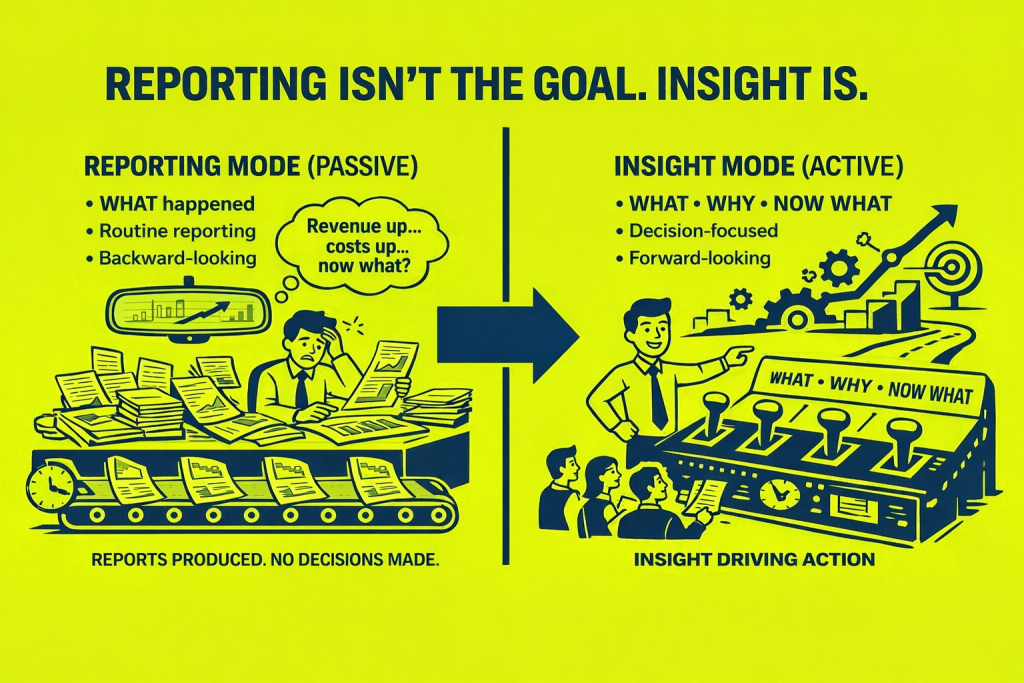
    In most businesses, reporting is seen as the finish line. The numbers are collected, the graphs are built, and the meeting ends with a slide deck. But that is only a fraction of the work. At Quantro, we see reporting as the starting point for strategic change, not the end of a process.

    Data by itself does not create impact. Interpretation does. The real value of KPIs comes when they shape the conversations that follow. When a founder rethinks pricing because customer acquisition costs are creeping up, or when management reallocates budget after spotting a drop in conversion rates. These are not data points; they are decisions, and that is where performance begins to shift.

    As technology and AI automate the mechanical side of reporting, the human role becomes even more important. Anyone can produce a dashboard; few can translate that dashboard into meaningful direction. The difference lies in understanding why the numbers look the way they do, and what to do about it.

    Every report should lead to a decision. Every decision should tie back to a KPI. That is how you close the loop between information and execution; and how reporting evolves from routine to real impact.

    Conclusion: Meaning Over Measurement

    KPIs are not just a way to keep score, they are a way to stay aligned. When chosen carefully, they connect strategy, behaviour, and outcomes, giving teams a shared understanding of progress. When chosen poorly, they create noise, confusion, and misplaced effort. The difference lies in how intentionally they are defined and how consistently they are used to guide decisions.

    The goal is not to measure everything that moves, but to focus on what truly matters. The right KPIs tell a story, one that explains where you are, why it matters, and what comes next. When that story drives action, data stops being a distraction and becomes a source of direction.

    At Quantro, we believe the future of reporting is not about faster dashboards or prettier charts, but about meaning. Businesses that learn to turn numbers into narrative will always make better, faster, and more confident decisions, because in the end, metrics only matter when they lead to movement.

  • From Chaos to Clarity: How an fCFO Transforms Your Business

    From Chaos to Clarity: How an fCFO Transforms Your Business

    When most business leaders hear the term fractional CFO, they picture someone who builds budgets, forecasts revenues, and keeps an eye on cash flow. While those tasks are important, they only scratch the surface of what a true fractional CFO (fCFO) brings to the table. The real value lies not in spreadsheets alone, but in helping a business navigate growth, complexity, and strategic decisions at the highest level.

    At Quantro, we see the fCFO as far more than a financial technician. The right fCFO becomes the CEO’s closest ally, a strategic partner who understands not just the numbers, but also the story behind them. With board-level experience and a track record of scaling businesses, an fCFO can step into the role of co-pilot, guiding leaders through uncertainty, turning gut-feel management into data-driven clarity, and embedding financial rigour into every aspect of the company.

    The Traditional View vs. Reality

    For many business owners, the idea of a CFO is rooted in tradition: someone who builds budgets, monitors cash flow, prepares forecasts, and ensures compliance. This definition is not wrong, but it is limited. It frames the CFO purely as a financial controller, a guardian of the books rather than a driver of growth. Under this lens, a fractional CFO is seen simply as a lighter, part-time version of the same role.

    The reality, however, is very different. A true fCFO is not just a finance professional, they are a business partner at the highest level, as they are business owners themselves. They bring the mindset of a business owner, often with hands-on experience in building and selling companies. This allows them to step into the role of strategist as well as financier, guiding CEOs through operational challenges, employee issues, and even sales and marketing considerations. In practice, an fCFO becomes the right hand of the CEO, contributing to both financial stability and holistic business growth.

    Differentiating the True fCFO

    Not all fractional CFOs are created equal. Many professionals in the market position themselves under the same title but only deliver the basics: finance-focused oversight, cash flow monitoring, and compliance reporting. While useful, this narrow view doesn’t unlock the full potential of what a fractional CFO can do. It risks reducing the role to a part-time accountant with a new label, rather than a high-level strategic leader.

    The Quantro approach is different. A true fCFO embeds within the business, operating at the same strategic level as a full-time CFO with board experience. That means understanding how the board thinks, what investors need to see, and how to present information in a way that builds confidence and clarity. More importantly, the role extends beyond finance into every part of the company: marketing, sales, operations, and performance. By building company-wide KPIs, not just financial metrics, the fCFO ensures that every department is aligned, measurable, and accountable. This integration is what allows businesses not only to grow, but to scale sustainably.

    Trust, Accountability & Communication

    Trust is the foundation of any effective CFO–CEO relationship, and it is especially critical when the role is fractional. Unlike a full-time executive embedded in the business daily, an fCFO must create confidence quickly and sustain it over time. This begins with open communication being available when urgent issues arise, whether by phone or instant message, while also establishing structured rhythms for deeper discussions.

    At Quantro, we build trust through a clear cadence: weekly strategy calls to discuss challenges and opportunities, paired with monthly reviews that present results, key wins, and actionable next steps. This routine is more than reporting; it is about creating accountability. Many founders operate in isolation, making it easy to lose focus or drift from strategic priorities. By holding them accountable to agreed actions week after week, the fCFO becomes more than an adviser, they become a reliable partner, a sounding board, and often the only person ensuring the CEO is not alone in driving progress.

    Case Study: From Chaos to Growth

    One of the clearest examples of the power of a fractional CFO comes from our work with an over 100+ people company generating more than 8 digit million in annual revenue. On the surface, this was a successful business. Underneath, however, it was running blind: no proper reporting, no departmental visibility, and no reliable way to assess performance. Decisions were made on instinct, leaving leadership unable to identify bottlenecks or allocate resources effectively.

    When Quantro stepped in, we stripped everything back and rebuilt the reporting framework from the ground up. We introduced a comprehensive dashboard that, for the first time, gave the business full visibility into every department’s P&L. Suddenly, the leadership team could see where money was being made, where it was being lost, and which areas were dragging performance down. This clarity transformed decision-making. Within 12 months, bottlenecks were removed, accountability was embedded, and the company experienced significant growth, all because visibility turned into action.

    When to Bring in an fCFO

    The right time to bring in a fractional CFO often comes earlier than many founders expect. Businesses usually wait until they are in distress, struggling with cash flow, facing investor scrutiny, or overwhelmed by rapid growth. Yet the most value is unlocked when an fCFO is introduced proactively, to prepare the foundations before challenges escalate.

    Clear warning signs include a lack of visibility into performance, reliance on gut-feel decision-making, or financial reports that don’t explain the real story of the business. Other triggers are external: preparing to raise capital, planning for a merger or acquisition, or scaling operations into new markets. In all these cases, a fractional CFO provides board-level expertise at a fraction of the cost of a full-time hire, with the flexibility to scale involvement up or down as the business evolves. The result is senior strategic leadership without the long-term overheads.

    Conclusion

    A fractional CFO is not just a financial expert hired to tidy up the books, they are a strategic partner who helps shape the future of the business. By embedding into the organisation, aligning every department to measurable KPIs, and bringing board-level insight, the fCFO ensures that leaders have both clarity and confidence in their decisions. This role bridges the gap between numbers and strategy, ensuring that financial intelligence translates into sustainable growth.

    For founders and CEOs, the real value lies in partnership. A true fCFO is not only a guardian of cash flow and profitability but also a co-pilot, someone who understands the pressures of leadership, holds you accountable, and helps transform vision into execution. At Quantro, we believe this blend of financial rigour and strategic foresight is what allows businesses to scale with resilience. If your company is ready to move from instinct-driven decisions to data-powered growth, partnering with an fCFO may be the smartest next step.

  • Cash Reserves: How Much Should Your Startup Really Hold?

    Cash Reserves: How Much Should Your Startup Really Hold?

    Determining how much cash reserves a startup should maintain is a critical aspect of financial management that can influence the long-term success and stability of the business. Cash reserves act as a financial buffer, providing the security to handle unexpected expenses, economic downturns, and growth opportunities. The global pandemic is a prime example of unexpected challenges necessitating cash reserves. Striking the right balance between maintaining sufficient reserves and investing back into the business is an ongoing challenge for many startup founders. This article explores various strategies and considerations for determining the appropriate amount of cash reserves for your startup, drawing on personal experiences and industry-specific insights.

    Financial planning must be both strategic and flexible. Factors such as industry-specific needs, the startup’s stage, and the overall economic climate significantly shape the approach to cash reserves. While conventional wisdom suggests maintaining three to six months’ operating expenses, many startups find their unique circumstances require more tailored strategies. Let’s dive into the guide to help startups navigate the complexities of cash reserve management.

    Understanding Cash Reserves

    Cash reserves refer to the funds a business keeps readily available to meet short-term and emergency needs.

    These financial resources provide a financial cushion, ensuring that the business can continue operations even in the face of unexpected challenges such as sudden drops in revenue, unexpected expenses, or economic downturns. Cash reserves are typically held in liquid forms, such as savings accounts or money market funds, which can be quickly accessed when needed. The benefit of having the idle cash into savings accounts or money market funds is that you get a return of around 5%. So, despite maintaining money to provide stability and security, allowing the business to navigate through difficult periods without the immediate need to secure additional funding, you can make some extra revenue and cash.

    For startups, having adequate cash reserves is particularly crucial. Unlike established businesses, startups often face higher levels of uncertainty and volatility. They might not have consistent revenue streams or long-standing credit lines to fall back on. With cash reserves, startups can weather short-term financial storms and avoid making hasty decisions under pressure, such as taking on high-interest debt or cutting critical expenses. The biggest problem when you require immediate cash from loans is the high interest you will pay on those debts.

    As those are close to emergency funds having 20% interest. If things are not going well, you will be lucky to get one from a bank. So, to avoid that, you should always be prepared for the worst and have credit facilities or loans before you need them. Additionally, cash reserves can provide the flexibility to seize unexpected opportunities, such as investing in new technology or expanding operations, which can drive long-term growth and success.

    Do you have enough cash?

    Managing cash flow in a startup always balances, ensuring financial security and making strategic investments for growth. Drawing from personal experience, it’s clear that determining the right amount of money to hold as cash reserves versus what to invest is influenced by numerous factors. For example, understanding your base revenue, confirmed revenue and fixed costs is crucial.

    In service-based businesses, dealing with clients and employees with specific notice periods adds another layer of complexity. As a rule of thumb, maintaining reserves equivalent to three times your monthly fixed expenses can provide a sufficient buffer.

    This approach proved effective during the tech bubble, offering enough time to recover from bad sales periods while keeping funds in high-interest liquidity accounts to avoid idle cash losing monetary value.

    Lessons Learned

    The importance of having an adequate cash reserve was underscored during the tech bubble when significant losses were incurred. This situation highlighted the necessity of proactive financial planning and the ability to foresee potential bumps on the road. Faced with $725k in losses over 15 months, it became evident that cash reserves were insufficient to cover both expected and unexpected costs, leading to the need for expensive short-term loans. To prevent such shortfalls in the future, we established a credit facility under favourable terms and developed alternative credit methods. This proactive approach ensures the business is better prepared for financial challenges, reinforcing the importance of maintaining robust cash reserves.

    Industry-Specific Factors

    Every industry demands different strategies for determining the right amount of cash reserves for a company. For instance, consider a manufacturing startup that relies heavily on raw materials and inventory management. Such a business must maintain a substantial cash reserve to cover the costs of purchasing materials in bulk, which can be subject to price volatility. Additionally, the manufacturing process often involves significant lead times, and any disruption in the supply chain can delay production and sales. Therefore, maintaining a cash reserve that covers several months of operating expenses can help the business manage these uncertainties and ensure smooth operations even when faced with supply chain disruptions or sudden increases in material costs.

    Additionally, whether a startup is funded or bootstrapped is crucial in determining its cash reserves. Funded startups may have more leeway in maintaining lower reserves due to their access to additional funding rounds, whereas bootstrapped startups might need to be more conservative.

    Moreover, the business stage—whether in the growth or scaling phase—also dictates the amount of cash reserves needed. Startups in the early growth phase might require larger reserves to navigate the unpredictability of market conditions and operational challenges. For example, a tech startup focusing on rapid product development and market entry will need substantial reserves to cover R&D costs, marketing expenses, and initial operational outlays.

    On the other hand, a startup in the scaling phase, with more predictable revenue streams and established customer bases, might manage with relatively smaller reserves but should still be prepared for any unexpected expenses or opportunities. Understanding these industry-specific nuances is essential for tailoring a cash reserve strategy that aligns with the company’s unique needs and risks.

    Balancing Cash Reserves with Investment Cash Flow

    Balancing the need for cash reserves with the potential opportunity cost of not investing those funds back into the business is a complex but crucial aspect of financial management. One effective approach to this balancing act involves evaluating potential investments based on their return on investment (ROI) and payback periods.

    For instance, if an investment promises a high ROI but has a slow payback period, it requires careful consideration to ensure it doesn’t jeopardise the company’s financial stability. Conversely, opportunities that offer a decent ROI with a quick payback period can be more appealing, especially if they don’t significantly impact liquidity. This method ensures that funds are preserved for emergencies and utilised effectively to drive business growth.

    In practice, having idle cash reserves might earn around 5% per annum, which is not just about the returns but also about the safety and liquidity it provides. Highly liquid investments, such as Fidelity Cash Reserves, are short-term investment options that provide quick access to financial resources without the need for a large amount of cash on hand. However, when the business experiences significant profits, making a quick investment that yields more than 5% in a short period can be a no-brainer. The key is to create detailed risk assessments, including good, bad, and average scenarios, and develop a plan for each.

    This involves modelling potential outcomes and ensuring that even in the worst-case scenario, the business can continue to operate smoothly. By balancing immediate cash needs and long-term investments, startups can ensure they are well-prepared for opportunities and challenges.

    Cash Reserve Adapting to the Current Economic Climate

    Given the current economic climate, the conventional wisdom of maintaining three to six months of operating expenses in cash reserves is generally sound. Reviewing financial statements to determine the appropriate amount to be placed in a cash reserve is crucial. Still, adjustments may be required based on specific circumstances. Startups must consider the overall economic environment, including inflation rates, interest rates, and market volatility. Because that might challenge their ability to raise money.

    In today’s context, where economic conditions can be unpredictable, a cash reserve covering at least three to six months of expenses can provide a necessary buffer. However, it might be wise to maintain a more substantial reserve for startups that can raise funds easily or are in a high-growth phase. Flexibility is key in adapting cash reserve strategies to the current economic landscape. For instance, if significant investment opportunities promise quick returns, startups might choose to reduce their cash reserves temporarily, provided they have contingency plans in place. Establishing credit facilities or maintaining relationships with investors can ensure that additional funds can be accessed quickly.

    Additionally, monitoring economic indicators and being prepared to adjust reserve levels accordingly can help startups effectively navigate uncertain times. By continuously reassessing their financial strategies and adapting to changing conditions, startups can balance maintaining financial security and pursuing growth opportunities.

    Closing Thoughts for Cash Reserve Amount

    Determining the right amount of cash reserves for your startup is a critical aspect of financial management that requires careful consideration of various factors. From understanding the basic purpose and importance of cash reserves to tailoring strategies based on industry-specific needs and economic conditions, maintaining adequate reserves is essential for navigating uncertainties and seizing growth opportunities. Reviewing financial statements for each accounting period helps determine the size of a cash reserve by analyzing the previous year's cash flow statement to calculate the monthly cash burn rate and leveraging the company's projected cash flow and budget. Balancing the safety of cash reserves with the potential returns from investments involves strategic planning and continuous reassessment to ensure your startup remains resilient and poised for success.

    Partnering with experts like quantro.gr can provide the guidance and resources needed to develop effective cash reserve strategies and capitalise on growth opportunities. With tailored financial plans, access to funding, and robust risk management frameworks, startups can confidently navigate the complexities of financial management. By maintaining a proactive approach and leveraging expert support, your startup can achieve financial stability and drive long-term growth.

    *Thumbnail image from September 3, 2025

  • Future-Proofing Your Business: Strategies to Prevent Cash Shortages

    Future-Proofing Your Business: Strategies to Prevent Cash Shortages

    The CFO’s Role in Cash Flow Management

    Cash flow is the lifeblood of any business, yet many companies still fail to manage it effectively. While revenue growth and profitability are key financial goals, a company can be profitable on paper and still run out of cash. This disconnect is one of the most common reasons businesses struggle, especially in uncertain economic environments. In 2025, with rising costs, shifting market conditions, and evolving financial technologies, CFOs must take a more proactive approach to cash flow management. Simply monitoring cash flow is no longer enough—CFOs must actively shape financial strategy to ensure liquidity and stability.

    The role of the CFO has always been the same, add wealth to the shareholders, protect the business assets and strategic cash flow optimisation. This includes forecasting cash needs, ensuring receivables and payables are well managed, leveraging automation, and securing financing before it’s needed. Without a structured, forward-thinking approach, companies risk cash shortfalls that can stall growth or even lead to business failure.

    The Biggest Cash Flow Mistakes CFOs Must Avoid

    Effective cash flow management starts with understanding the common mistakes that put businesses at risk. Many companies fail not because their business model is flawed, but because they don’t manage liquidity effectively. Here are three of the most common cash flow mistakes businesses must actively avoid.

    1. Mistaking Profit for Cash Flow

    One of the most fundamental misconceptions among founders is assuming that profit equals cash flow. In reality, profitability and liquidity are two entirely different things. A business might show strong profits on its P&L, but if revenue is tied up in unpaid invoices, excessive inventory, or delayed payments, it can still struggle to cover essential operating expenses like payroll and rent.

    CFOs must ensure that cash flow is tracked separately from profit and that businesses have real-time visibility into their actual liquidity. This requires strong accounts receivable processes, optimised payment cycles, inventory management based on ROI and frequent cash flow forecasting. Without these safeguards, businesses can face unexpected cash shortages, even if their financial statements look strong.

    2. Failing to Secure Financing Before It’s Needed

    Many companies wait until they’re in a cash crunch to start looking for financing. The problem? Banks and investors are more willing to lend when you don’t desperately need it. CFOs must take a proactive approach to credit management, ensuring they secure lines of credit, business loans, or investor backing during stable periods, rather than scrambling for capital when the business is under pressure.

    A well-prepared financing strategy means having pre-approved credit facilities, strong banking relationships, and contingency plans in place. This ensures that businesses aren’t forced into poor financial decisions—such as selling equity at a discount or taking on expensive short-term debt—just to cover operational costs.

    In addition, CFOs can forecast whether financing is more cost-effective than an investment based on ROI. For example, a business may secure financing at a 5% interest rate to bulk purchase inventory at a 10% discount, resulting in a net financial gain. Strategic use of financing can improve cash flow efficiency, allowing businesses to leverage opportunities without depleting working capital.

    3. Overlooking ROI and Payback Periods on Investments

    Another major cash flow mistake is failing to evaluate the return on investment (ROI) and payback period before spending capital. Many businesses invest heavily in marketing, hiring, or product development without a clear timeline for when those investments will generate returns. This can lead to capital being locked up in low-yield projects, putting unnecessary strain on working capital.

    CFOs must ensure that every major investment is assessed based on ROI and payback period. This means prioritising high-impact initiatives that deliver measurable returns in a reasonable timeframe. By maintaining a disciplined approach to capital allocation, businesses can avoid unnecessary cash flow risks and ensure that every pound spent contributes to long-term financial stability.

    5 Strategies to Improve Cash Flow

    CFOs and finance departments must take a proactive approach to cash flow management, and we gave practical examples of how to improve cash flow, ensuring businesses are not only profitable on paper but also financially liquid and operationally stable. Here are five key strategies businesses can implement to strengthen cash flow in 2025.

    1. Proactive Accounts Receivable (AR) Management

    One of the most important elements of cash flow is cash intake, meaning CFOs or finance departments in bigger businesses need to stay on top of receivables. A business cannot afford to simply assume invoices will be paid on time—it must implement a structured process to track and accelerate collections. Weekly AR reports should be reviewed with the teams, project managers (PMs), finance, or account managers. The goal is to keep cash moving consistently while maintaining positive client relationships.

    A best practice is to tailor the AR follow-up process to the client. In some instances, the growth director (client partner) drives the relationship, in others, the project manager (PM) is responsible, and in some cases, the finance team takes the lead. Knowing which approach works best for each client ensures a firm but collaborative collections process. By embedding clear AR policies and regular communication, businesses can minimise late payments, avoid cash flow gaps, and strengthen financial predictability.

    2. Optimising Accounts Payable (AP) for Stronger Working Capital

    On the flip side of receivables is accounts payable, which, if managed strategically, can significantly improve cash flow. Instead of paying invoices immediately upon receipt, businesses should implement a structured AP process that aligns payments with incoming receivables. By scheduling payments once or twice per month—around the time most receivables are collected—CFOs can maintain a healthy working capital buffer while avoiding unnecessary cash shortfalls.

    Another strategy is negotiating extended payment terms with suppliers. If a business secures 45- or 60-day payment terms while collecting receivables within 30 days, it creates a natural cash flow advantage. However, this must be balanced carefully—maintaining strong supplier relationships is just as important as optimising cash flow. Communication is key, ensuring suppliers understand that extended terms are part of a long-term, mutually beneficial partnership.

    3. Leveraging AI and Automation for Real-Time Cash Flow Monitoring

    AI is transforming cash flow management, allowing CFOs to automate forecasting, track variances, and even execute intra-company cash transfers across multiple accounts in real-time. AI-driven financial tools can detect patterns, flag potential shortfalls, and recommend adjustments before liquidity issues arise.

    However, while AI enhances efficiency and accuracy, it cannot replace human judgment when it comes to strategic financial decisions. For example, AI may recommend delaying a supplier payment based on cash flow projections, but only a CFO understands the context of supplier relationships and the strategic implications of payment delays. The best approach is to use AI for automation and insights, while keeping final decision-making in human hands.

    4. Offering Client Discounts for Early Payments

    A powerful yet often overlooked strategy to improve cash flow is offering discounts to clients who pay in advance or within shorter payment terms. This approach incentivises faster collections, ensuring that cash comes in sooner rather than being tied up in long payment cycles.

    For example, a business might offer a 2% discount for payments made within 10 days instead of the standard 30-day term. While this means slightly reducing revenue on an invoice, the benefit of having immediate cash available often outweighs the discount given. Having strong cash flow early allows the business to reinvest in growth, secure bulk purchasing discounts, or avoid needing external financing.

    However, CFOs must ensure that discounts are structured properly. They should only be offered to financially reliable clients and should be calculated so that the benefit of receiving cash early outweighs the cost of the discount. Additionally, these incentives should be used selectively to target key clients who contribute significantly to cash flow, rather than being applied across all invoices.

    5. Negotiating Supplier Discounts for Faster Payments

    Just as businesses can offer clients incentives for early payments, CFOs can leverage faster payments to negotiate better terms with suppliers. Many suppliers offer significant discounts for upfront or expedited payments, which can directly improve profitability and reduce overall costs.

    For example, a company might negotiate a 5-10% discount in exchange for paying invoices within 10 days instead of the usual 30- or 60-day terms. While this means cash leaves the business sooner, the savings gained from these discounts can offset the impact of reduced working capital. This strategy works particularly well for businesses with excess cash on hand or those that can use the savings to increase margins or reinvest in growth initiatives.

    However, this approach should be used strategically. CFOs must balance early payment discounts with maintaining sufficient liquidity for daily operations. This strategy is most effective when businesses have a clear view of their cash flow projections and can identify which supplier discounts will generate the greatest financial benefit. By securing high-impact cost reductions, CFOs can strengthen cash flow indirectly by lowering overall expenses, improving the company’s financial position without taking on additional revenue risk.

    The CFO’s Role in Financial Resilience

    In 2025, CFOs must take a proactive and strategic approach to cash flow management to ensure business stability and sustainable growth. Simply tracking financial performance is no longer enough—companies must actively optimise cash flow through faster collections, smarter payment strategies, and cost-saving initiatives.

    By implementing structured accounts receivable follow-ups, aligning payables with cash inflows, leveraging AI for better forecasting, offering client discounts for early payments, and negotiating supplier discounts for faster payments, CFOs can strengthen liquidity and improve working capital. These strategies create a self-sustaining cash flow cycle that supports both day-to-day operations and long-term business expansion.

    Ultimately, cash flow is more than a financial metric—it’s a strategic tool that determines whether a business thrives or struggles. With a well-structured scalable financial plan, as quantro offers we can ensure our businesses that will remain financially agile, competitive, and resilient in an ever-changing market.

    *Image from September 3, 2025

  • How to Build a Scalable Financial Plan for Startups

    How to Build a Scalable Financial Plan for Startups

    Many startups approach startup budgeting reactively, often creating their first scalable financial plan only when they face cash flow issues. Instead of crafting a structured, forward-looking strategy, founders rush to put together a basic Profit & Loss (P&L) statement that reflects what they hope to see—without incorporating key assumptions or data-driven projections. This leads to unrealistic expectations, as the plan assumes best-case scenarios with no room for market fluctuations, operational setbacks, or strategic pivots. Without a scalable financial plan, businesses risk running out of cash faster than expected or misallocating resources to low-impact initiatives.

    A well-structured startup budgeting process should not just be an accounting exercise—it should act as the North Star for decision-making, guiding where to invest resources, when to scale operations, and how to adapt to changing market conditions. Instead of being a static spreadsheet, it should be a dynamic framework that evolves as the business grows. The best scalable financial plans are built around key business goals, helping founders and teams understand how financial decisions translate into sustainable growth. In this article, we’ll break down the core principles of building a scalable financial plan, compare different approaches for VC-backed vs. bootstrapped startups, and explore how AI is transforming startup budgeting while reinforcing the need for human oversight and strategic thinking.

    Core Principles of a Scalable Financial Plan

    A scalable financial plan is built on more than just projections—it requires a solid foundation of assumptions, scenario planning, and cash flow management. Many founders make the mistake of treating their financial model as a fixed prediction rather than a living document that adapts to business realities. A truly effective startup budgeting process starts by defining clear business goals, identifying key revenue and cost drivers, and creating a financial model that evolves alongside the company’s growth. Without this structured approach, startups risk either overspending on unproven strategies or being too conservative and missing growth opportunities.

    Another critical element of startup budgeting is prioritizing cash flow over profitability. Many startups focus on achieving revenue growth, but without proper cash flow management, even the most promising businesses can collapse due to liquidity issues. A scalable financial plan should incorporate burn rate analysis, cash runway projections, and working capital management to ensure the company remains financially stable. Additionally, financial planning must be rooted in real data, not just gut instinct—founders should regularly update their assumptions based on actual performance and market conditions. By embedding these principles into the financial planning process, startups can make smarter investment decisions, allocate resources more efficiently, and build a foundation for long-term scalability.

    How Financial Planning Differs for VC-Backed vs. Bootstrapped Startups

    Not all startups follow the same financial planning approach. The key distinction lies in whether a startup is venture-backed or bootstrapped, as each model comes with different risk tolerances, growth strategies, and cash management techniques. A VC-backed startup typically operates under a growth-first mentality, aggressively investing in hiring, marketing, and product development to capture market share before competitors. These startups often burn cash intentionally in the early stages, with the expectation of securing future funding rounds to sustain operations. In contrast, a bootstrapped startup operates with a cash-conscious approach, prioritizing profitability and self-sufficiency from the outset. Instead of scaling rapidly, bootstrapped startups focus on sustainable growth, ensuring that each investment delivers a clear return.

    For venture-backed startups, startup budgeting focuses on speed and experimentation. Marketing spend is often allocated to paid media, aggressive customer acquisition campaigns, and rapid product iteration. The goal is to identify high-ROI channels before running out of funding, even if it means burning cash in the process. Conversely, bootstrapped startups must plan each investment carefully. With limited funds, they typically prioritize organic growth channels such as SEO, content marketing, and outbound sales, which offer longer-term returns but require patience and consistency. Because they don’t have the luxury of burning cash, bootstrapped startups must always maintain positive cash flow, ensuring that essential expenses—like payroll—are covered every month.

    Making Financial Planning a Team-Wide Effort

    A scalable financial plan should not be created in isolation by the finance team or founders alone. One of the biggest mistakes startups make is treating financial planning as a top-down exercise, where only senior leadership sets the budget while teams simply execute. In reality, financial planning is most effective when it is collaborative, ensuring that each department understands how their actions impact the company's overall financial health. By involving team members in the startup budgeting process, businesses foster accountability, ownership, and strategic decision-making at all levels.

    Every department—whether marketing, sales, operations, or product—should take responsibility for their own budget and understand how their spending decisions contribute to revenue growth and profitability. For example, the marketing team should own their budget allocation, ensuring that ad spend, SEO investment, and outbound campaigns align with the company’s financial goals. Similarly, sales teams should track their cost of acquisition (CAC) and customer retention metrics, ensuring that each deal closed contributes positively to the bottom line. By making financial planning a team-wide effort, startups can create a culture where every team member thinks like a CFO, balancing growth ambitions with financial discipline.

    AI & the Future of Financial Planning: The Balance Between Technology & Human Expertise

    The rise of Artificial Intelligence (AI) in FP&A (Financial Planning & Analysis) is transforming how startups approach startup budgeting and financial decision-making. AI-powered tools can now automate forecasting, detect financial anomalies, and optimise budget allocations, significantly reducing the time spent on manual financial tasks. Machine learning models can analyse historical data, market trends, and customer behaviour to create highly accurate projections, allowing startups to plan with greater confidence. This automation enables founders and finance teams to shift their focus from number-crunching to strategic decision-making, ensuring financial plans are both data-driven and scalable.

    However, while AI enhances financial efficiency, it cannot replace human judgment and business acumen. A scalable financial plan is not just about numbers—it requires context, critical thinking, and adaptability, which AI alone cannot provide. AI-generated forecasts may be statistically sound, but without a deep understanding of the company’s vision, competitive landscape, and operational nuances, they risk being misleading. Founders and finance leaders must leverage AI for data processing and automation while retaining control over strategic decisions that involve risk assessment, market shifts, and business priorities. The key is to embrace AI as a powerful tool while ensuring that human expertise remains the final filter for financial planning and budgeting decisions.

    A Scalable Financial Plan is a Competitive Advantage

    Startups that treat financial planning as a strategic tool rather than a reactive necessity are far more likely to achieve sustainable growth. A scalable financial plan is not just about forecasting revenue and expenses—it’s about aligning financial decisions with business goals, optimising cash flow, and making data-driven investments that maximise returns. Whether a startup is venture-backed or bootstrapped, the key to success lies in understanding its financial levers, planning for different scenarios, and ensuring accountability across teams.

    As AI continues to revolutionise startup budgeting, founders must strike a balance between automation and human expertise. Leveraging AI-powered financial tools can improve accuracy and efficiency, but the final decisions should always incorporate business context, market dynamics, and strategic foresight. Startups that master this blend of technology, financial discipline, and team-wide accountability will be better positioned to navigate challenges, seize opportunities, and scale successfully. The best financial plans are not static—they evolve, adapt, and serve as a North Star guiding every business decision. At Quantro we help you prepare a scalable financial plan that will growth your business.

  • The benefits of data driven growth modelling

    The benefits of data driven growth modelling

    As an operational-minded CFO, I believe Finance needs to be at the heart of the business. It needs to be focused on operations and involved in all departments to truly be able to budget, plan investments, improve and develop people, and grow the client portfolio in order to maintain its financial health. The best way to do that is by building a reliable growth model from start to finish.

    How to create a sophisticated growth model

    Gather data to build the model on

    The way we make decisions at growthCFO is based on looking into validated data. We use platforms that provide us with benchmarks, which allows us to get numerous different kinds of data from our clients, such as the cost of acquisition form, cost of registration, cost of lead, etc., and take into consideration various parameters such as their industry, business model, where your product is based (app or website), geographical location and budget, to provide a more accurate view. These insights reveal very important growth KPIs that we then convert into a model.

    Choose the right metric to start the analysis from

    When we are planning, we don’t start with your typical business-relevant metrics, such as conversions or registrations. We run a regression analysis to find the strongest correlation against your qualified leads, which might be paid media, organic, blog or anything else.

    Use the analysis to get clear predictions

    We take all the data available to us, from blog articles, to subscriptions, monthly posts, paid advertisements, media fees etc., and create a regression analysis model to see what actually drives traffic to your website, and statistically approve those factors when we build our analysis. That way, we have a clear prediction of how many people will visit your website, how many of those will be converted into potential leads, how many of those are qualified leads, and how many of those will close and become your clients. The predicted values produced from the statistical models are accurate compared to the actual values to the level of statistical significance.

    Observe how changing the inputs changes the outcomes

    These inputs are the starting point, and because they are correlated with your top-funnel metric, the outcome changes as well when you change them. It is all automated and built into a dynamic model. Then, we anticipate the investment needed in certain areas to have a certain number of conversions, qualified leads, and new clients. All the models we’ve built are dynamic, including the next 3 years, and are made to be automatically re-forecast based on actual data.

    Using the growth model to plan investments and predict revenue

    At that point, it’s much easier to go into the revenue because you know the average package you have per client and the average price per package. You should know exactly which costs are coming attached to the new clients and the fixed costs and overheads attached to your people. The moment we change our inputs, the entire model changes based on the data and the analysis we made, and we effectively create our P&L and growth model for the future.

    Obviously, some areas are going to have a lag – for example, when you post an article, you don’t expect to have conversions right at that moment. We consider the lag as well. If we change how many articles you post per month in the model, you don’t see the conversion that month or the next, but we definitely see them down the line, and we know how much money to invest in which area.

    Using the growth model for hiring

    The growth model also solves the problem of finding the right balance between overhiring and underhiring. There is a significant correlation between clients and team members. Obviously, every business needs the relevant people to provide high-quality services to their clients. One element of that is quantity and resourcing; the other is to have the right people for the job. With the growth model, we can predict how many clients how much new business you will have and what impact that will have on your revenue. Then automatically predicts how many people you need and what seniority they need to be, so you can be prepared for hiring.

    Another thing to consider when hiring people is time zones if you are working remotely, as many of our clients do. Where to hire people can be a strategically tricky question – a five-hour time difference between clients and team members is a potential problem. By knowing where you can anticipate having your next client, you can be prepared to hire the right people in the right place at the right time – obviously, well ahead of time. 

    What the process of growth modelling looks like

    From our side, this is what the growth modelling process looks like:

    • We run a regression analysis with the existing client data to see what drives the traffic and the correlation between marketing efforts, paid or organic, and qualified leads
    • We use Growth Benchmarks platforms to get the data for growth modelling
    • We compare the data with similar companies in the industry
    • We create the growth model from the data
    • We create and optimise metric-focused actionable strategies 
    • We outperform the benchmark for the metric

    Growth modelling is at the core of what we do at Quantro, both on the client and internally. It lets us accurately predict outcomes, allowing for greater control of our investments, and can be applied to any business to achieve remarkable benefits.