Category: Finance

  • Story Time: How Fractional CFOs Actually Create Value

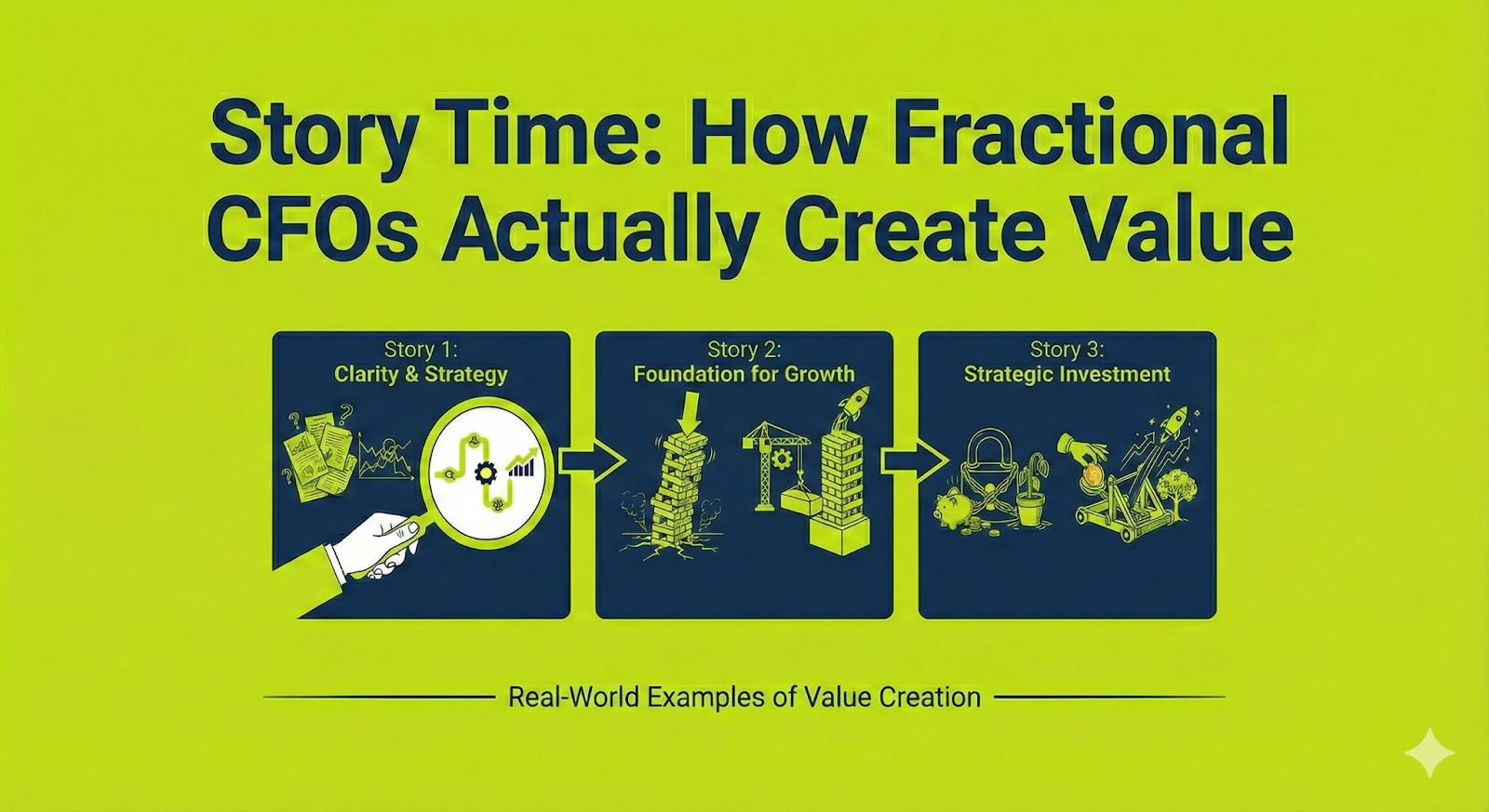
    Story Time: How Fractional CFOs Actually Create Value

    Most founders reach out to a fractional CFO for one simple reason.

    They want to put their finances in place.

    Clean numbers.
    Better reports.
    Fewer unknowns.

    And that makes sense. No business can scale without solid financial foundations.

    But here is the part that often gets missed.

    Finance is not a separate function that sits quietly at the side of the business. It is not a box to tick or a document to sign off once a month.

    Finance sits at the heart of how a business actually operates.

    When you really look at the numbers, you do not just see revenue and costs. You see how work flows through the company. You see where time is being lost, where teams are under pressure, and where decisions are being delayed or avoided.

    That is why a fractional CFO rarely just fixes financial problems.

    By analysing the numbers, we often uncover issues that live deep inside the operations of the business. Hiring decisions that are happening too late. Growth plans that look good on paper but cannot be executed in reality. Investments that are being avoided out of caution, even though they are exactly what the business needs next.

    Below we share three real stories of how a fractional CFO created value far beyond spreadsheets and reports.

    Not by focusing on finance alone.
    But by using finance as a lens to improve the business as a whole.

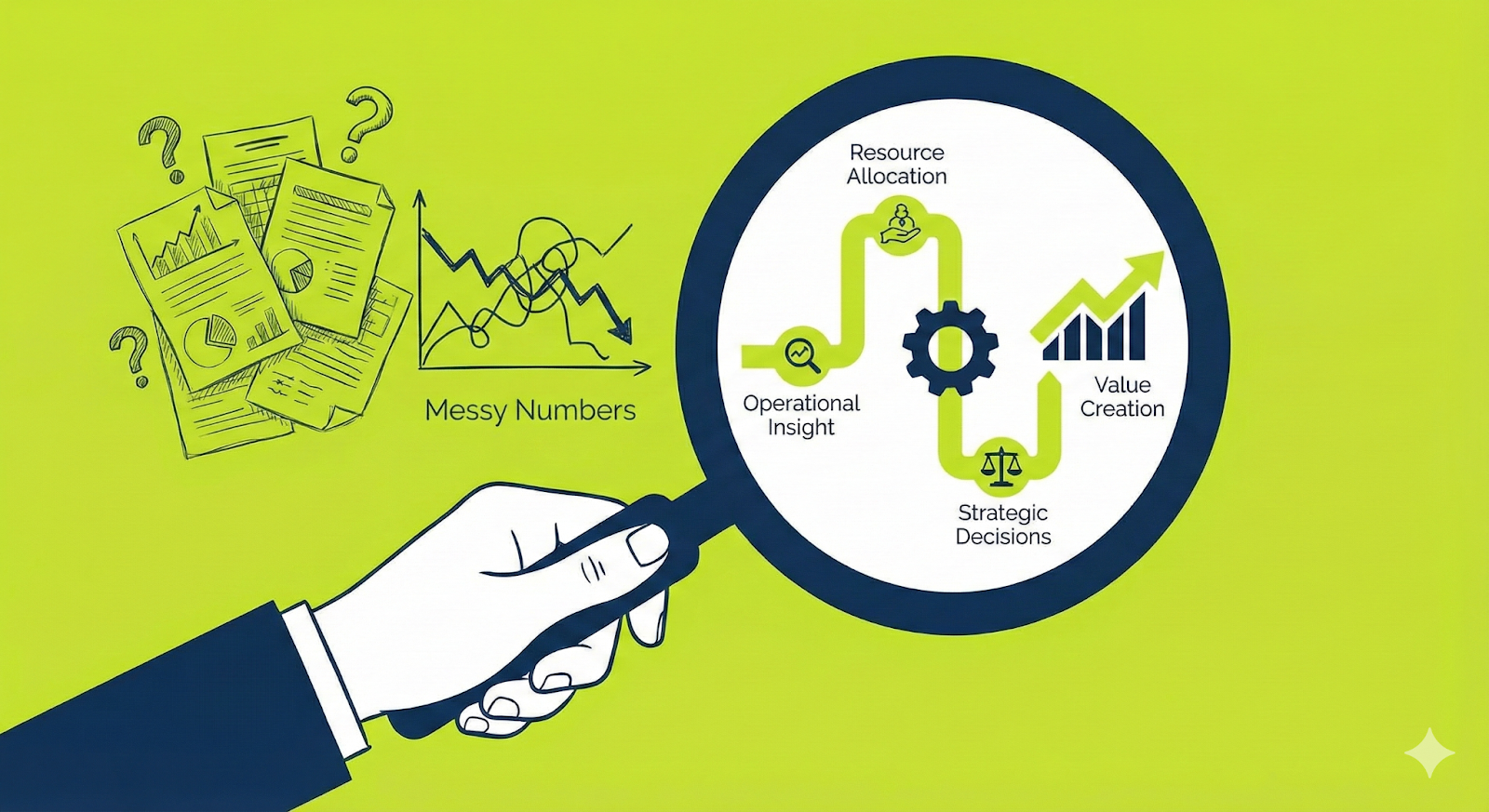
    Story 1: “We Just Need a CFO to Put the Finances in Place”

    This is how the conversation usually starts.

    A founder reaches out and explains that the business has grown quickly. The numbers exist, but they feel messy. Reports are produced, but they are not driving decisions.

    What they ask for is simple.
    Put the finances in place.

    When we joined this business, that was exactly the expectation. Clean up the reporting, create some structure, and make sure everything looks sensible.

    But once we started working through the numbers, it became clear that the problem was not financial accuracy.

    The numbers were telling a different story.

    Margins varied wildly between projects. Certain teams were constantly under pressure, while others had spare capacity. Projects that looked profitable on paper were quietly draining time and energy from the business.

    None of these issues showed up as red flags in the accounting reports. But they were obvious when finance was used as a tool to understand how the business actually operated.

    Instead of focusing purely on reports, we shifted the conversation.

    Why do some projects consistently run over budget?
    Why does hiring always feel late rather than planned?
    Why are some decisions being revisited every month?

    By answering these questions, the founder began to see that finance was not the problem to fix. It was the tool that helped reveal what needed fixing.

    Once finance moved to the centre of the business, operational decisions became clearer. The founder stopped reacting to monthly numbers and started using them to shape how the company ran.

    That is when real value was created.

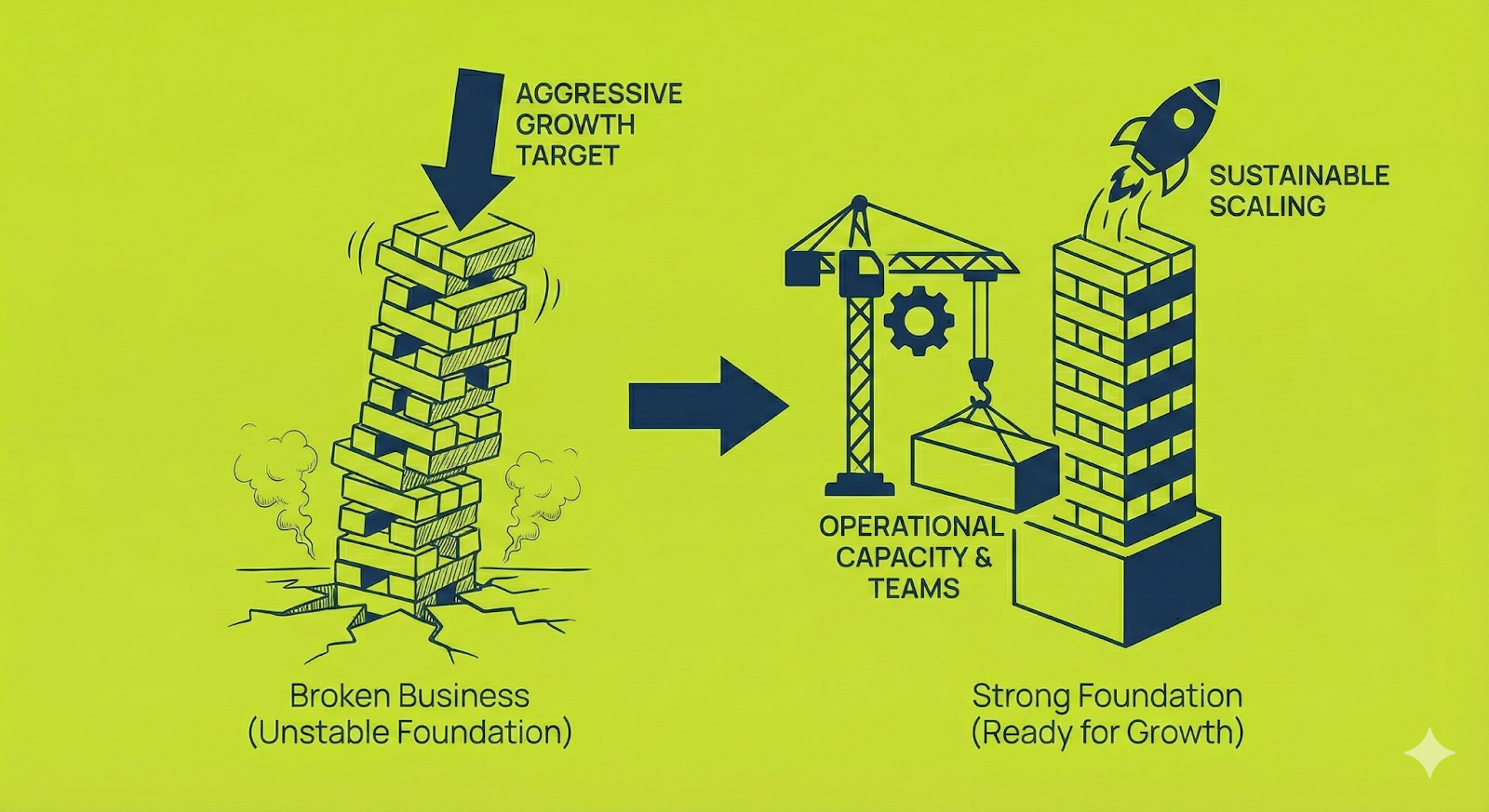
    Story 2: The Growth Plan That Would Have Broken the Business

    This founder had a clear ambition.

    Revenue needed to grow fast. Very fast. Investors were confident, the market was there, and the projections showed a five times increase within a year.

    On paper, it looked achievable.

    When we reviewed the numbers, we agreed with one thing. The revenue target itself was not unrealistic. Demand could be generated, and sales could support it.

    The problem was everything around it.

    What the numbers quickly revealed was that the business was not built to handle that level of growth. Hiring plans lagged behind revenue expectations. Key roles were missing. Operational capacity was already close to its limit.

    If the growth arrived as planned, the business would not have scaled. It would have cracked.

    This is where finance becomes more than forecasting.

    By linking revenue projections to operational capacity, we could show the founder something investors had not. Growth is not just about selling more. It is about whether the business can deliver without burning out teams or damaging quality.

    Because this was identified early, the founder had time to act.

    We reworked the hiring plan. Key roles were brought forward. Costs increased earlier than originally planned, which felt uncomfortable at first.

    But when demand increased, the business was ready.

    Instead of scrambling to hire in crisis mode, the team was already in place. Delivery stayed strong, pressure stayed manageable, and the business was able to sustain the growth it had promised.

    This is the difference between chasing numbers and building a business that can actually support them.

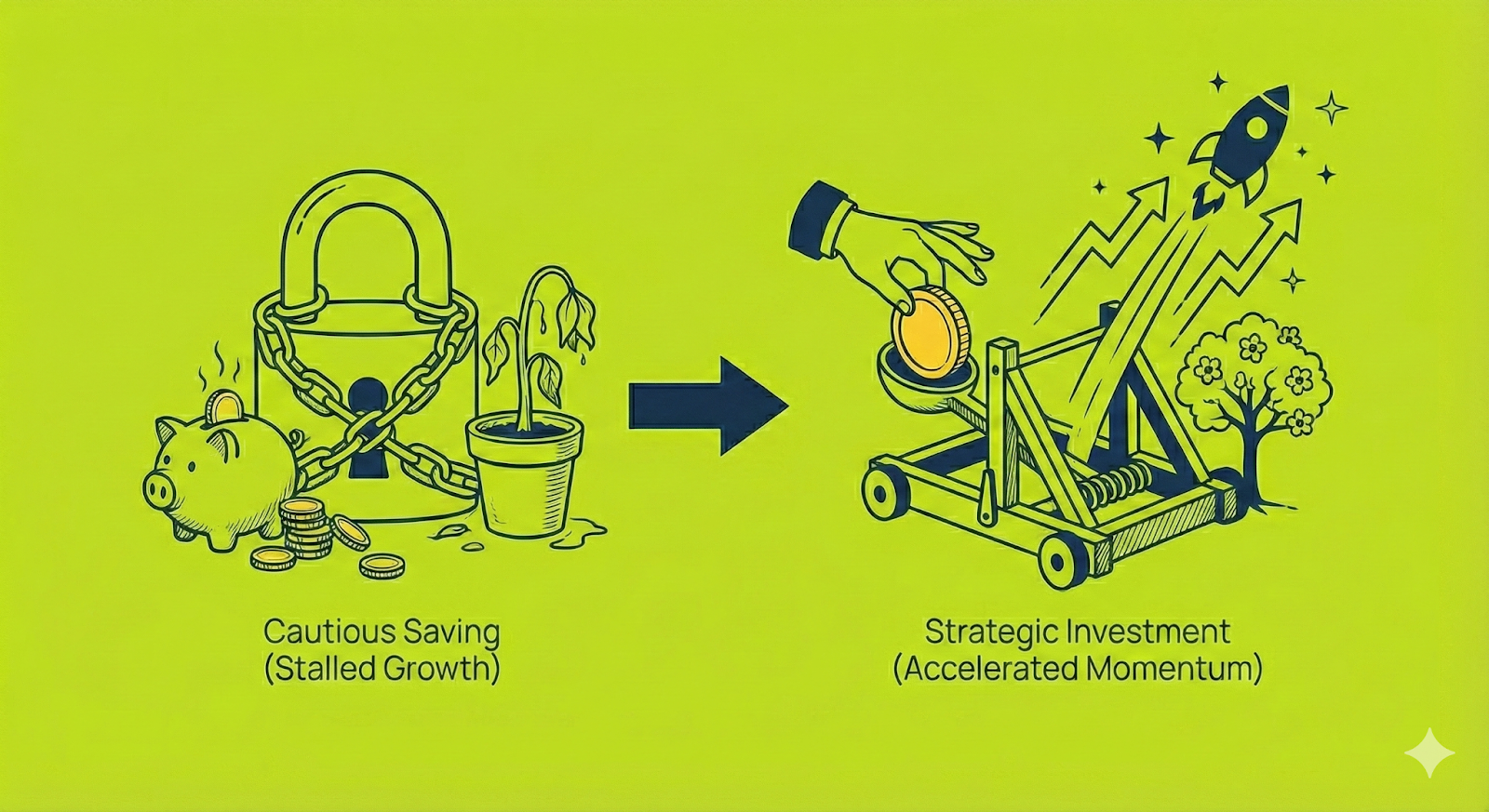
    Story 3: When Spending More Was the Right Financial Decision

    This founder was cautious. And for good reason.

    They had built the business carefully, kept costs under control, and avoided unnecessary risk. Every major spend was questioned, challenged, and often delayed.

    From a purely accounting perspective, that approach made sense.

    But as the business matured, something started to stall.

    Growth slowed. Teams worked harder, but results did not scale at the same pace. Opportunities were being discussed, but never fully committed to.

    When we stepped in, the instinctive question was familiar.
    How do we protect the numbers?

    Instead, we reframed it.
    What is the cost of doing nothing?

    By looking beyond the immediate financial impact, we could see that the business was underinvesting in the very areas that would unlock future returns. Marketing was constrained despite clear signals of demand. Internal processes were stretched but never improved. Decisions were being filtered through short term caution rather than long term value.

    This is where the difference between accounting and CFO thinking becomes clear.

    A CFO does not just look at whether the business can afford to spend. They look at whether the business can afford not to.

    With a full view of the strategy, timing, and expected outcomes, we helped the founder invest intentionally. Not recklessly, but with purpose and conviction.

    The numbers dipped slightly in the short term. That was expected.

    What followed was not. Improved momentum, stronger positioning, and a business that was once again moving forward rather than holding back.

    Sometimes the most responsible financial decision is to lean in, not pull back.

    The Value Is Not in the Numbers Alone

    Across all three stories, the pattern is the same.

    The problem was never a lack of data.
    The reports existed.
    The numbers were accurate.

    What was missing was interpretation.

    A fractional CFO does not create value by producing better spreadsheets or cleaner reports. The value comes from understanding what the numbers are really saying about the business.

    They reveal where operations are under strain.
    They show when growth plans are disconnected from reality.
    They highlight when caution is holding a business back from its next stage.

    Most importantly, a fractional CFO is not there for a quick fix. The real impact comes from becoming part of the team, understanding the business deeply, and growing alongside the founder.

    That is when finance stops being a support function and becomes a decision making tool.

    If you are ready to use your numbers to guide how your business actually runs, rather than simply report on the past, we would love to help.

    Book a conversation with the Quantro team to explore how we can build a financial model tailored to your business. One that gives you not just numbers, but clarity, control, and confidence in every decision you make.

  • Working Capital: Why Profitable Companies Still Run Out of Cash

    Working Capital: Why Profitable Companies Still Run Out of Cash

    Working capital is one of those areas every business depends on, yet most founders rarely look at closely. They focus on their P&L, celebrate revenue wins and push for growth, while the Balance Sheet sits quietly in the background. The problem is that profit does not keep a business alive. Cash does. You can have healthy sales, strong margins and a confident forecast, yet still find yourself unable to pay suppliers or meet payroll on time. It is a contradiction that catches out even the most promising companies.

    The truth is simple. Businesses do not fail because they are unprofitable, they fail because they run out of cash. We see this often. Founders chase growth, sign new clients and expand their teams, but forget to ask when the cash from this activity will arrive. They allow invoices to drift, pay expenses earlier than needed or increase their cost base before their cash position can support it. On paper they look successful, but underneath, liquidity is tightening. Working capital becomes the silent pressure point in the business, the place where good intentions meet financial reality.

    When working capital is understood and managed properly, everything changes. It gives leadership the clarity to grow with confidence and the control to protect the business during periods of uncertainty. It turns profit into usable fuel rather than a number on a report. Done well, working capital management stops being a technical exercise and becomes the foundation for sustainable, cash centred decision-making. It is not just about improving processes. It is about helping founders build a business that succeeds not only on paper, but in practice.

    Why Founders Overlook Working Capital

    Most founders are naturally drawn to the P&L. It is the document that shows growth, momentum and commercial success. It is where revenue targets live and where performance is judged. The Balance Sheet, by comparison, can feel static and less urgent. Yet this focus on top-line progress often hides the real issues. A company can be growing quickly, winning new customers and increasing its margins, while at the same time building a hidden cash problem that only becomes visible when it is too late.

    The most common reason this happens is a lack of visibility. Many founders simply do not know what they are owed or what they owe at any point in time. They underestimate how much capital is trapped in overdue invoices, early payments or expanding cost bases. Without a clear picture of accounts receivable and accounts payable, decisions are made on optimism rather than on available liquidity. The result is a business that appears healthy on paper but is stretched in practice.

    At Quantro we see this pattern again and again. The issue is rarely that a company is unprofitable. It is that cash is being managed on guesswork. Once founders begin to look beyond the P and L and understand the timing and movement of cash within the business, the picture becomes clearer. Working capital shifts from being an afterthought to becoming a core part of strategic planning. The companies that make this shift are the ones that grow sustainably rather than dangerously.

    The Two Working Capital Levers That Break First

    When a business begins to grow, the first cracks rarely appear in revenue or profit. They show up in accounts receivable and accounts payable. These two levers determine how cash moves through the business, yet they are often the least understood by founders. Accounts receivable is where cash becomes trapped. It represents work completed and revenue earned, but not money in the bank. When invoices are allowed to drift or credit terms extend beyond what the business can comfortably support, liquidity tightens long before it shows up in the P&L. This is why understanding the core working capital metrics becomes essential. They reveal whether your business has the immediate financial strength to operate and how efficiently cash moves through its daily cycle.

    At the foundation sits the Current Ratio, a straightforward test of short term health. It is calculated as Current Assets divided by Current Liabilities. Current assets are items the business expects to convert into cash within twelve months, such as cash itself, accounts receivable and inventory. Current liabilities are obligations due within the same period, such as supplier invoices, short term loans and tax payments. A ratio above one suggests the business can cover its short term commitments, while a ratio below one can signal potential strain. Working Capital expresses this same relationship in absolute terms, calculated as Current Assets minus Current Liabilities. For example, if a company has current assets of 450,000 pounds and current liabilities of 300,000 pounds, its working capital is 150,000 pounds. These fundamentals provide a financial safety check, but they only tell part of the story.

    The deeper insight comes from understanding the timing of cash. This is where operational KPIs matter. The Cash Conversion Cycle shows how long cash is tied up in operations before it returns to the bank account. It is calculated as Days Sales Outstanding plus Days Inventory Outstanding minus Days Payable Outstanding. Days Sales Outstanding measures how quickly customers pay. Days Inventory Outstanding measures how long stock sits before it is sold. Days Payable Outstanding measures how long the business takes to pay suppliers. When these measures are monitored together, they reveal how efficiently the business turns activity into cash and where delays are building. A rising cycle is an early warning that cash is becoming stretched, even if profit looks healthy. This is why these KPIs are central to diagnosing working capital pressure early, rather than reacting once the problem appears on the P&L.

    Accounts payable tells a similar story from the opposite direction. Many businesses pay suppliers earlier than necessary, either out of habit or in a well intentioned attempt to maintain strong relationships. The intention may be positive, but the outcome is often damaging. Cash leaves the business faster than it needs to, reducing the breathing room required to operate with confidence. When accounts receivable slows and accounts payable accelerates, even profitable companies begin to feel the strain. Understanding DPO gives founders the clarity to set payment timings that support cash flow without harming supplier relationships.

    At Quantro we see this pattern in nearly every client we support. The problem is rarely that the business model is broken. It is that founders lack visibility of what they are owed and what they owe at any point in time. By implementing real time cash flow tools and weekly dynamic accounts payable reports, we help founders see the movement of cash clearly and act on it quickly. Once these two levers are understood and managed with intention, the business begins to operate on solid ground rather than on hope.

    The Outdated View of Working Capital and Why It Hurts Businesses

    For many companies, working capital is still treated as a technical chore rather than a strategic advantage. It sits in the background of the finance function, managed quietly through invoicing routines, supplier cycles and basic reconciliation. This narrow view assumes that working capital is simply an administrative process: collect what is owed, pay what is due and keep everything moving. The problem is that this approach misses the bigger opportunity. It separates day to day cash management from the decisions that shape the future of the business.

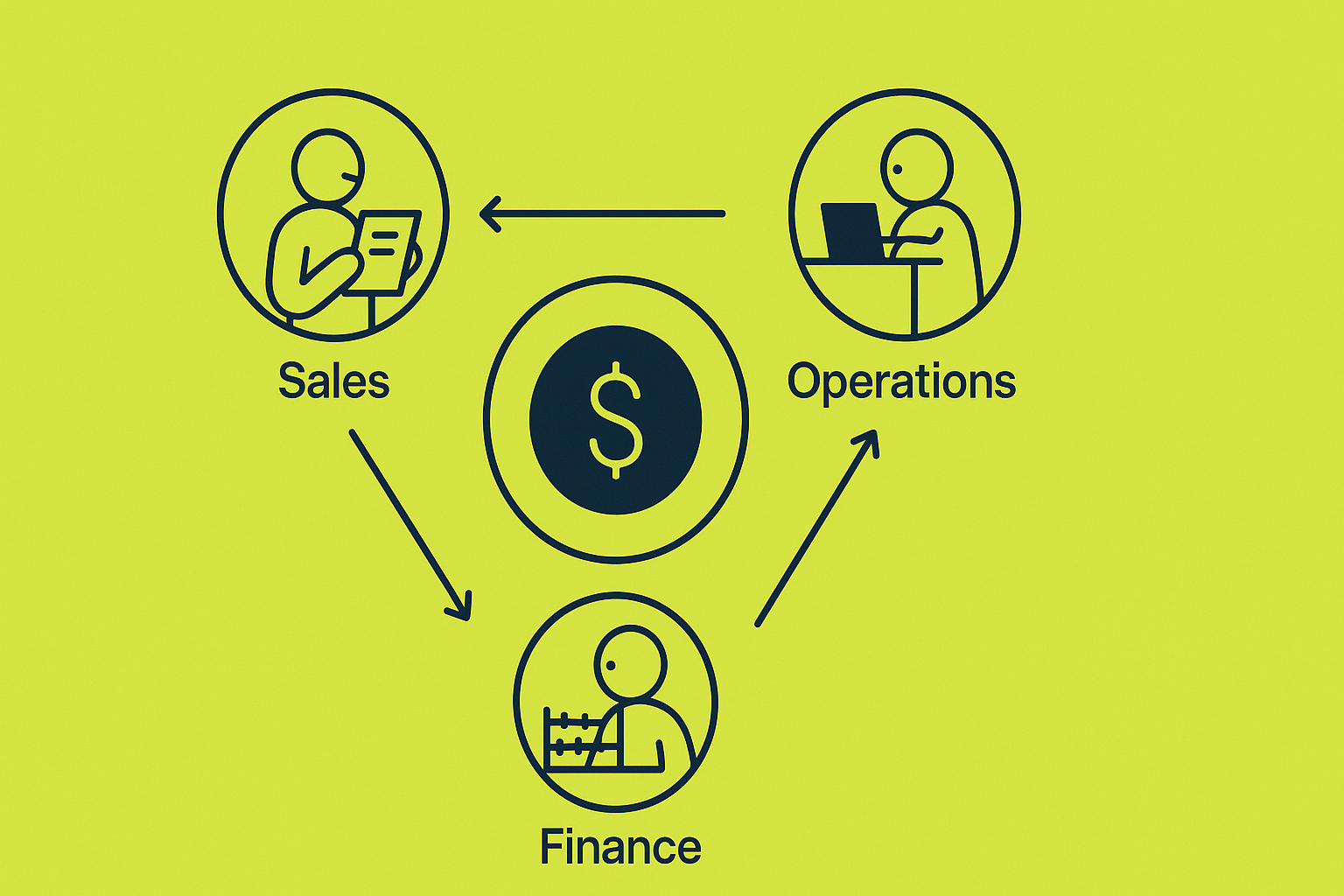
    When working capital is viewed in isolation, it is easy for teams to optimise their own priorities without considering the wider impact. Sales teams focus on closing deals regardless of payment terms. Operations push for efficiency without considering stock levels or supplier timing. Finance tries to manage the consequences rather than drive the strategy. Each department operates with good intent, yet the combined effect can quietly weaken liquidity. A business can look efficient on paper while unknowingly tightening its own cash position.

    A more modern view brings working capital into the centre of strategic planning. Payment terms become a competitive tool, not an afterthought. Inventory management becomes a lever for resilience, not only for efficiency. Cash timing becomes part of every investment discussion, from hiring to marketing. At Quantro we encourage founders to treat working capital as an active management discipline. When it is integrated into everyday decision making, the business becomes more predictable, more resilient and far better prepared for growth.

    This is also the point where the right metrics begin to matter. The Current Ratio and the absolute working capital number provide a snapshot of short term strength, while measures such as Days Sales Outstanding, Days Payable Outstanding and Days Inventory Outstanding reveal how quickly cash moves through the business. The Cash Conversion Cycle brings these elements together to show how long it takes to turn investment back into cash. Working capital turnover and the Quick Ratio can add further clarity. When founders track these indicators consistently, they gain a far deeper understanding of liquidity and can make decisions with greater confidence.

    Helping Founders Understand the Profit and Cash Divide

    For many founders, the hardest shift is accepting that profit and cash do not move at the same pace. Profit shows the outcome of the work the business has done. Cash shows whether the business can actually afford to keep going. When these two are out of sync, even healthy companies begin to feel pressure. We often find that once founders see the timing difference between when revenue is earned and when it is collected, the entire financial picture changes for them. It becomes clear that the problem is not growth, but the rhythm of cash flowing through the business.

    Our role at Quantro is to make this divide visible and understandable. We strip away unnecessary complexity and highlight the points where cash is delayed or released. This creates space for better decisions. Founders can see precisely how long it takes to turn a sale into usable cash and how each payment cycle affects liquidity. When this understanding is embedded into regular discussions, the business becomes more proactive. Cash stops being a surprise and becomes part of everyday planning.

    What makes this approach powerful is that it replaces assumptions with clarity. Instead of chasing revenue in the hope that cash will follow, founders begin to manage their business with a clearer sense of timing and control. They understand that a company can be profitable and still vulnerable if cash is not managed with discipline. Once the distinction becomes part of the culture, decisions become steadier, planning becomes sharper and the business gains the resilience it needs to grow with confidence.

    Turning Working Capital into Confidence

    Working capital is not a background task or a technical detail. It is the financial heartbeat of a business, and when it is ignored, even the most promising companies can find themselves under pressure. The difference between profit and cash becomes painfully clear when invoices are slow, expenses mount and the timing of money in and money out drifts out of sync. Yet the opposite is also true. When working capital is managed with intention, businesses gain stability, resilience and the freedom to grow on their own terms.

    What we see at Quantro is that the moment founders understand the movement of cash in their business, everything becomes clearer. Decisions feel less reactive, planning becomes more grounded and growth becomes something that feels controlled rather than chaotic. Cash stops being the thing that surprises you and becomes the thing that supports you. This shift is not theoretical, it is practical. It is the difference between a business that survives and one that grows with confidence.

    If you are ready to turn your working capital into a tool for growth rather than a source of stress, we would love to help. Book a meeting with our team to explore how Quantro can build a working capital structure tailored to your business. One that gives you not just profit, but clarity, control and confidence.

  • From Panic to Predictable: Mastering Seasonality in Cash Flow Forecasting

    From Panic to Predictable: Mastering Seasonality in Cash Flow Forecasting

    The Myth of the Linear Year

    Most founders plan as if every month will look the same. Revenue is assumed to arrive in steady increments, costs are spread evenly across twelve months, and cash flow is expected to follow a straight line. On a spreadsheet, this version of reality looks comforting. It feels stable and predictable. Yet any CFO who has worked through a financial year knows that business rarely follows such a tidy rhythm. Sales spike, clients delay payments, campaigns launch in bursts, and costs appear in clusters. Seasonality is not the exception, it is the rule.

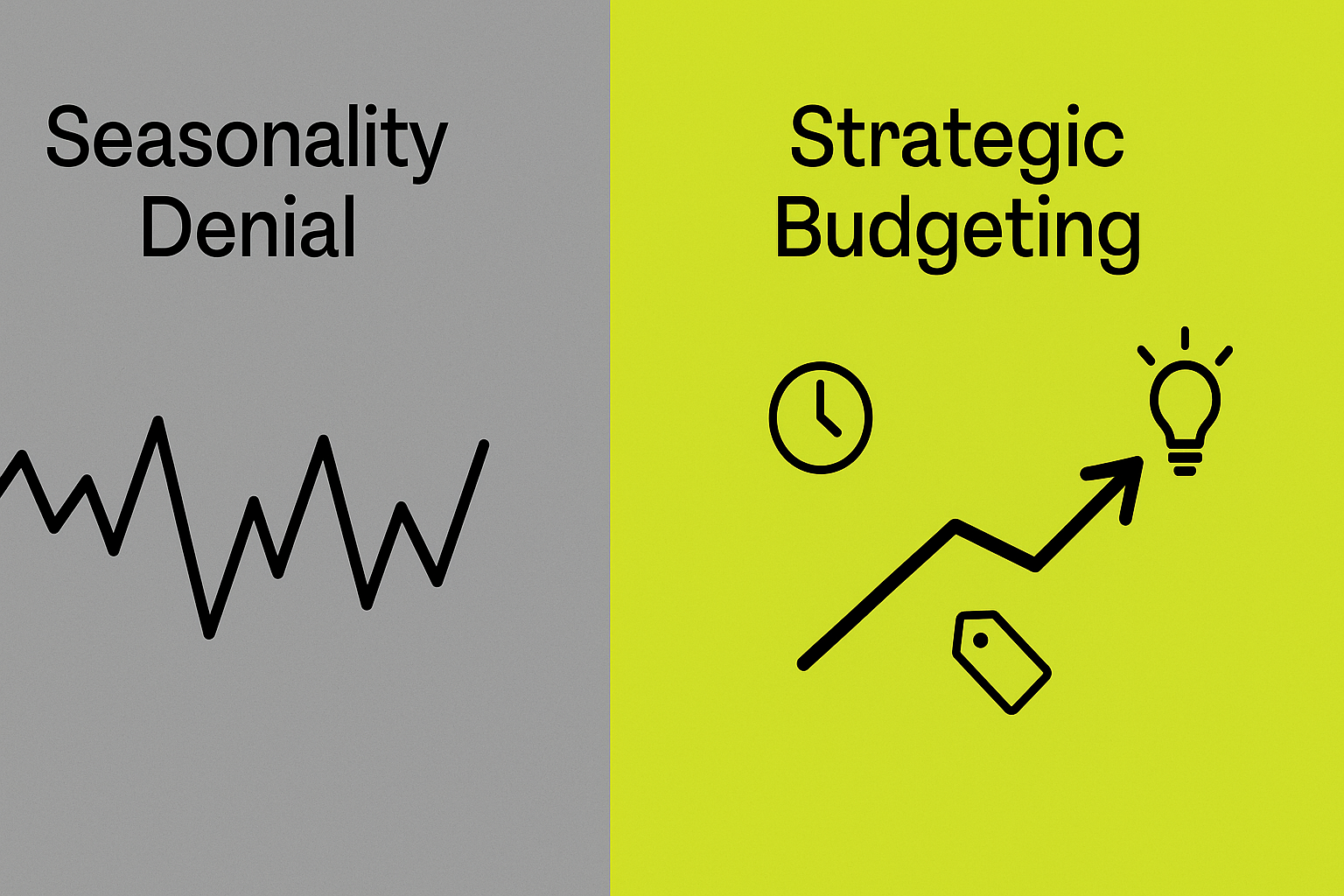
    The real problem is not that businesses experience seasonality, but that so few plan for it. Many founders quietly acknowledge that some months are stronger than others, but they treat it as an inconvenience rather than a structural feature of their business. They budget as if their operations are linear, then act surprised when their forecasts start to unravel. When we ignore seasonality, we are not simplifying finance; we are distorting it. A forecast built on flat assumptions quickly loses credibility, and a business that does not plan for quiet months ends up reacting to them in panic.

    The truth is that seasonality does not make a business weaker. It simply makes it human. Every company, from e-commerce to SaaS to hospitality, operates within cycles. Understanding those cycles and building a plan around them is what separates reactive businesses from strategic ones.

    Why Seasonality Is Inevitable (and Not a Bad Thing)

    Every business has its rhythm. Some industries, like retail or hospitality, have obvious peaks and troughs tied to holidays or weather. Others, like B2B services or SaaS, experience quieter patterns driven by client budgets, project cycles or the summer slowdown. The details differ, but the pattern is always there. The problem is that too many founders treat seasonality as something to be ignored or outgrown. They want to believe that steady growth month after month is a sign of maturity. In reality, it is rarely how business works.

    Recognising seasonality does not mean accepting weakness; it means accepting truth. When founders refuse to acknowledge the natural ebb and flow of their operations, they lose the opportunity to plan around it. Cash flow surprises appear, marketing spend gets mistimed, and teams find themselves overstretched one quarter and underutilised the next. At Quantro, we often meet businesses that know their busy months and quiet ones instinctively, yet avoid reflecting that reality in their budgets. It feels safer to plan for consistency. The irony is that this illusion of stability is what creates volatility.

    When you build a forecast that embraces seasonality, something powerful happens. You move from reacting to your business to leading it. You can anticipate when cash will be tight, when to build reserves, when to hire and when to slow down. You stop seeing the quiet periods as threats and start using them as strategic windows for investment and improvement. Seasonality does not need to be eliminated; it needs to be understood.

    The Cost of Ignoring Seasonality

    When businesses fail to recognise seasonality, their financial plans become fiction. Budgets are built on smooth averages rather than real patterns, and forecasts that once looked solid quickly fall apart. Founders are left wondering why cash reserves vanish faster than expected or why operating expenses feel harder to meet in certain months. The answer is simple: they are planning for a world that does not exist. When revenue and costs are treated as constant, even small fluctuations can trigger big problems: delayed payments, rushed borrowing, and unnecessary stress across the organisation.

    Ignoring seasonality does more than distort the numbers; it erodes trust in the forecasting process. Teams start to see budgets as irrelevant and adjust spending on instinct rather than insight. Over time, this creates a reactive culture where financial control is lost and planning becomes a cycle of surprises. A forecast that ignores seasonality is not just inaccurate; it is misleading. It hides the true rhythm of the business, leaving leaders to make decisions with incomplete information.

    Understanding and integrating seasonality brings the opposite effect. When the peaks and troughs are visible, leaders stop being caught off guard. They can time their decisions, investing during quiet months, holding reserves when cash is strong, and scaling up only when demand is real. At Quantro, we see it often: once businesses start forecasting with seasonality in mind, financial anxiety turns into confidence. Predictability is not about making the numbers smooth; it is about making them honest.

    Learning from the Past: The Predictable Cycles

    Seasonality always leaves a trace. You can see it in the data if you take the time to look: the same months where revenue slows, the same periods when costs rise, the same clients who pay later than expected. These patterns matter, but they are not the full story. The past can show you what has happened before, but it does not decide what comes next. It is a guide, not a guarantee.

    For a CFO, the value lies not in following history but in learning from it. Historical data provides context; strategy creates direction. If August is usually quiet, that is not a limitation but a signal. It is a time to plan campaigns, strengthen systems or invest in process improvements while others wait for activity to return. If Q4 is typically a strong period, it is a chance to prepare early, build liquidity and ensure your team is ready to deliver at scale.

    This shift from observing the past to designing the future is what defines effective financial leadership. The best CFOs do not rely on luck or repetition; they use patterns to make deliberate choices. A business that understands its rhythm can plan, adapt and thrive through every cycle. When you treat seasonality as insight rather than inconvenience, forecasting becomes more than a financial exercise. It becomes a tool for growth, resilience and control.

    The CFO’s Mindset Shift

    For many finance leaders, the turning point comes when they stop viewing seasonality as a nuisance and start treating it as a strategic signal. The role of a CFO is not simply to acknowledge that the business has ups and downs; it is to design the financial systems, budgets and decision frameworks that turn those patterns into an advantage. Predictive finance is built on this shift in perspective, from reacting to fluctuations to planning for them with precision and intent.

    When a CFO builds seasonality into their forecasting, they move from uncertainty to foresight. They can see when to build liquidity, when to pull back on discretionary spending and when to double down on growth initiatives. This is where strategic timing becomes a competitive edge. The ability to make confident decisions in advance of the cycle, rather than in response to it, is what sets apart strong financial leadership.

    A seasonal view also changes how a business measures success. Instead of chasing unrealistic month-on-month consistency, finance leaders can define performance by how well the company manages its rhythm. Strong quarters become opportunities to invest, and slower ones become moments for optimisation. As a result, the business stops riding its cycles and starts steering them.

    Seasonality will never disappear, but its impact can be transformed. For a modern CFO, the goal is not to eliminate variability but to harness it; to understand when to act, when to prepare and when to wait. When this mindset takes hold, finance stops being a reactive function and becomes a source of stability and foresight.

    If you are ready to turn seasonality from a source of stress into a strategic advantage, we would love to help. Book a meeting with our team to explore how Quantro can build a forecasting model tailored to your business; one that anticipates cycles, strengthens cash flow and gives you the clarity and confidence to plan every season with intent.

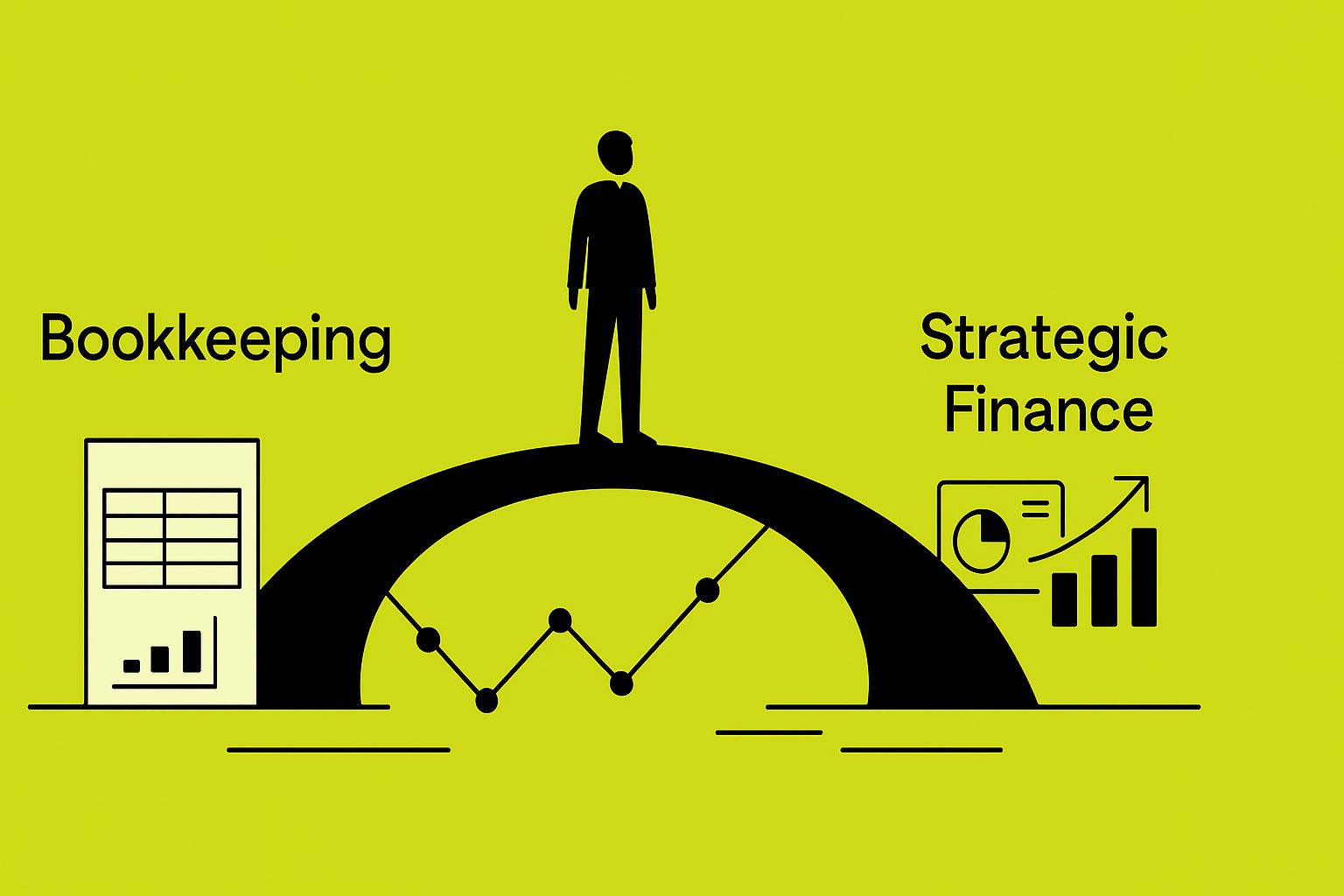
  • Scaling Pains: When to Upgrade from Bookkeeping to Strategic Finance

    Scaling Pains: When to Upgrade from Bookkeeping to Strategic Finance

    The Hidden Limits of Bookkeeping

    For most growing businesses, bookkeeping feels like enough. The numbers are clean, the accounts reconcile, and reports arrive on time. It creates a sense of order, a comfort in knowing that the financials are under control. But beneath that surface, a quiet problem begins to grow. Bookkeeping tells you where your money went, not where it should go next. It is reflective, not predictive. The moment a company begins to scale, that distinction becomes critical.

    At Quantro, we see this pattern every day. Founders invest in excellent bookkeepers who keep their accounts organised, yet still find themselves unsure about cash flow, margins, or investment timing. The numbers are technically right but strategically incomplete. That is because traditional bookkeeping was never designed to guide decisions, only to record them. When a business starts growing faster than its financial insight, bookkeeping alone stops being a safety net and starts becoming a blindfold.

    Why Bookkeeping Stops Working as You Scale

    Bookkeeping is essential for every business. It records transactions, ensures compliance and keeps financial data organised. For early-stage companies, that foundation is enough; it provides clarity and structure. But as a business grows, the limits of bookkeeping become clear. Recording what happened in the past no longer provides enough information to guide the future.

    The problem is that bookkeeping is reflective, not predictive. It explains where the money went but not what to do next. When revenues rise, costs spread and operations expand, the financial picture becomes more complex. Founders may see growth on paper but still struggle to understand cash flow, profitability or investment timing. These are strategic questions, and bookkeeping alone cannot answer them.

    Many growing businesses try to solve this by improving their systems or hiring more bookkeepers, but the real issue is not the data, it is the absence of analysis. Numbers must be connected, interpreted and projected into future scenarios. That is where strategic finance begins. It transforms financial information into insight, helping leaders plan, prioritise and grow with confidence.

    What Strategic Finance Really Means

    Strategic finance begins where bookkeeping ends. It takes the same financial data that once sat quietly in ledgers and turns it into a forward-looking decision-making tool. Instead of asking what happened last month, it asks what might happen next quarter, and what actions will shape that outcome. It connects financial understanding to business planning, allowing leaders to see the cause and effect of their choices with far greater clarity.

    At its core, strategic finance is about alignment. It aligns numbers with strategy, cash flow with growth, and ambition with capability. It gives decision-makers not only visibility over the current financial position but also the ability to model different futures. This means moving beyond the traditional reports and building tools that allow for forecasting, scenario planning and performance tracking in real time. It is a shift from recording facts to influencing direction.

    At Quantro, this process begins with simplification. We take control of a client’s financial data, clean it, and transform it into a format that is both structured and meaningful. From there, we build insights that help founders focus on what truly drives their business. We show them where they are strong, where they are exposed, and what changes will have the most significant impact on growth. The result is not just a clearer picture of the business, but a plan of action that connects day-to-day operations with long-term goals.

    When done well, strategic finance becomes part of every major decision. It informs hiring plans, pricing strategies, market expansion, and investment choices. It brings the future into every financial conversation, turning uncertainty into structure and instinct into strategy. For growing businesses, this is the difference between reacting to numbers and leading with them.

    The Signs You’ve Outgrown Bookkeeping

    At some point, every growing business reaches a stage where bookkeeping alone no longer provides the clarity it once did. The reports are accurate, but they stop being useful for decision-making. You can see what happened last month, yet you cannot tell why it happened or what will happen next. When financial data becomes purely descriptive rather than strategic, the business has already outgrown bookkeeping.

    One of the most common signs is recurring cash flow pressure despite profitability. Bookkeeping shows profit, but not timing. Without a forward-looking view of payments, costs and collections, even a profitable company can struggle to manage liquidity. This is where strategic finance adds value, linking financial information to business reality and helping founders anticipate challenges before they occur.

    Complexity is another clear signal. As a company expands into multiple products or markets, the data multiplies and simple systems begin to strain. Spreadsheets become slow, errors creep in and financial management turns reactive rather than proactive. When that happens, it is time to move from keeping records to managing the future. Strategic finance brings structure, rhythm and foresight; the tools every scaling business needs to stay in control.

    The Middle Ground — The Rise of the Fractional CFO

    Between the limits of bookkeeping and the cost of hiring a full-time Chief Financial Officer, there is a valuable middle ground. This is where the fractional CFO comes in. For many growing businesses, it offers the ideal balance between strategic insight and affordability. A fractional CFO provides the same level of financial expertise as a full-time executive but on a flexible, scalable basis that adapts to the pace of growth.

    At Quantro, we find that this model works best for companies entering their next stage of expansion. They have reliable bookkeeping and basic reporting in place but need guidance on how to plan ahead, manage cash flow and invest with confidence. We step in to translate data into strategy, building financial models, forecasts and performance dashboards that help leadership make informed decisions. The founder can stay focused on operations while knowing that the financial direction is sound.

    The advantage of a fractional CFO is that it bridges the gap between control and strategy. It turns raw numbers into insight, provides clarity where there was uncertainty, and creates a rhythm for reviewing and refining performance. Most importantly, it gives growing businesses access to the same strategic finance capabilities as larger organisations, without the full-time cost. For many founders, it is the first real step towards financial maturity.

    ​​Real Impact: From Numbers to Decisions

    The value of strategic finance becomes clear when numbers start driving real change. At Quantro, we often work with companies that are profitable on paper but still face monthly cash flow challenges. The issue is rarely about revenue; it is about timing, structure and visibility. Without a clear understanding of how money moves through the business, even successful companies can find themselves short of liquidity when they need it most.

    By taking a deeper look at their financial data, we uncover patterns that bookkeeping alone cannot show. We analyse payment cycles, supplier terms and spending behaviour, then translate those insights into action. Sometimes that means renegotiating contracts, improving credit terms or adjusting pricing strategy. Other times, it is about helping leadership decide where to invest or when to hold back. The goal is always the same: to turn financial data into meaningful decisions that improve performance.

    For many of our clients, these adjustments have a visible impact within months. Cash positions stabilise, costs reduce and planning becomes more confident. With the right strategy in place, the numbers start to tell a different story: one of control, not uncertainty. Strategic finance transforms financial management from an administrative task into a driver of growth.

    It’s Never Too Early

    Many founders wait too long to bring strategy into their finances. They see CFO support as something for later, when the business is larger or more complex. In truth, the benefits of strategic finance begin long before that stage. Having the right financial insight early allows a company to grow with intention rather than reaction. It ensures that every decision, from pricing and hiring to expansion and investment, is grounded in data, not instinct.

    At Quantro, we have seen how transformative this can be. Businesses that once struggled with cash flow, confidence or direction often find stability within months of introducing a fractional CFO. They gain visibility over their numbers, clarity around their priorities and confidence in their next steps. The result is not just better financial control, but better leadership. Strategic finance turns uncertainty into structure and transforms growth from something that happens to the business into something it actively drives.

    If you are ready to move beyond bookkeeping and bring strategic clarity to your finances, we would love to help. Book a meeting with our team to explore how Quantro can design a tailored financial strategy for your business; one that gives you not just data, but direction, focus and the confidence to grow.

  • From Metrics to Meaning: How to Prioritise the KPIs That Really Matter

    From Metrics to Meaning: How to Prioritise the KPIs That Really Matter

    The KPI Paradox

    Most businesses today are swimming in data. Dashboards, trackers, and reports arrive with clockwork precision; yet the clarity they’re meant to bring often remains elusive. The irony is hard to miss: the more metrics we have, the less we seem to know what really matters. In a world obsessed with numbers, many teams mistake measurement for meaning.

    At Quantro, we’ve seen this paradox play out countless times. Teams report diligently, charts look impressive, but the insights stop at the surface. The problem isn’t a lack of discipline; it’s a lack of direction. Metrics have become an end in themselves rather than a tool for decision-making. The real work begins when you move beyond tracking to interpreting, when data stops being a scoreboard and becomes a compass. That’s the shift; from metrics to meaning.

    Lesson 1: One Size Doesn’t Fit All, Context is Everything

    When it comes to KPIs, copying what others measure is one of the fastest ways to lose focus. Every business has its own rhythm, challenges, and market dynamics. What makes sense for one company might be completely irrelevant for another. It sounds simple, but in practice, this is where many teams go wrong, chasing the metrics that look right instead of those that fit their model.

    When helping a client clarify their market positioning, we quickly saw that standard KPIs like engagement or acquisition were not telling the full story. They showed activity, but not progress. By redefining what success looked like for that business, we were able to build a sharper, more meaningful KPI framework that translated directly into results.

    The takeaway? Context is everything. KPIs are not templates to be copied from someone else’s dashboard. They are reflections of your unique strategy, market, and maturity. Getting them right means understanding the story behind the numbers, and making sure that story belongs to you.

    Lesson 2: Bridge Strategy and Measurement Early

    Good KPIs do not appear out of thin air. They are built on strategy, not spreadsheets. Before you can decide what to measure, you need to understand what the business is really trying to achieve. That is why, for us, KPI definition starts during onboarding, not after. Every new client conversation begins with one question: Where do you want to be, and how will we know when you are getting there?

    This discussion helps align short-term progress with long-term vision. Some metrics need to show quick wins, while others must track structural change over time. If you only measure short-term outputs, you risk chasing activity without creating real momentum. If you focus only on long-term outcomes, you lose visibility on the smaller signals that show you are on the right track. The art lies in connecting the two.

    When done properly, KPIs become a shared language between the client and the team. They help both sides see the same reality, anticipate issues earlier, and celebrate meaningful progress rather than arbitrary numbers. The result is not just better reporting, but better collaboration, built on a clear line between intent and impact.

    Lesson 3: Make It Measurable, or Don’t Track It

    If a KPI cannot be measured, it cannot be compared, and if it cannot be compared, it cannot be improved. That is a principle we hold firmly to. Data should not only describe performance but make it possible to see whether progress is real. Vague objectives like “better customer experience” or “stronger brand awareness” sound strategic, but without a way to measure them, they rarely lead anywhere meaningful.

    There are ways to bring even soft metrics into focus. We often rely on surveys, operational reports, website tracking data, and direct customer feedback to turn intangible goals into quantifiable signals. The aim is to create consistency between reporting periods, so what you measure today can be evaluated against what happened last month or last quarter. That consistency builds credibility and helps everyone see whether strategy is working.

    Metrics without measurement are opinions. Metrics with clarity are proof. The more measurable a KPI is, the easier it becomes to act on it, and action is where data starts to matter.

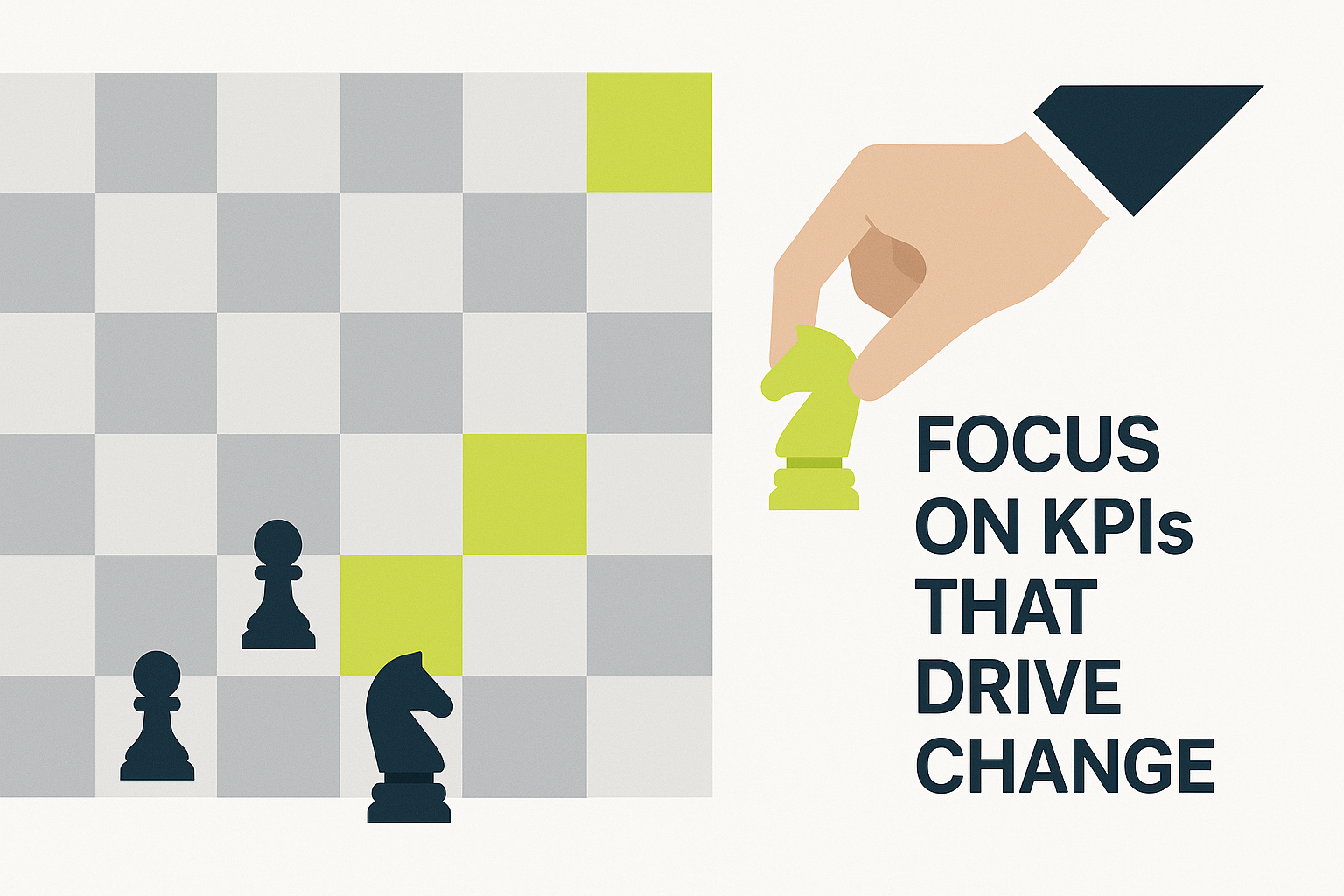
    Lesson 4: Focus on KPIs That Drive Change

    Not every KPI deserves your attention. Some metrics exist simply because they are easy to track, not because they lead to improvement. A good KPI should trigger a decision or inspire an action. If it cannot, it does not belong on your dashboard.

    Too many teams collect data they cannot influence. They measure outcomes that look impressive but do not tell them what to do next. The problem with this is simple — numbers without levers create frustration. You see movement, but you cannot cause it. Instead, build your KPI set around areas where your choices, strategies, and behaviours can make a difference.

    Ask a simple question when reviewing each KPI: Can we change this? If the answer is no, replace it with something you can. Sometimes that means letting go of long-standing metrics that no longer serve your goals. It can be uncomfortable, especially when stakeholders are attached to them, but irrelevant KPIs drain focus and waste energy.

    The goal is not to track everything, but to track what drives change. When every metric has a clear link to action, you move from reporting performance to shaping it; and that is where real growth begins.

    Lesson 5: From Reporting to Real Impact

    In most businesses, reporting is seen as the finish line. The numbers are collected, the graphs are built, and the meeting ends with a slide deck. But that is only a fraction of the work. At Quantro, we see reporting as the starting point for strategic change, not the end of a process.

    Data by itself does not create impact. Interpretation does. The real value of KPIs comes when they shape the conversations that follow. When a founder rethinks pricing because customer acquisition costs are creeping up, or when management reallocates budget after spotting a drop in conversion rates. These are not data points; they are decisions, and that is where performance begins to shift.

    As technology and AI automate the mechanical side of reporting, the human role becomes even more important. Anyone can produce a dashboard; few can translate that dashboard into meaningful direction. The difference lies in understanding why the numbers look the way they do, and what to do about it.

    Every report should lead to a decision. Every decision should tie back to a KPI. That is how you close the loop between information and execution; and how reporting evolves from routine to real impact.

    Conclusion: Meaning Over Measurement

    KPIs are not just a way to keep score, they are a way to stay aligned. When chosen carefully, they connect strategy, behaviour, and outcomes, giving teams a shared understanding of progress. When chosen poorly, they create noise, confusion, and misplaced effort. The difference lies in how intentionally they are defined and how consistently they are used to guide decisions.

    The goal is not to measure everything that moves, but to focus on what truly matters. The right KPIs tell a story, one that explains where you are, why it matters, and what comes next. When that story drives action, data stops being a distraction and becomes a source of direction.

    At Quantro, we believe the future of reporting is not about faster dashboards or prettier charts, but about meaning. Businesses that learn to turn numbers into narrative will always make better, faster, and more confident decisions, because in the end, metrics only matter when they lead to movement.

  • Every Business Has a Beat Reports Should Follow It

    Every Business Has a Beat Reports Should Follow It

    Most businesses obsess over what to report. But very few ask: When should we report?

    In fast-moving businesses, timing is everything. A perfectly accurate report that arrives too late is as useless as an outdated forecast. Yet many businesses still rely on default monthly reporting cycles, because that’s the norm.

    As businesses grow, especially at a fast pace, traditional cadences often fall short. A 12-month budget might become irrelevant by month three. A monthly report might come too late to catch problems before they escalate. And producing too many reports too frequently can overwhelm teams rather than support decision-making.

    That’s why reporting cadence deserves more attention. It’s not just a finance task it’s part of how a business stays aligned, responsive, and in control.

    There’s no one-size-fits-all approach. The right cadence depends on the business model, the funding setup, the team’s habits, and the type of decisions being made. In some cases, weekly reporting is essential. In others, a tighter monthly rhythm with real-time dashboards does the job.

    This is why we start every client relationship by understanding the real needs behind the numbers and we build the cadence from there.

    Because when finance reporting is built around context, stage, and decision-making rhythm, it becomes a growth lever not just a compliance task.

    What Is Reporting Cadence (and Why It’s Misunderstood)

    At its core, reporting cadence is the rhythm at which financial information is reviewed and used weekly, monthly, quarterly, annually. But cadence is more than just setting a calendar; it's about matching the speed of your business with the flow of insights.

    The mistake many businesses make is treating cadence as a box-ticking exercise:
    “Close the books monthly? Check.”
    “Quarterly forecast? Done.”

    But here’s the issue: if the cadence doesn’t match how fast decisions need to be made, then even accurate reports lose their value.

    For example, in a high-growth business, cash can move significantly in just a few days. Waiting for a month-end report might mean missing a risk or an opportunity. On the other hand, a mature, stable business might not need weekly forecasting, and doing so would just create noise.

    The right cadence bridges the gap between what’s happening in the business and when decision-makers need to know about it.

    Cadence Isn’t Copy-Paste: Every Business Has Its Own Rhythm

    There’s a common mistake many finance teams make: they use the same reporting cadence for every client or company. A standard monthly close, a quarterly forecast, maybe an annual board pack. Done.

    But reporting cadence shouldn’t be copied, it should be personalised to each business.

    A bootstrapped startup with five people and tight cashflow doesn’t need the same reports or frequency as a Series B-funded scaleup with multiple departments and an active board. Even if both businesses are in the same industry and making the same revenue.

    Founders also operate differently. Some want to see numbers weekly and use them to make quick decisions. Others prefer a higher-level monthly overview, with less operational detail.

    That’s why the best cadence is built by asking the right questions first:

    • What decisions are you trying to support?
    • How often do those decisions need to be made?
    • What level of detail is useful and what’s just noise?
    • What’s the funding situation?
    • What stage is the business in?

    The goal isn’t to prepare every possible report.
    It’s to deliver the right insight at the right time, without slowing the team down.

    The Core Layers of Reporting Cadence

    A good reporting system isn’t just about what gets produced, it's about when it gets produced, why it exists, and who it’s for.

    Each layer of reporting serves a different purpose:

    Weekly – Keep Your Finger on the Pulse

    Designed to help founders and leadership teams make quick, tactical decisions.

    Focus:

    • Cash flow visibility
    • AR/AP updates
    • Client-level profitability
    • Operational performance vs expectations

    Why it matters:
    You don’t want to realise at month-end that a key client became unprofitable, or that you're over-servicing without knowing it. Weekly cadence gives you the early warning system to course-correct before problems escalate.

    Monthly – Reflect, Analyse, Reforecast

    The most common cadence but only valuable when used to drive action.

    Focus:

    • Full financial statements (P&L, Balance Sheet, Cash Flow)
    • Variance analysis (Actual vs Budget, MoM, Year-on-Year)
    • Budget re forecasting if trends shift
    • Financial Strategy and adjustments if needed

    Why it matters:
    This is where teams can zoom out, evaluate strategy, and align on what’s working or not. But it only works if financials are accurate, timely, and paired with thoughtful commentary.

    Quarterly – Align Strategy & Stakeholders

    This layer is more strategic, often involving investors or board members.

    Focus:

    • Strategic re-forecasting
    • Business unit performance
    • Investor-ready packs
    • Progress vs goals or OKRs

    Why it matters:
    Quarterly reporting is the bridge between tactical action and long-term direction. It forces reflection, alignment, and higher-level decision-making.

    Annual – Plan, Budget, Comply

    Less about operations, more about structure and direction.

    Focus:

    • Budget planning
    • Audits & statutory filings
    • Strategic roadmap
    • Multi-year projections (when needed)

    Why it matters:
    Annual cadence creates the foundation for forward-looking control. It’s not about forecasting perfectly, it’s about aligning the business for the long game.

    When to Break the Rules: Adjusting Cadence in Fast-Moving Environments

    The reality is, even the best-designed reporting cadence needs to flex.
    In high-growth businesses, change happens fast and that can make long-term plans obsolete overnight.

    We’ve seen this many times for our clients: a 12-month budget built in Sept previous year becomes irrelevant by March. A startup lands a major client, raises funding, or shifts its pricing and suddenly the assumptions behind the entire plan no longer hold.

    In these moments, sticking rigidly to the “monthly report / quarterly forecast” cycle does more harm than good.

    What We Do Instead:

    When speed picks up, we shift the cadence:

    • Move from annual budget review to a rolling 3-month re-forecast
    • Increase weekly visibility (cash, client margin, operational delivery)
    • Focus on real-time indicators instead of lagging metrics

    The shift is simple: weekly becomes the decision-making layer, and monthly becomes the audit trail.

    For example, every Monday, we:

    • Update the 13-week cashflow
    • Refresh AR and AP
    • Review client servicing levels
    • Assess profitability per client
    • Re-forecast where needed
    • Sit with the management team for review

    This rhythm allows fast teams to act before the damage is done, not after.

    Don’t Confuse Activity with Impact

    It’s easy to default to more reports, faster cycles, tighter updates.
    But that can create noise.

    The point isn’t just to report faster, it’s to report at the speed decisions need to be made.

    The Most Overlooked Report: The Balance Sheet

    Ask most founders what they review regularly, and you’ll usually hear:
    Revenue
    Profit
    Cash position

    What rarely comes up?
    The Balance Sheet.

    And yet, this is often where the real risks are hiding.

    Why It Gets Ignored:

    • It’s misunderstood, many non-finance leaders don’t know how to read it
    • It feels less “operational” than the P&L
    • It doesn’t directly show performance, it shows position

    But here’s the thing: the Balance Sheet is where you track your company’s resilience.
    If the P&L is a sprint recap, the Balance Sheet is the health check after the race.

    What the Balance Sheet Really Tells You:

    • Are you accumulating uncollected receivables?
    • Are you under-capitalised relative to your liabilities?
    • Are your inventory levels starting to choke your cash?
    • Are you stretching vendors or relying on short-term debt to stay afloat?

    When reviewed properly, it gives early warnings you won’t see in a profit report.

    Making It Useful (Not Just a Compliance Document):

    • Track working capital trends over time
    • Build in Balance Sheet KPIs like current ratio, debtor days, and equity buffer
    • Tie movements to actual business events (e.g., delayed invoices, increased prepayments)
    • Visualise asset/liability shifts over time for clearer interpretation

    When founders understand and use the Balance Sheet unlocks better decisions and prevents nasty surprises.

    Dashboards vs Reports: You Need Both, But for Different Reasons

    In finance, the conversation often becomes binary:
    “Should we build a real-time dashboard or stick to structured reports?”

    The answer isn’t either/or.
    The best-performing businesses use both and for different purposes.

    Dashboards = Direction in Real Time

    Dashboards are living systems. They’re updated automatically (or frequently), and they answer one key question:
    “How are we doing right now?”

    Use dashboards to:

    • Monitor cash runway
    • Track revenue pacing or client delivery in-week
    • Surface immediate risks (e.g., over-servicing, margin squeeze)
    • Support quick, operational decisions

    They're ideal for fast-paced teams who need to course-correct on the fly.

    Reports = Meaning and Accountability

    Structured reports, on the other hand, allow for reflection and deeper analysis. They aren’t just about today they help you understand what happened and what to adjust moving forward.

    Use reports to:

    • Reconcile financial accuracy
    • Analyse budget vs actual
    • Explain trends and performance
    • Drive accountability in leadership meetings

    This is where monthly and quarterly cadences come into play.

    The Key Is Knowing When to Use What

    • Dashboards = motion
    • Reports = interpretation
    • Dashboards = speed
    • Reports = structure

    Used together, they give you both immediacy and insight—which is exactly what a finance function needs to support smart decisions.

    What Makes a Good Reporting Cadence? One That’s Designed, Not Duplicated.

    Many finance teams fall into the trap of standardisation, repeating the same reports for every client or business, regardless of size, funding, or priorities.

    But a strong reporting cadence isn't built around templates.
    It’s built around context.

    At Quantro, we don’t start with reports.
    We start with questions:

    • What’s the founder trying to achieve in the next 6–12 months?
    • What decisions are being made weekly, monthly, or quarterly?
    • Is this a bootstrapped business that watches cash daily, or a funded company focused on burn efficiency?
    • How involved is the leadership team in the day-to-day numbers?

    This discovery process helps us build a cadence that fits not one that overwhelms or under-delivers.

    Not Too Much, Not Too Little

    We’ve seen both extremes:

    • Clients flooded with dashboards they never open
    • Others flying blind with just a P&L and nothing more

    The sweet spot is a reporting rhythm that:
    – Matches business velocity
    – Respects the team’s bandwidth
    – Drives decisions
    – Reduces noise

    You don’t need 20 reports.
    You don’t need 1.
    You need the right few—delivered at the right time.

    Reporting Is Rhythm, Not Just Data

    A well-structured finance function isn’t just about accuracy, it’s about timing, relevance, and rhythm.

    When reporting cadence is thoughtfully designed, it stops being a back-office task and becomes a forward-looking tool. It helps businesses:

    • Spot risks before they escalate
    • Align decisions across teams
    • Understand both performance and position
    • Act with confidence, not assumptions

    But cadence isn’t something you set once and forget.
    It needs to adapt based on pace, stage, funding, and the personalities in the business.

    The goal isn’t more reporting.
    It’s better timing, sharper focus, and actionable insights.

    Whether it’s a live dashboard, a Monday cashflow review, or a quarterly investor update, the value lies in seeing the right numbers, at the right time, in the right context.

    That’s what makes finance useful. And that’s what makes cadence strategic. At Quantro, we can help make that strategic decision and recalibrate your reporting.

  • The KPI Playbook: Strategies for Winning in Business Analytics

    The KPI Playbook: Strategies for Winning in Business Analytics

    Navigating the complexities of financial metrics and Key Performance Indicators (KPIs) is crucial for any business aiming to carve out a path to success. These metrics are not just numbers complementing the company's financial statements; they represent the heartbeat of a business, indicating health, potential risks, and growth opportunities. By mastering these tools, you can gain invaluable insights into your business operations, guiding strategic decisions that propel your company forward.

    The key to effectively leveraging financial metrics and KPIs' key performance indicators lies in understanding their context and the stories they tell about your overall company’s performance and financial performance. Whether you want to streamline operations, enhance the company's profitability, or scale your business, these indicators provide a factual basis to support your decision-making.

    The Importance of Contextualising Financial Metrics

    Understanding financial metrics within their specific business context is vital for deriving actionable insights. A metric like Gross Profit Margin (GPM) tells a story about profitability but doesn't stand alone as a complete narrative. For example, a low Gross Profit Margin could result from underutilised capacity within the company. This could indicate that while products are priced appropriately, the company might not produce enough volume to cover fixed costs efficiently or be overstaffed, leading to excessive payroll expenses (operating expenses) relative to the output.

    That’s not necessarily a bad thing, as the company might have used operational leverage to meet sales demand, but again, to understand those things, you need to dig deeper. It's crucial to consider additional operational KPIs to gain a more comprehensive insight. Metrics such as capacity utilisation and operational efficiency provide context to the Gross Profit Margin figures.

    By examining these together, you can determine whether a low GPM's root cause is pricing models, production inefficiency, or perhaps both. This is crucial for solving, as you can increase your net profit margin and net profit.

    This holistic approach helps pinpoint the problems and guides you towards more strategic solutions, such as adjusting pricing strategies, optimising production processes, or even reevaluating labour needs.

    This method transforms a simple profitability metric into a powerful diagnostic tool that significantly improves operational and financial performance.

    Communicating Complex Financial Data to Stakeholders

    Effectively communicating complex financial Key Performance Indicators to stakeholders who may not have a financial background is crucial for aligning team efforts with business objectives.

    The key is to simplify these Key Performance Indicators without diluting their significance. For instance, when discussing intricate metrics like return on investment (ROI) or operating margins, it's beneficial to use analogies or visual aids that relate these concepts to everyday experiences or well-understood business processes. This helps make abstract numbers of a Key Performance Indicator (KPI) more tangible and easier to understand.

    In practice, this could involve presenting Key Performance Indicators through interactive dashboards that allow users to visualise data trends over time or using graphics to compare current performance against historical data or industry benchmarks. Visual aids can be particularly powerful, as they translate complex financial data into formats that are easily digestible at a glance.

    Tools like charts, graphs, and infographics can convey the story behind the numbers and KPIs, helping stakeholders see the bigger picture and understand how their contributions impact overall business's health, like the net profit margin or net profit. Additionally, regular, brief training sessions can help demystify these metrics for non-financial staff, ensuring everyone understands how their actions influence the overall business outcomes.

    It’s about creating a narrative around the data that connects individual roles to company-wide financial goals. For example, showing how improvements in customer service KPIs correlate with increased customer lifetime value can clarify the importance of everyday interactions to customer service teams.

    At Quantro, we have adapted new tools for our clients, and we built KPI dashboards to measure performance and track progress, which makes team collaboration much easier. That improved a lot the company's operations and eventually increased the net profit margin and net profit as well as operating cash flow.

    This communication strategy promotes transparency and fosters a culture of data-driven decision-making within the organisation. When team members from various departments understand financial outcomes and their roles in influencing those outcomes, it enhances accountability and motivates performance aligned with business strategies.

    By making KPIs accessible and understandable, you empower your team to contribute more effectively to the company's financial goals.

    Using Financial KPIs for Strategic Decision-Making

    Once financial KPIs are effectively communicated and understood across the organisation, leveraging these metrics to guide strategic decision-making is the next critical step. This involves more than just observing historical data; it requires using these insights proactively to shape future business strategies.

    For example, when I first joined Ladder, the financial KPIs revealed that the highest-paying client was actually not profitable when all factors were considered. This surprising insight led to a strategic decision to overhaul the business model and ultimately shift focus towards more profitable client segments.

    In implementing strategic decisions based on financial KPIs, it's vital to maintain a continuous feedback loop. This process involves setting specific, measurable objectives, executing changes, and reviewing the outcomes to adjust the strategy as needed.

    When we adjusted our service model at Ladder, we closely monitored the new client profitability metrics and operational efficiency. This ensured that the changes were yielding the expected benefits and highlighted new areas for improvement.

    In strategic decision-making, financial KPIs serve as both a compass and a map. They point to where adjustments are needed and guide the planning and execution of those adjustments.

    For businesses, the capability to adapt based on these metrics can mean the difference between thriving and merely surviving. This dynamic approach ensures that the organisation remains agile and responsive to internal performance and external market conditions.

    Aligning Key Performance Indicators with Evolving Business Goals

    Financial metrics and KPIs are not static; they should evolve as business goals and market conditions change. Ensuring these metrics remain relevant and aligned with your business's strategic objectives is critical for sustained success.

    It is beneficial to review and adjust your KPIs at the beginning of each fiscal quarter to reflect any shifts in business strategy or external market pressures. For instance, metrics such as market penetration rates and local customer acquisition costs become crucial if a business aims to expand into new markets. Regular alignment sessions with department heads can be instrumental in this process. These meetings should evaluate whether the current KPIs still serve the strategic goals or if adjustments are needed.

    For example, as a business shifts from growth to profitability, the emphasis might shift from revenue-based KPIs to cost management, customer satisfaction and profit margin metrics. This ensures that every team within the organisation is focused on the most relevant metrics that will drive the company towards its current objectives and strategic goals.

    This proactive approach keeps your business agile and ensures every team member understands how their work contributes to the company's goals. By continuously aligning key performance indicators with evolving goals, businesses can maintain a clear vision and execute effective strategies even as the external business environment changes.

    Extra KPIs that a services business will be targeting

    Traditional Key Performance Indicators (KPIs) often fail to capture the full business picture in service-oriented industries.

    While metrics like revenue growth, gross profit margin/net profit margin, net income, operating cash flow and customer satisfaction remain vital, modern service businesses increasingly focus on a broader spectrum of indicators to gauge performance comprehensively.

    Below are the 13 most important Key Performance Indicators KPIs for services business:

    1. Revenue per Head measures the efficiency of your business and sets a benchmark for your business

    2. Contribution per Department is set for businesses with more than one department; they can measure the Contribution Margin for each of them and then compare the profitability of each, helping them make informed decisions.

    3. Churn Ratio can be measured monthly, quarterly, or annually. It shows how much revenue you lose during that period of time and shows the stability of the business, as well as the ability to keep the revenue and build more on top. That's an important metric as every business is losing revenue. Still, in services, businesses tend to have higher churn rates, which can show the financial health of the business and the potential build-up by keeping the existing customers.

    4. New businesses it's pretty self-explanatory, but it is one of the most important sales KPIs as it shows the ability of the business to generate revenue. That can go hand in hand with sales targets and monthly recurring revenue.

    5. Website Traffic: You can measure that with many tools that exist in the market; it measures how many unique users visited your website and shows how your marketing efforts landed to your potential users. That's an important metric because it starts the customer journey. As much traffic you have, especially from organic resources, will significantly reduce your customer acquisition cost.

    6. Marketing Efficiency metrics measure the performance of your marketing efficiency and the ability to generate sales. It is a very vital metric for your marketing department and among the most important marketing KPIs.

    7. Marketing Quality: This is the number of MQls converted into SQLs, which is useful for producing your growth model and among the most important marketing KPIs. It combines your sales and marketing efforts, as those teams should work together and create an ICP score.

    8. Conversion Ratio is among the Sales KPIs and shows how efficient your sales team is. Again, it is a very important metric for building your growth model.

    9. The Employee Happiness Index is a difficult metric to measure directly. Still, different tools can measure it. It shows how much you invest in the well-being of your people (the only asset services businesses have) and is a guide for employee churn. Usually, if that metric is high, it improves gross margin, net income, and profitability ratio as people's productivity increases.

    10 .Time to Hire per Position: It measures the days you need to hire for each position, which is among the leading KPIs, especially when you are growing the business rapidly. If that is quite long, it might indicate a bottleneck in the operations, and that suggests reducing it heavily. The benchmark usually is around 30 days turnover.

    11. The client profitability ratio is super important in understanding the business's overall health; as per our example above, you always need to understand how much cash flow you can generate from each customer, meaning how much net profit you get from each one of them. It's the most important Key Performance Indicator, as it will help you either seize the best opportunities in the market or miss a few.

    12. Projected capacity is usually measured for the next 8 weeks. It shows how much capacity will be left if you add new clients. It can also show whether you need to hire new people to accommodate new revenue and your operational leverage.

    13. The Utilisation Ratio measures the efficiency of your operations and can help you understand your capacity and hire where and when it is needed. Although it is not a financial metric, it is among service businesses' leading KPIs and key performance indicators.

    Other KPIs are equally important, like debt-to-equity ratio and accounts receivable. Still, they are not for all businesses as they might not have debt or deal with receivables very well.

    For obvious reasons, we don't include the more traditional Key Performance Indicators, like monthly revenue, net profit, gross profit margin, operating cash flow, operating expenses, operating profit, and some other liquidity metrics, as those are non-negotiable and should be produced on a monthly basis among the income statement, cash flow statement and balance sheet. Numerous reporting tools can produce such metrics, so we are focusing on more modern and strategic KPIs so that you will gain valuable insights and drive your business forward.

    Measuring and Monitoring KPIs Key Performance Indicators

    Effective measurement and monitoring of Key Performance Indicators (KPIs) are foundational to any strategic management process. This requires a systematic approach to selecting KPIs and the technologies used to measure progress. Initially, selecting the right KPIs involves understanding which metrics closely align with your business goals and will provide actionable insights rather than just raw data. These KPIs should be specific, measurable, achievable, relevant, and time-bound (SMART).

    Once the KPIs are selected, the monitoring phase begins. This involves setting up KPI reports that capture data consistently and accurately. We have built numerous KPI reports and dashboards at a minimum direct cost. For instance, a dashboard that analyses KPIs might display real-time data on all the abovementioned KPIs.

    The regular review of these KPIs is crucial. It should be scheduled consistently to ensure it still serves the overarching business strategy and provides the needed insights to make informed decisions. This might include monthly reviews of operational KPIs and quarterly or annual reviews of strategic KPIs. During these reviews, it's important to question whether the KPIs need refinement, whether new KPIs should be added, or if any should be retired because they no longer serve a useful purpose.

    This systematic approach to measuring and monitoring KPIs ensures that businesses can swiftly and with informed strategies react to changes in their environment, thereby maintaining competitiveness and operational efficiency.

    The Strategic Edge of Mastering Financial KPIs

    Mastering the use of KPIs is not merely about keeping tabs on the current state of your business—it's about actively shaping its future.

    By deeply understanding and effectively applying these tools, business leaders can turn everyday data into profound insights that drive strategic decision-making.

    The ability to react to and anticipate changes in the business environment distinguishes thriving businesses from those that struggle to adapt. The journey involves continuous learning and adaptation for any business looking to leverage its data to the fullest extent.

    It’s about building a culture where data is valued and integral to the storytelling of the company's journey. Encouraging this mindset across all levels of an organization ensures that strategic decisions are well-supported by data, driving growth and innovation.

    In conclusion, Key Performance Indicators are invaluable tools that, when used correctly, provide a competitive edge in today's dynamic market. They empower organisations to track performance and anticipate and prepare for future challenges and opportunities.

    As we wrap up this exploration, remember that the true power of these metrics lies in their strategic application, transforming numbers on a page into a roadmap for sustained success.

    *Thumbnail image from September 3, 2025

  • Strategic Pricing: Mastering Agency Pricing in a Dynamic Market

    Strategic Pricing: Mastering Agency Pricing in a Dynamic Market

    Achieving effective agency pricing strategies is a balancing act between ensuring profitability and nurturing client satisfaction. This journey not only requires a deep dive into the agency's own operational costs but also demands a keen understanding of the market's dynamics and the value delivered to clients. Our experience working with different agencies helped us make this practical guide, aiming to demystify the complexities surrounding agency pricing models. There are numerous insights into various strategies, from the foundational cost-plus model to the more nuanced value-based pricing; we aim to enlighten and guide agencies towards sustainable growth and deeper client relationships.

    Understanding Agency Costs

    At the heart of every agency's pricing strategy lies a thorough understanding of its operational costs. This foundational knowledge serves not just as a ledger of expenses but as a strategic tool for crafting a pricing model that aligns with both the agency's sustainability and its clients. Variable costs, such as salaries and freelancers, and fixed costs, including rent and software subscriptions, constitute the baseline for agencies to begin to shape their pricing. By allocating these costs across billable hours, agencies can determine a base hourly rate. However, the real artistry comes in adding a desired profit margin, a decision that hinges not just on covering costs but on positioning the agency competitively in the market.

    Example:

    The personnel cost-to-revenue ratio offers a lens through which agencies can assess the efficiency of their pricing model. Keeping this ratio at 60% or below strongly indicates a healthy balance between personnel costs and revenue. This suggests that the agency is not just keeping operational efficiency but is also on a path to growth and profitability. This metric is more than a number; it's a reflection of how well an agency manages its resources and maximises its billable hours. In this context, understanding and managing agency costs becomes a dynamic process of strategic planning that supports the agency's journey from merely surviving to actively thriving in the competitive landscape of the creative industry.

    From Hourly to Value: Pricing Models

    Transitioning from traditional hourly billing to more contemporary pricing models like value-based and performance-based pricing signifies an evolution in the way agencies align their services with client expectations and market demands. Hourly billing, while straightforward, often places the focus on the quantity of time spent rather than the quality of outcomes achieved. This model can inadvertently set the stage for a misalignment of agency-client goals, as clients are more interested in results than how long it takes to achieve them. On the other hand, value-based pricing shifts this dynamic, emphasising the agency's ability to impact the client's business significantly. By anchoring the price to the perceived value of the services rendered, agencies can foster a more collaborative and goal-oriented relationship with their clients.

    Value-based pricing, while incentivising agencies to drive tangible results, carries its own set of risks. This model can place agencies at the mercy of factors beyond their control, such as market fluctuations or changes in the client's internal priorities, which can significantly affect the agency's compensation. Furthermore, a heavy reliance on performance metrics might encourage short-term thinking, potentially sacrificing long-term brand building for immediate results. Agencies must also consider the administrative burden of tracking and validating performance metrics, which can add complexity and cost to client relationships.

    Both models require a delicate balance between risk and reward, and agencies must navigate these waters carefully to ensure that the shift from hourly billing does not jeopardise their financial stability. Implementing safeguards, such as minimum retainer fees or caps on performance fees, and maintaining an open, ongoing dialogue with clients can help mitigate these risks, ensuring that the agency-client relationship remains mutually beneficial.

    Performance-Based Pricing: A Double-Edged Sword

    Performance-based pricing, agencies venture into a model that directly links their compensation to the results they deliver for their clients. This approach can be advantageous, fostering a deep alignment between agency efforts and client outcomes. A well-crafted performance-based pricing model incentivises agencies to push the boundaries of creativity and effectiveness, as their financial success becomes intrinsically tied to their clients' success. For instance, setting up tiered incentives based on specific performance milestones, such as the number of new accounts opened or the percentage increase in online engagement, can motivate agencies to aim higher and think more strategically about their campaigns.

    However, the allure of potentially higher rewards comes with its pitfalls. The volatility of relying solely on performance-based income can place agencies in a precarious financial position. A dramatic example can be seen when a client decides to slash their marketing budget, significantly affecting the agency's revenue overnight. Such scenarios underscore the risk of having all your eggs in the performance-based basket. Agencies must navigate these waters with caution, implementing safeguards like minimum retainer fees that offer some income stability. Balancing the risk and reward of performance-based pricing requires a keen understanding of both your agency's resilience and the client's market dynamics. By marrying the promise of higher rewards with the security of a stable base income, agencies can harness the benefits of performance-based pricing while mitigating its inherent risks.

    Tailoring Pricing to Client Needs

    The essence of a successful agency lies not just in its creative output but in its ability to adapt its pricing strategy to meet the diverse needs of its client base. Recognising that each client is unique, with varying budgets, goals, and levels of market maturity, requires a flexible approach to pricing. For startups or businesses in growth phases, for example, traditional retainer models may not always be feasible. In these cases, agencies might consider equity-based arrangements or performance incentives that align more closely with the client's financial realities and growth aspirations. Such tailored pricing strategies facilitate a partnership approach to client relationships and underscore the agency's commitment to shared success.

    Similarly, when working with startups, especially those eyeing an exit, another innovative pricing strategy involved attaching a percentage of the exit profit to the standard retainer fee. We implemented this approach to a client of ours, and we not only aligned the agency's efforts with the client's long-term goals but also demonstrated a vested interest in the client's ultimate success. These examples highlight the importance of understanding each client's unique position and goals. By moving beyond a one-size-fits-all pricing model to embrace more customised arrangements, agencies can better serve their clients' needs while incentivising outstanding performance. Tailoring pricing strategies in this manner requires not just a deep understanding of the client's business but also a flexible approach to contract structure, ensuring that both parties are invested in the success of their partnership.

    Transitioning Between Pricing Models

    The decision to shift from one pricing model to another is monumental and can significantly impact both agency operations and client relationships. Such a transition requires careful planning, clear communication, and a nuanced understanding of the implications for all stakeholders involved. Drawing from experience, a strategic approach to this transition is first pinpointing the rationale behind the move. For example, an agency might find its unit economics unsustainable under the current model, prompting a shift towards a more profitable structure. This was the case when transitioning to a retainer-based model due to the inefficiencies and financial strain of hourly billing, which often needed to account for the value delivered accurately.

    Successfully navigating this transition involves a phased approach, starting with introducing the new model to new clients while maintaining existing arrangements until a suitable time for renegotiation. This gradual shift allows the agency to test and refine the latest model in real-world scenarios, ensuring it meets operational needs and market expectations. Once many new clients are onboard with the new pricing structure, the agency can begin conversations with longstanding clients, outlining the benefits and addressing any concerns. It's essential to manage this process with sensitivity and transparency, reinforcing this change's value to the client-agency relationship. Ultimately, the goal is to achieve a seamless transition that supports the agency's long-term sustainability and enhances the quality and scope of client services.

    Final Thoughts

    As we conclude our exploration of agency pricing strategies, it's clear that the journey towards finding a suitable model is complex and deeply individualised. Each strategy offers unique advantages and challenges, from hourly billing to value-based and performance-based models. The key to success lies not in choosing the "best" model in absolute terms but in selecting and adapting a strategy that aligns with your agency's values, capabilities, and goals, as well as the needs and expectations of your clients.

    The transition between pricing models, adapting to client needs, and implementing innovative pricing strategies underscore a fundamental truth: mutual trust and shared objectives are the heart of a successful agency-client relationship. As agencies continue to navigate the creative industry's evolving landscape, flexibility and pricing transparency will become increasingly vital. This journey is not about pursuing perfection but the continuous adaptation and growth towards mutually beneficial partnerships.

    In sharing these insights and experiences, we aim to illuminate the path for agencies seeking to refine their pricing strategies. Agencies can confidently navigate pricing complexities by embracing a mindset of openness, curiosity, and resilience, ensuring their longevity and prosperity in a competitive marketplace. Remember, the goal is to sell and build lasting relationships that thrive on shared success and collective achievement, and at Quantro, we are here to help you achieve your goals.

    *Thumbnail image from September 3, 2025

  • quote-to-cash: How Finance Turns Revenue into Predictable Cash Flow

    quote-to-cash: How Finance Turns Revenue into Predictable Cash Flow

    Most founders look at revenue and assume it automatically translates into cash. After all, if sales are growing, the business must be healthy — right? In reality, the path from a signed deal to actual liquidity in the bank is more complex. Each step in the quote-to-cash cycle — from pricing and discount governance, through billing, collections, revenue recognition, and churn — has a direct impact on cash flow.

    At Quantro, we see this disconnect often: a business might appear profitable on paper but still struggle to meet payroll or fund growth because cash inflows lag behind reported revenue. This is why understanding and managing the quote-to-cash process is not just an operational concern — it’s a financial survival skill.

    We’ve written previously about the importance of reporting cadence and how timely insights help leadership teams make better decisions. Quote-to-cash goes one step further: it links day-to-day commercial actions directly to cash visibility and predictability. For growing companies, especially those in SaaS, e-commerce, or services, mastering this cycle is the difference between riding growth momentum and stalling out due to liquidity gaps.

    Pricing & Discount Governance

    Discounting is often seen as purely a sales lever, a way to close deals faster or clear stock. But from a finance perspective, discounts are much more strategic: they directly affect liquidity, working capital, and the cash runway.

    At Quantro, we always start by asking: what does the business need most right now margin, liquidity, or growth? The answer determines how discounts should be used.

    Take e-commerce as an example. Inventory sitting unsold for months is not just a storage problem; it’s cash locked away in stock. In one client case, we recommended clearing slow-moving items even at cost or below purchase price. The result? Liquidity was freed up and redeployed into high-margin inventory and targeted marketing campaigns that delivered a 3x ROI. By taking a short-term hit on paper, the client generated more profitable growth and improved cash flow.

    In another case, a service business struggling with liquidity needed faster access to working capital. Instead of focusing on list prices, we structured early-payment discounts to incentivise customers to pay quickly. The accelerated inflows allowed the business to reinvest in growth initiatives and stabilise its cash position.

    The principle is simple: discounting isn’t about generosity; it’s about aligning commercial decisions with financial strategy. With the right modelling, discounts can become one of the most effective tools for unlocking liquidity.

    Billing Structures & Invoicing Discipline

    One of the most overlooked cash levers is billing. Many businesses, even SaaS companies, still rely on monthly invoices with 30–60 day payment terms. On paper, revenue looks steady. In reality, cash lags far behind, creating a mismatch between reported performance and available liquidity.

    We’ve seen this first-hand. A SaaS client of ours was invoicing every month and waiting for transfers to clear. Not only did this create delays in cash inflows, but it also generated an unnecessary admin burden, with finance teams spending time chasing invoices and correcting errors. Worse, we discovered missed invoices amounting to significant revenue that had to be billed retroactively, which risked client trust and strained the business’s cash position.

    Our solution was simple but transformative: we introduced payment cards via Stripe, connected directly to recurring subscriptions. Instead of sending invoices and waiting weeks for payment, the business now renews automatically each month. The result was:

    • Cash arriving on time, every time,
    • Elimination of missed invoices,
    • Reduced admin load, freeing finance teams to focus on value-added tasks.

    This is why we often say: billing isn’t an administrative process; it’s a cash discipline. Choosing the right structure (upfront billing, auto-renewals, card payments) determines whether you’re funding growth with predictable inflows or constantly waiting on receivables.

    We covered the importance of short-term visibility in our article on the 13-week cashflow. Billing practices are one of the most direct levers that determine whether that forecast is accurate or whether it becomes an exercise in wishful thinking.

    Collections & Receivables Management

    If pricing sets the rules and billing defines the structure, then collections are where everything is tested in practice. It doesn’t matter how strong your contracts or invoices are if customers don’t pay on time, your business starves of cash.

    At Quantro, we always remind founders: the goal is to make it as easy as possible for clients to pay. That may mean adjusting payment methods, simplifying invoicing, or restructuring terms altogether. But beyond convenience, it requires discipline.

    Our approach is simple and consistent. Every Monday, we review a weekly AR ageing report for each client. This report shows which invoices are current, which are overdue, and by how long. From there, we assign actions to the right team members ensuring someone is responsible for following up. It’s this rhythm that prevents overdue balances from snowballing into liquidity problems.

    The benefit is twofold:

    • Cash comes in faster, improving predictability.
    • Client relationships stay healthier, since follow-ups happen promptly and professionally.

    Collections metrics, such as DSO (Days Sales Outstanding) and AR turnover, deserve a place on KPI dashboards alongside growth and profitability. After all, there’s little value in booked revenue if it never makes it into the bank.

    Revenue Recognition Basics

    Revenue recognition is one of those topics that can feel overly technical, but it doesn’t have to be. The principle is simple: revenue should be recognised when the service is delivered, not when the cash is received.

    Two elements matter:

    1. Value of the service, and
    2. Timeframe of delivery.

    For example, imagine a client pays €1,200 upfront in January 2025 for a 12-month service. Even though the full amount is in the bank immediately, finance doesn’t record €1,200 as January revenue. Instead, it is spread across the service period: €100 per month from January through December.

    The impact of this becomes clear over the long run. If you treat the entire €1,200 as January revenue, you might feel “flush with cash” and spend too aggressively in the early months. But by mid-year, if new customers haven’t been added, you’ll still have six months of costs to cover without any fresh revenue coming in. This disconnect can create liquidity squeezes that catch founders by surprise.

    It also distorts performance reporting. Imagine your monthly costs are €100:

    • With proper recognition, January shows €100 revenue and €100 costs → break-even. February, with €50 revenue, shows a €50 loss.
    • Without proper recognition, January would appear to show €1,100 profit, while February would show a €50 loss. Neither figure reflects reality, and both mislead stakeholders.

    That’s why accurate revenue recognition matters: it keeps your financial picture grounded in economic reality. It protects cash runway, ensures profits are measured consistently, and avoids overstating performance in one month only to show unexpected losses in the next.

    Churn & Retention → Cash Predictability

    If revenue recognition shows you the timing of revenue, churn tells you whether that revenue will actually keep coming in. For subscription or recurring revenue businesses, churn is one of the most powerful drivers of cash predictability.

    At Quantro, we build churn directly into our clients’ forecasting models. The structure is straightforward:

    • Revenue: carried forward from the previous month.
    • New Revenue: net new sales added in the current month.
    • Churned Revenue: a percentage reduction based on average historical churn rates.

    By layering these three elements together, we create a revenue forecast that reflects both growth and decay. That forecast is then linked directly to cash flow: receivables days determine when the forecasted revenue actually lands in the bank, week by week.

    The impact is twofold:

    1. Founders get a realistic picture of whether growth is net positive or simply covering churn.
    2. Cashflow forecasts become more reliable, because future inflows are stress-tested against customer retention, not just top-line optimism.

    We’ve previously explored cash flow forecasting for startups, where we stressed the importance of accuracy in short-term planning. Factoring churn into the model is what keeps those forecasts grounded in reality, ensuring that projected inflows don’t collapse when customers leave faster than expected.

    Readiness Checklist

    To test whether your business is truly cash-ready, we use a simple diagnostic framework at Quantro. If you can tick these boxes, you’re well on the way to aligning your revenue engine with your cashflow reality:

    • Discounts aligned with cash strategy: Do you treat discounts as a working capital lever, not just a sales tool?
    • Billing terms designed for liquidity: Are you using structures (like card payments or upfront billing) that accelerate inflows, instead of relying on slow invoice cycles?
    • Collections discipline in place: Do you review AR ageing weekly and assign actions for follow-up?
    • Revenue recognition understood and applied: Do you separate cash in the bank from revenue over time, so your forecasts and performance reporting remain realistic?
    • Churn integrated into forecasts: Do your models include churn as a reduction line, so cashflow projections don’t rely on wishful thinking?

    This readiness checklist isn’t just a health check it’s a foundation. Businesses that get these right have a cash engine that fuels growth rather than constrains it.

    KPI Tree – Connecting Revenue Levers to Cash Flow

    One of the most powerful tools we use with clients is the KPI tree a way to visualise how operational levers cascade into financial outcomes. Here’s a simplified version for quote-to-cash:

    • Pricing & Discounts → Gross Margin → Liquidity runway
    • Billing Terms → Days Sales Outstanding (DSO) → Cash Conversion cycle
    • Collections Discipline → % of receivables paid on time → Operating cash inflows
    • Revenue Recognition → Deferred Revenue → Cash visibility & runway accuracy
    • Churn & Retention → Net Revenue Retention (NRR) → Forecasted inflows predictability

    The key point: these are not isolated metrics. Each connects directly into cash. By treating KPIs as part of a system rather than standalone numbers, you move from firefighting liquidity gaps to proactively managing financial health.

    From Revenue Engine to Cash Engine

    The quote-to-cash process isn’t just about administrative efficiency or ticking compliance boxes. It is the hidden engine that determines whether a business can sustain growth, meet its obligations, and reinvest with confidence.

    When pricing, billing, collections, revenue recognition, and churn are managed in isolation, founders risk liquidity gaps, distorted performance reporting, and short-term decisions that undermine long-term stability. But when those elements are connected and actively governed through a finance lens, the business gains something far more powerful than revenue: predictable, investable cash flow.

    At Quantro, this is where we step in. We bring clarity, structure, and discipline to the quote-to-cash cycle, ensuring that every euro earned translates into liquidity you can actually use to fuel growth. The companies we work with don’t just scale revenue they scale confidence in their financial future.

  • Profitable but Broke: 7 Financial Mistakes That Quietly Kill Small Businesses

    Profitable but Broke: 7 Financial Mistakes That Quietly Kill Small Businesses

    Why Financial Discipline Matters More Than Ever

    In the early stages of running a business, financial management often takes a back seat to growth, sales, and operations. That’s understandable—but it’s also one of the biggest reasons small businesses hit revenue milestones only to plateau—or worse, regress. It’s not that they’re not generating income. It’s that they’re not managing their finances with the structure and foresight needed to sustain success.

    We’ve seen businesses grow past €1M+ in revenue, land major clients, and build promising teams—yet still run into cash problems, make poor investments, or stall due to lack of visibility. The issue isn’t ambition—it’s foundation. Financial mistakes don’t always look dramatic, but they compound over time, quietly eroding profitability and agility. We’ll explore seven of the most common financial mistakes small businesses make, drawn directly from real experience, and most importantly—how to avoid them before they cost you growth.

    1. Not Knowing Your Numbers

    One of the most common—and dangerous—mistakes small business founders make is not truly understanding their numbers. Early on, it’s tempting to rely on rough calculations, a spreadsheet here and there, or even handwritten notes to keep track of revenue and costs. But informal tracking almost always leads to blind spots. Founders often forget about hidden costs, underestimate overheads, or ignore timing differences between income and actual cash received. Without clear financial visibility, every decision becomes a guess—and growth becomes a gamble.

    To scale sustainably, you need to know your real-time margins, overheads, and break-even point. This isn’t about over-complicating your finances—it’s about knowing what you’re making, what you’re keeping, and what you’re burning. Without that foundation, you can’t prioritise spending, identify profitable clients or products, or confidently plan for the future. Knowing your numbers is step one in transforming finance from a back-office task to a strategic growth lever.

    1. Misunderstanding Profit vs. Cash

    This is a financial trap that catches even experienced founders: assuming that being profitable means the business is financially healthy. It’s not uncommon to see a business with strong revenue and solid profit margins—but barely enough cash in the bank to cover payroll or supplier payments. The reality is, profit is an accounting concept, while cash is what keeps your business alive. The two don’t always move in sync, and failing to understand that difference can lead to serious liquidity issues.

    We’ve seen businesses hit impressive revenue targets, only to face a crisis when accounts receivable delay collections or unexpected costs surface. You can’t rely on the P&L alone. Instead, businesses need to track and forecast cash inflows and outflows just as closely—understanding how money moves through the business, and what’s available at any given time. It’s cash, not profit, that pays your team, your rent, your tax bill, and your suppliers. And it’s cash shortages—not unprofitability—that put businesses at risk.

    A fractional CFO can help bridging that gap, either by creating a finance facility (credit facility, invoice factoring) or by alarming the founder to adjust the current strategy to avoid any future cash issues.

    1. Investing Without a Clear Strategy

    Seeing profit on the books is exciting—but for many founders, it leads to impulsive or reactive spending. They hire quickly, expand operations, or invest in new tools and services without a defined plan. The reasoning often sounds like: “We’re profitable, so we can afford it.” But profit doesn’t automatically mean your business is ready to invest—and spending without strategy can drain resources and stall growth.

    Every investment decision should be intentional and linked to long-term business goals. That means evaluating the ROI, payback period, and alignment with your strategic direction. It’s easy to fall into the trap of copying what others in your industry are doing—whether that’s scaling the team, opening new offices, or increasing marketing spend—without assessing if it makes sense for your business. Strategic finance is about prioritising high-return initiatives, not chasing growth for the sake of it. Without a clear investment plan, you risk burning capital instead of building momentum.

    Real life example: In an agency we have seen a significant growth in one year, the business grew over 100% of revenue and the forecast was very encouraging. We made a decision to hire in advance people to prepare the agency for the next growth round. Although, things didn’t go as planned and not only we didn’t hit the sales targets but we lost a significant portion or our revenue because of the tech bubble, when many big corps laid off thousands of people and cut budgets. So we had to downsize significantly causing not only financial troubles but also morale issues to the team members but also to the management team. So making a cautious plan for when and how to invest is very crucial for the business performance and sustainable growth.

    1. Ignoring Unit Economics

    Top-line revenue can be misleading. Just because a business is generating sales doesn’t mean it’s generating value. One of the most overlooked mistakes is failing to understand unit economics—the profitability of each unit sold, whether that’s a product, a service hour, or a subscription. Too often, founders focus on the total revenue without knowing what they’re really earning per transaction. The result? They scale what seems like success but are actually losing money on every sale.

    We’ve seen businesses onboard large clients or close high-value deals, only to realise—far too late—that those deals were unprofitable once all costs were factored in. Without knowing your cost per unit, contribution margin, and breakeven point, you can’t assess whether growth is helping or hurting. True financial control comes when you can answer confidently: “Are we making money on every sale?” If not, revenue growth might just be accelerating the burn.

    1. Poor Financial Reporting

    You can’t manage what you can’t see. Yet many businesses still operate without structured, timely, or actionable financial reporting. This mistake becomes especially dangerous as a business grows—because the bigger you get, the faster you need to make decisions. Without clear visibility into performance, margins, cash position, and cost trends, you end up reacting too slowly or making decisions based on assumptions rather than facts.

    We’ve worked with businesses that came to us because they grew past €2M in revenue, only to slide backwards because their reporting systems hadn’t evolved with the business. Leadership teams were flying blind—guessing margins, misjudging cash flow, and missing early warning signs. Reporting isn’t just about compliance. It’s about giving your leadership team the agility and confidence to act quickly, back strategies with data, and course-correct in real time. If your financial reports are late, unclear, or inconsistent, growth will always feel uncertain—because you won’t know what’s working.

    1. No Cash Buffer

    Many founders treat cash as something to deploy, not protect. They reinvest every spare euro into growth—new hires, tools, marketing, expansion—without building a financial safety net. But growth rarely follows a straight line. Clients leave. Sales dip. Markets shift. Without a cash buffer, even a profitable business can find itself exposed to risk and unable to respond with control.

    We always recommend holding at least three months’ worth of operating expenses in reserve. It’s not about being overly cautious—it’s about being able to weather turbulence without panic. That cash reserve becomes your insurance policy for navigating slow payment cycles, surprise tax bills, or unexpected costs. But more than that, it gives you confidence and leverage—to invest from a position of strength rather than react from a place of pressure. A business with a buffer doesn’t just survive—it grows strategically and sustainably.

    1. Delayed Financial Leadership

    One of the most limiting financial mistakes growing businesses make is waiting too long to bring in financial leadership. Many founders believe that a bookkeeper or outsourced accountant is enough to keep things under control. But those roles are operational, not strategic (we discussed extensibly about the difference of a controller and a CFO). Once your business is generating over €1M in revenue—or if you plan to scale quickly—you need more than compliance. You need direction.

    The right setup for most scaling businesses is a fractional CFO supported by a junior in-house Controller. The Controller ensures data is clean, timely, and accurate. The CFO provides insight, investment planning, scenario modelling, and strategic alignment. This combination gives you a real-time financial engine that enables confident, forward-looking decisions. Waiting too long to put this structure in place leads to missed opportunities, reactive decision-making, and in some cases, costly mistakes that could have been prevented with better visibility. Finance isn’t just a back-office function—it’s the foundation of scale.

    Small Fixes, Big Results

    Financial mistakes don’t always show up immediately—but they always catch up eventually. Whether it’s investing without a plan, misunderstanding cash flow, or running the business without reliable numbers, these issues limit growth and increase risk. The good news? They’re all fixable.

    Getting your finances in order isn’t about becoming an expert overnight—it’s about having the right structure, systems, and support in place. That’s where Quantro comes in. We help founders like you turn finance from a stress point into a strategic engine—building visibility, improving decision-making, and creating a path to sustainable scale.

    From fractional CFO support to clear reporting frameworks and actionable financial strategies, we plug in exactly where you need us—no fluff, no delay. If you're ready to avoid these common pitfalls and build a business that grows with control and clarity, book a call with us today.