Category: Business

  • Why Every Business Needs a CFO—Just Not a Full-Time One

    Why Every Business Needs a CFO

    Why Finance is More Than a Back-Office Function

    Many founders believe that finance is purely an administrative function—a necessity for bookkeeping, tax compliance, and reporting, but not something that actively contributes to growth. This mindset often leads them to delay hiring financial leadership, thinking they can manage without it. However, this couldn’t be further from the truth. A CFO is not just a number cruncher—they are a strategic partner who ensures that financial decisions are data-driven, investments are optimised for growth, and the business has the liquidity to scale sustainably.

    For many businesses, hiring a full-time CFO isn’t feasible or necessary—especially when revenue is low. This is where a CFO on demand (also known as a fractional CFO) becomes an invaluable asset. A CFO on demand provides the same level of financial expertise and strategic leadership as a full-time CFO but on a flexible, cost-effective basis. They help businesses gain financial visibility, optimise cash flow, and make smarter investment decisions, all without the overhead of a permanent hire but what a CFO on demand does, when businesses should consider hiring one, and how they drive business growth.

    What Does a CFO on Demand Do?

    A CFO on demand brings the same financial expertise and strategic leadership as a full-time CFO—but with greater flexibility and cost-efficiency. Their role is not just about managing financial reports but about steering the business towards sustainable growth through data-driven financial decisions. Instead of operating reactively, a fractional CFO proactively identifies opportunities, mitigates risks, and ensures the financial health of the company.

    Here are some of the key responsibilities of a fractional CFO:

    📌 Strategic Financial Leadership – They go beyond number-crunching, providing actionable insights that align financial strategy with business objectives. Whether it’s planning for expansion, securing funding, or optimising profitability, they ensure financial decisions support long-term success.

    📌 Forecasting & Planning – A fractional CFO helps businesses predict financial performance and prepare for different scenarios. They build detailed financial models to assess growth opportunities, anticipate cash flow needs, and prevent financial surprises.

    📌 Investment Prioritisation – Every business has limited capital—a fractional CFO ensures that money is allocated to the highest ROI initiatives. By focusing on fast payback periods and data-backed investments, they help businesses grow efficiently.

    📌 Cash Flow & Working Capital Optimisation – Many businesses struggle with cash shortages despite being profitable. A fractional CFO optimises working capital, ensuring that businesses always have liquidity for operations, growth, and financial stability.

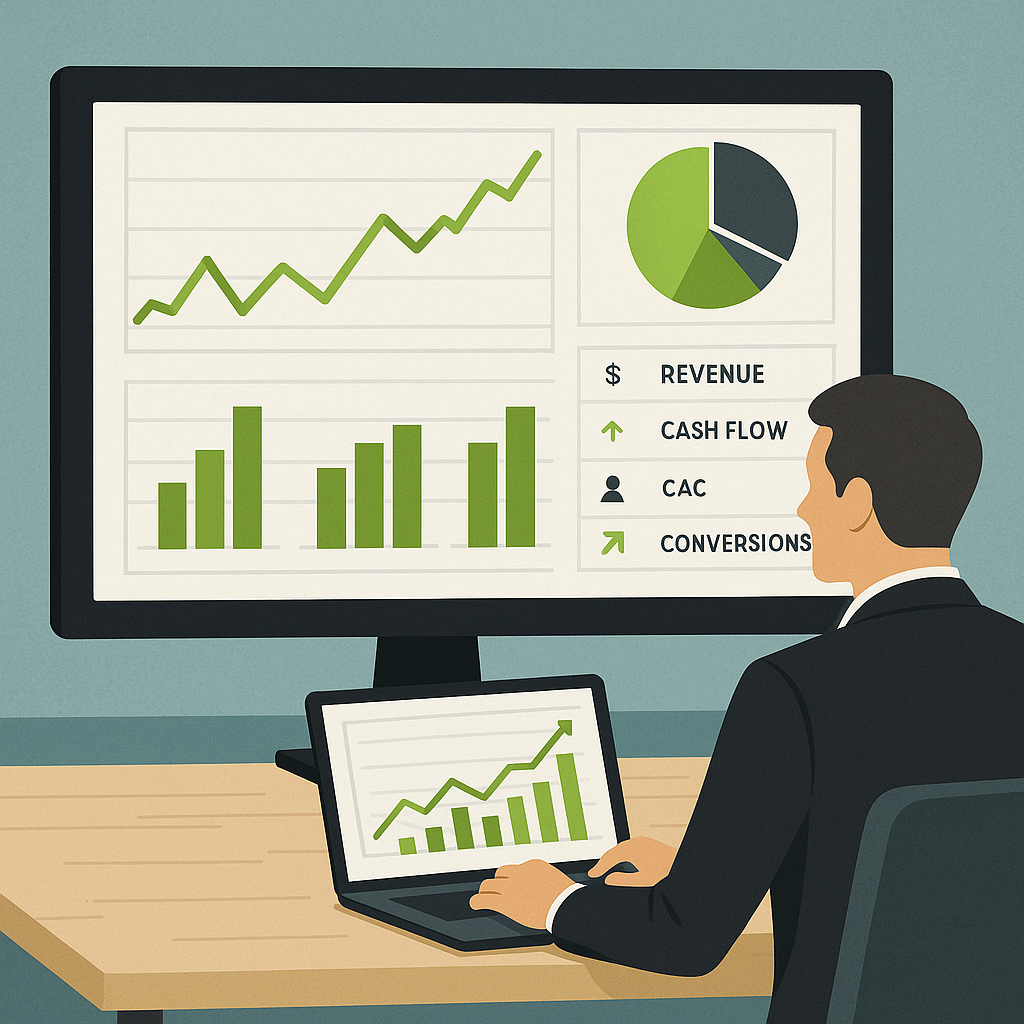
    📌 Financial Visibility & KPI Tracking – Instead of relying on gut feeling, a fractional CFO builds dashboards and tracks dynamic KPIs to provide a clear, real-time picture of the business’s financial performance. This ensures that leadership teams can make decisions based on data, not assumptions.

    📌 Unbiased, Politics-Free Decision-Making – In many businesses, internal politics can influence financial decisions. A fractional CFO is an external expert who provides objective recommendations, ensuring financial strategy is based purely on what’s best for the business, not internal pressures.

    A fractional CFO doesn’t just keep a business financially stable—they turn finance into a growth engine. By implementing strong financial systems, optimising cash flow, and ensuring every financial move is strategic, they help businesses scale with confidence.

    When Do You Need a Fractional CFO?

    Many businesses hesitate to bring in financial leadership because they assume a CFO is only necessary for large corporations. In reality, a fractional CFO can add significant value to businesses at various stages, particularly those that are growing, facing financial challenges, or needing strategic guidance. The key indicator of when to hire a fractional CFO isn’t just business size—it’s financial complexity.

    Here are clear signs that your business needs a fractional CFO:

    📌 You’re Flying Blind Without Clear Financial Visibility – Many founders don’t truly understand their profitability, cash flow, or financial health. Without structured reporting and KPIs, they’re making decisions in the dark. A fractional CFO brings clarity, real-time financial dashboards, and strategic forecasting to ensure informed decision-making.

    📌 You’re Scaling Fast But Lack Financial StrategyGrowth without financial structure can be dangerous. If revenue is increasing but cash flow remains tight, margins aren’t optimised, or the business lacks a long-term financial roadmap, a fractional CFO helps build a financial strategy that supports sustainable scaling.

    📌 You Need to Secure Funding or Credit Facilities – Whether a business is raising investment, applying for loans, or negotiating credit terms, a fractional CFO ensures financial statements are investor-ready and funding is structured optimally. They also use their network to unlock better financing opportunities.

    📌 You’re Making Investment Decisions Without ROI Analysis – Many businesses spend money without truly evaluating returns. A fractional CFO ensures every investment decision is backed by data, prioritising high-ROI, fast payback initiatives that accelerate growth without putting the company at financial risk.

    A fractional CFO isn’t just for struggling businesses—they’re a strategic partner for any company looking to build a solid financial foundation, scale efficiently, and maximise profitability. By bringing in the right financial leadership at the right time, businesses can avoid costly mistakes, optimise growth, and make financial decisions with confidence.

    Real-World Impact: How a Fractional CFO Transforms Businesses

    Hiring a fractional CFO isn’t just about financial oversight—it’s about unlocking business potential through strategic finance. Many companies operate without clear financial visibility, leading to cash flow struggles, inefficient investment decisions, and missed growth opportunities. Here are two real-world examples of how fractional CFO leadership drove transformational results.

    📌 Case Study 1: Unlocking Growth with Real-Time Financial Visibility
    One of our clients was scaling fast but had no structured financial reporting. They didn’t fully understand how profitable they were, what was driving their margins, or how much cash they had available to reinvest. Decisions were being made reactively, and the leadership team was operating without a clear financial strategy.

    To solve this, we built a live dashboard with dynamic KPIs, integrating real-time P&L and balance sheet insights. This gave the business full transparency into its financial health, enabling better planning, data-driven decision-making, and smarter capital allocation. The result? 297% revenue growth in 18 months, over 200% profit increase, and 100%+ growth in cash on hand.

    📌 Case Study 2: Fixing Cash Flow & Strengthening Financial Processes
    Another company was facing severe cash flow issues—they had strong sales, but their financial structure was disorganised, leading to delayed receivables, unpredictable cash cycles, and strained operations. They needed a structured approach to financial management to avoid liquidity issues and stabilise growth.

    We tackled this by:
    Using our network to secure credit facilities, providing immediate breathing room.
    Optimising receivables, implementing a structured collections strategy for faster cash inflows.
    Restructuring invoicing & payment terms, ensuring predictable, steady income streams.
    Implementing a quarterly-reviewed budget, keeping financial discipline while allowing for growth.

    Within months, the business stabilised its cash flow, improved liquidity, and created a structured financial plan that supported long-term scaling.

    💡 The Key Takeaway? A fractional CFO transforms finance from an administrative function into a growth engine. By improving financial visibility, cash flow management, and strategic decision-making, they help businesses scale with confidence and financial stability.

    When to Transition from a Fractional CFO to a Full-Time CFO

    While a fractional CFO provides immense value, there comes a point in a company’s growth where a full-time CFO becomes necessary. The decision isn’t about industry—it’s about complexity. The financial needs of a business evolve, and at a certain stage, having a dedicated in-house CFO delivers a higher return on investment.

    📌 Revenue Exceeds €30M
    Once a company crosses the €30M revenue threshold, financial operations become more complex. At this stage, businesses typically require daily financial oversight, sophisticated forecasting models, investor relations, and deeper financial planning that justifies a full-time hire. The effort required exceeds what a fractional CFO can provide within a part-time engagement.

    📌 The Business Requires Ongoing CFO-Level Involvement
    If financial decisions are becoming more frequent and intertwined with daily operations, a full-time CFO can provide faster decision-making and deeper integration within the company. This is particularly crucial when a company is scaling aggressively, acquiring businesses, or preparing for an IPO.

    The ROI of a Full-Time CFO Becomes Positive
    Hiring a full-time CFO is a significant investment, but when the value they provide outweighs their cost, it makes financial sense. If a CFO can optimize cash flow, secure strategic funding, and drive efficiencies that directly impact profitability, the business can justify the cost of a full-time leadership role.

    A fractional CFO is the best choice for businesses scaling under €30M, but once financial operations demand full-time strategic leadership, transitioning to an in-house CFO ensures continued growth, stability, and long-term success.

    A Fractional CFO as a Growth Accelerator

    A fractional CFO is more than just financial oversight—they are a strategic partner for growth. By providing financial visibility, cash flow optimisation, and data-driven decision-making, they help businesses scale efficiently without the cost of a full-time CFO.

    For most businesses under €30M, a fractional CFO is the best solution. However, as financial complexity increases, transitioning to a full-time CFO becomes necessary. The key is knowing when to scale financial leadership to sustain growth.

    💡 The Takeaway? A fractional CFO turns finance into a business accelerator, ensuring smarter decisions, stronger cash flow, and sustainable profitability.

    At Quantro, we help businesses gain financial clarity, improve profitability, and scale with confidence. If you're ready to leverage finance as a true growth driver, book a call with us today and see how we can help your business thrive.
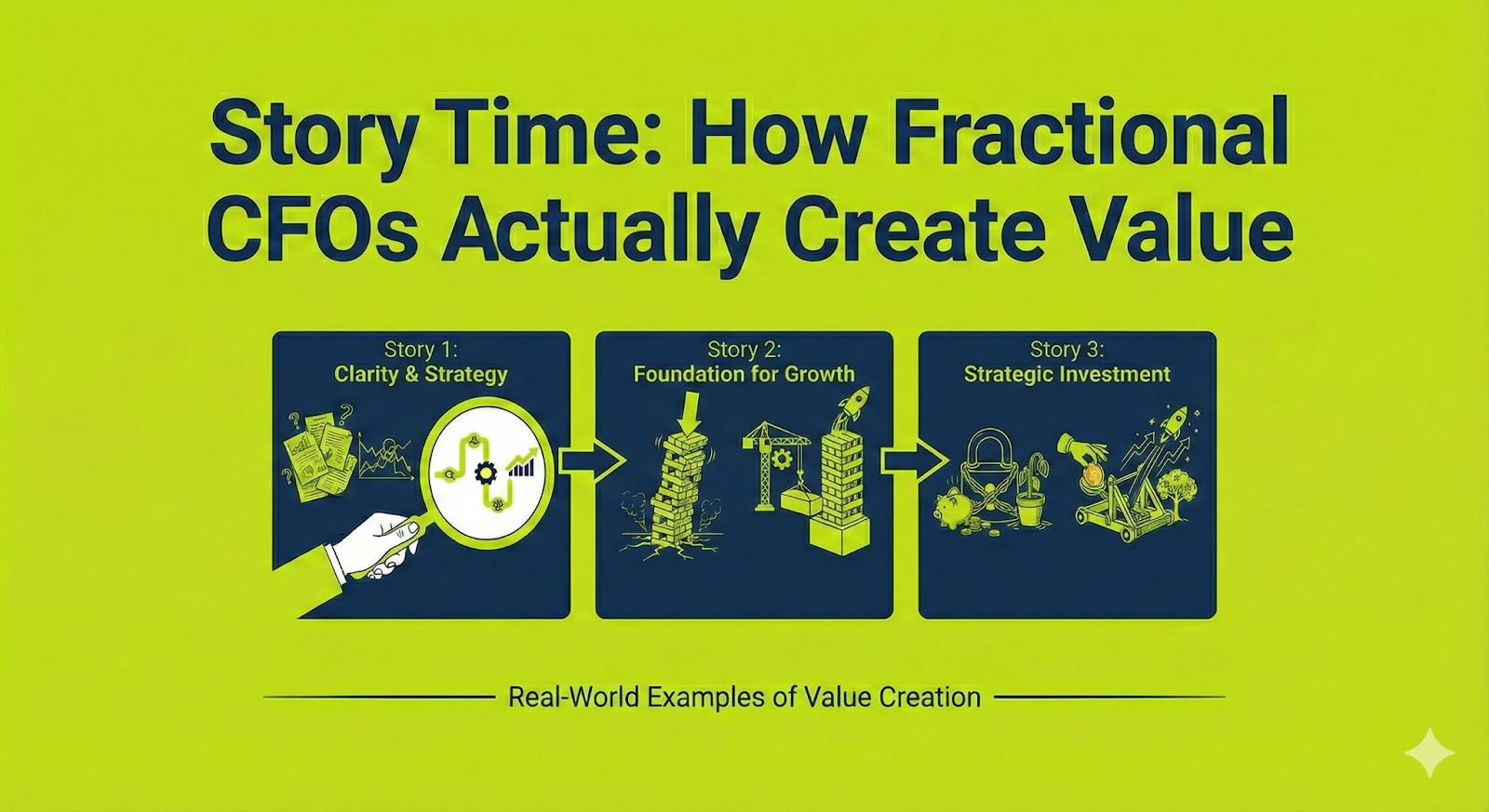
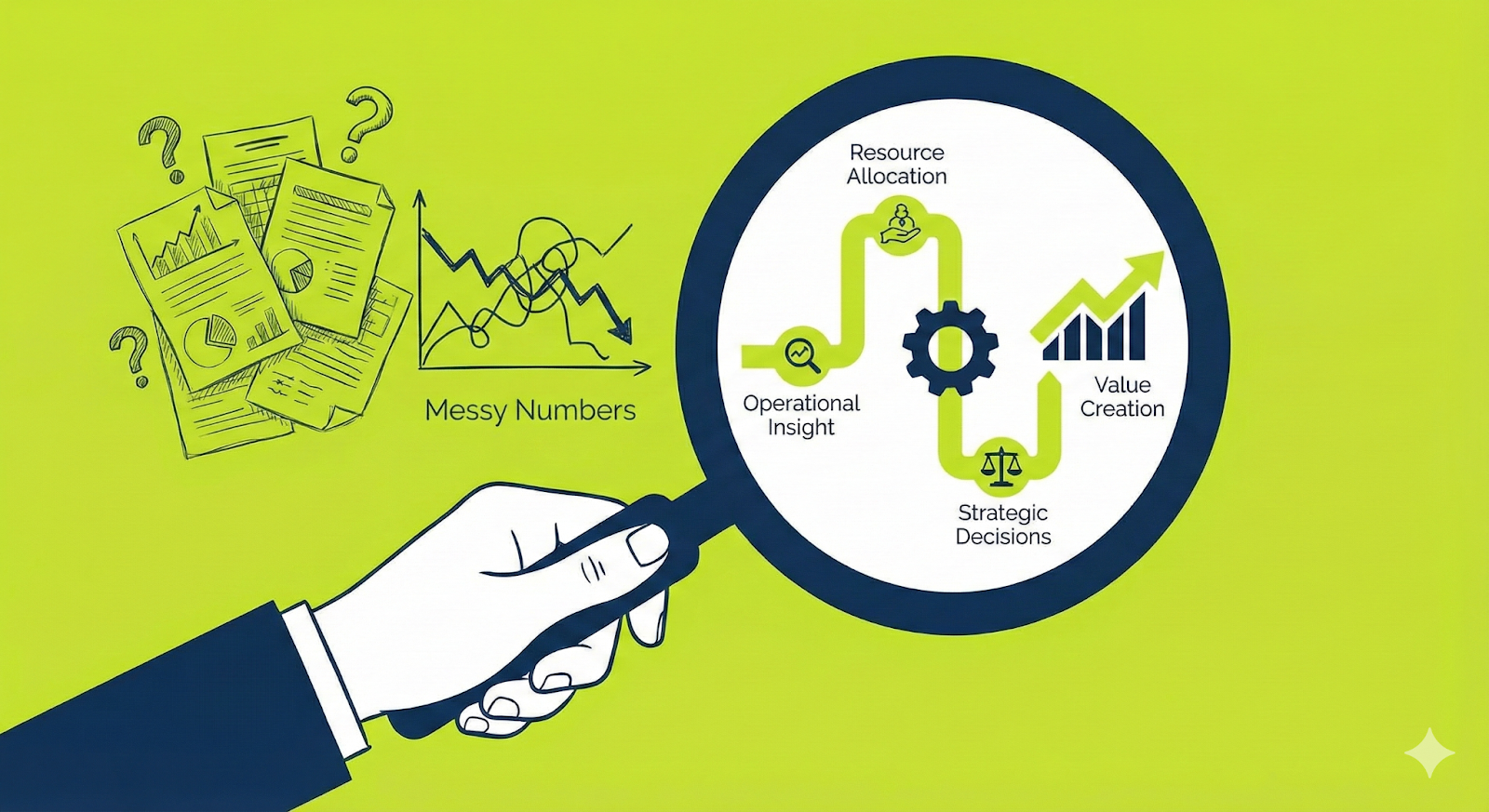
    *Image from April 15, 2026

  • Story Time: How Fractional CFOs Actually Create Value

    Story Time: How Fractional CFOs Actually Create Value

    Most founders reach out to a fractional CFO for one simple reason.

    They want to put their finances in place.

    Clean numbers.
    Better reports.
    Fewer unknowns.

    And that makes sense. No business can scale without solid financial foundations.

    But here is the part that often gets missed.

    Finance is not a separate function that sits quietly at the side of the business. It is not a box to tick or a document to sign off once a month.

    Finance sits at the heart of how a business actually operates.

    When you really look at the numbers, you do not just see revenue and costs. You see how work flows through the company. You see where time is being lost, where teams are under pressure, and where decisions are being delayed or avoided.

    That is why a fractional CFO rarely just fixes financial problems.

    By analysing the numbers, we often uncover issues that live deep inside the operations of the business. Hiring decisions that are happening too late. Growth plans that look good on paper but cannot be executed in reality. Investments that are being avoided out of caution, even though they are exactly what the business needs next.

    Below we share three real stories of how a fractional CFO created value far beyond spreadsheets and reports.

    Not by focusing on finance alone.
    But by using finance as a lens to improve the business as a whole.

    Story 1: “We Just Need a CFO to Put the Finances in Place”

    This is how the conversation usually starts.

    A founder reaches out and explains that the business has grown quickly. The numbers exist, but they feel messy. Reports are produced, but they are not driving decisions.

    What they ask for is simple.
    Put the finances in place.

    When we joined this business, that was exactly the expectation. Clean up the reporting, create some structure, and make sure everything looks sensible.

    But once we started working through the numbers, it became clear that the problem was not financial accuracy.

    The numbers were telling a different story.

    Margins varied wildly between projects. Certain teams were constantly under pressure, while others had spare capacity. Projects that looked profitable on paper were quietly draining time and energy from the business.

    None of these issues showed up as red flags in the accounting reports. But they were obvious when finance was used as a tool to understand how the business actually operated.

    Instead of focusing purely on reports, we shifted the conversation.

    Why do some projects consistently run over budget?
    Why does hiring always feel late rather than planned?
    Why are some decisions being revisited every month?

    By answering these questions, the founder began to see that finance was not the problem to fix. It was the tool that helped reveal what needed fixing.

    Once finance moved to the centre of the business, operational decisions became clearer. The founder stopped reacting to monthly numbers and started using them to shape how the company ran.

    That is when real value was created.

    Story 2: The Growth Plan That Would Have Broken the Business

    This founder had a clear ambition.

    Revenue needed to grow fast. Very fast. Investors were confident, the market was there, and the projections showed a five times increase within a year.

    On paper, it looked achievable.

    When we reviewed the numbers, we agreed with one thing. The revenue target itself was not unrealistic. Demand could be generated, and sales could support it.

    The problem was everything around it.

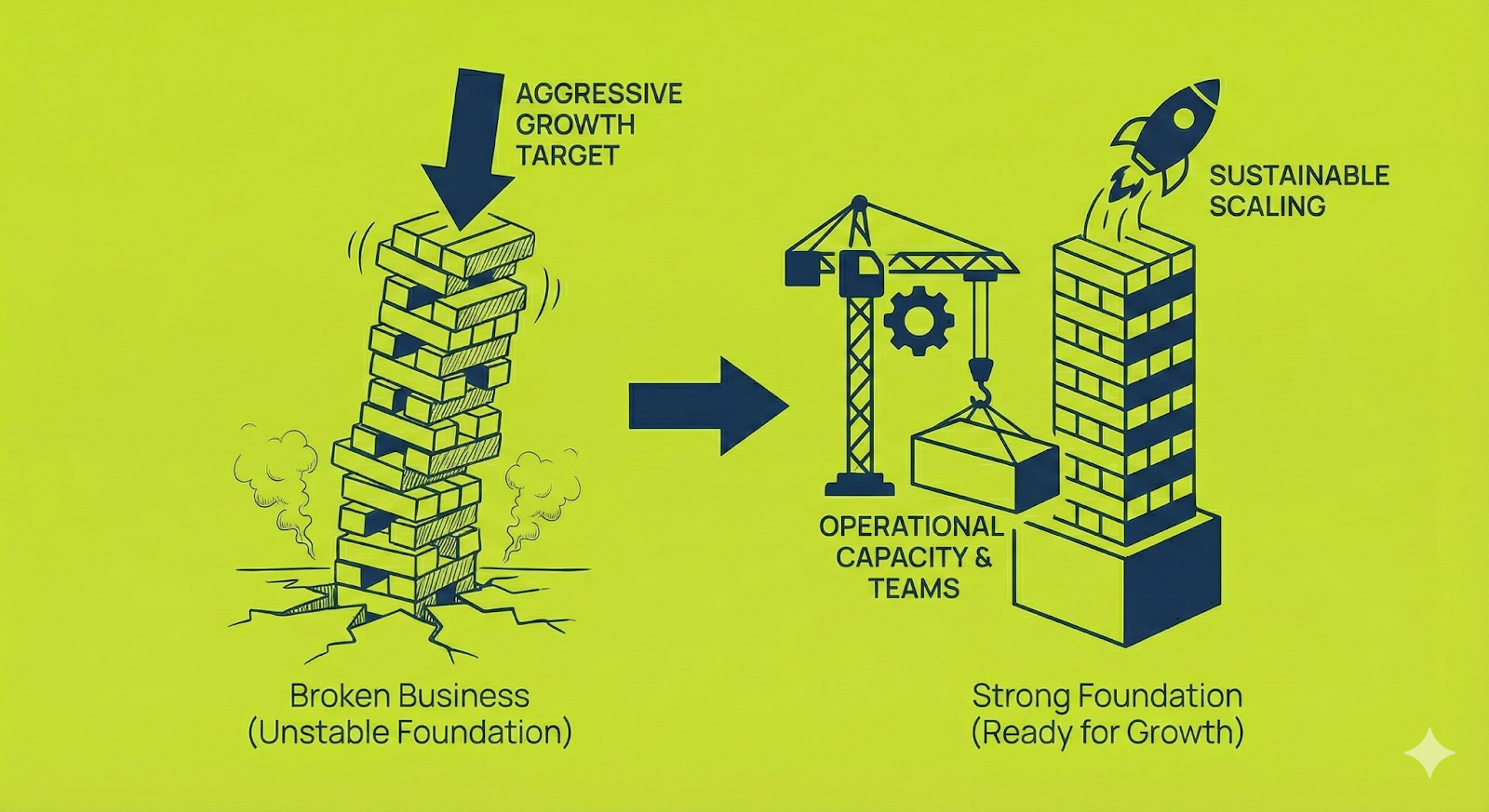
    What the numbers quickly revealed was that the business was not built to handle that level of growth. Hiring plans lagged behind revenue expectations. Key roles were missing. Operational capacity was already close to its limit.

    If the growth arrived as planned, the business would not have scaled. It would have cracked.

    This is where finance becomes more than forecasting.

    By linking revenue projections to operational capacity, we could show the founder something investors had not. Growth is not just about selling more. It is about whether the business can deliver without burning out teams or damaging quality.

    Because this was identified early, the founder had time to act.

    We reworked the hiring plan. Key roles were brought forward. Costs increased earlier than originally planned, which felt uncomfortable at first.

    But when demand increased, the business was ready.

    Instead of scrambling to hire in crisis mode, the team was already in place. Delivery stayed strong, pressure stayed manageable, and the business was able to sustain the growth it had promised.

    This is the difference between chasing numbers and building a business that can actually support them.

    Story 3: When Spending More Was the Right Financial Decision

    This founder was cautious. And for good reason.

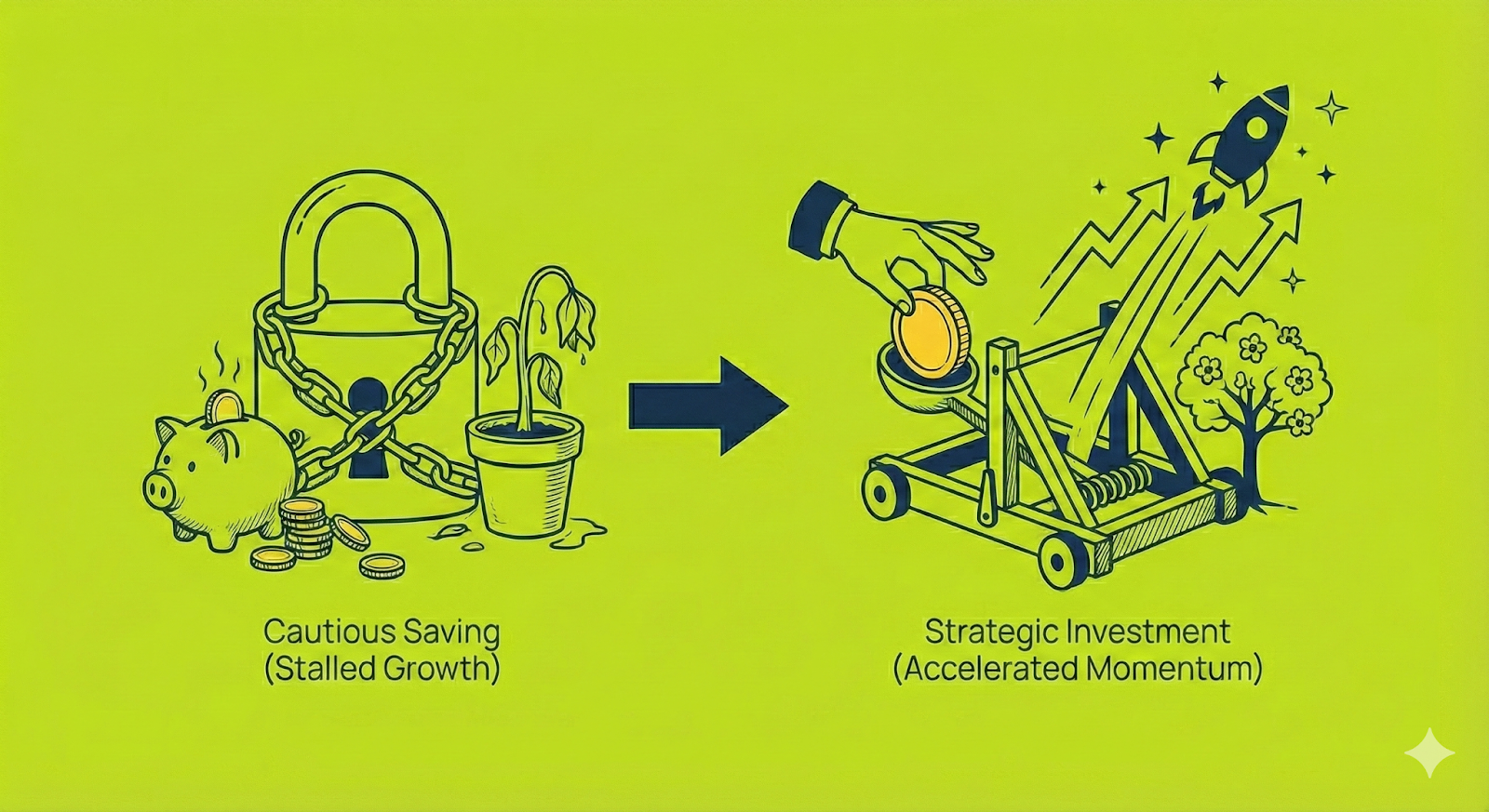
    They had built the business carefully, kept costs under control, and avoided unnecessary risk. Every major spend was questioned, challenged, and often delayed.

    From a purely accounting perspective, that approach made sense.

    But as the business matured, something started to stall.

    Growth slowed. Teams worked harder, but results did not scale at the same pace. Opportunities were being discussed, but never fully committed to.

    When we stepped in, the instinctive question was familiar.
    How do we protect the numbers?

    Instead, we reframed it.
    What is the cost of doing nothing?

    By looking beyond the immediate financial impact, we could see that the business was underinvesting in the very areas that would unlock future returns. Marketing was constrained despite clear signals of demand. Internal processes were stretched but never improved. Decisions were being filtered through short term caution rather than long term value.

    This is where the difference between accounting and CFO thinking becomes clear.

    A CFO does not just look at whether the business can afford to spend. They look at whether the business can afford not to.

    With a full view of the strategy, timing, and expected outcomes, we helped the founder invest intentionally. Not recklessly, but with purpose and conviction.

    The numbers dipped slightly in the short term. That was expected.

    What followed was not. Improved momentum, stronger positioning, and a business that was once again moving forward rather than holding back.

    Sometimes the most responsible financial decision is to lean in, not pull back.

    The Value Is Not in the Numbers Alone

    Across all three stories, the pattern is the same.

    The problem was never a lack of data.
    The reports existed.
    The numbers were accurate.

    What was missing was interpretation.

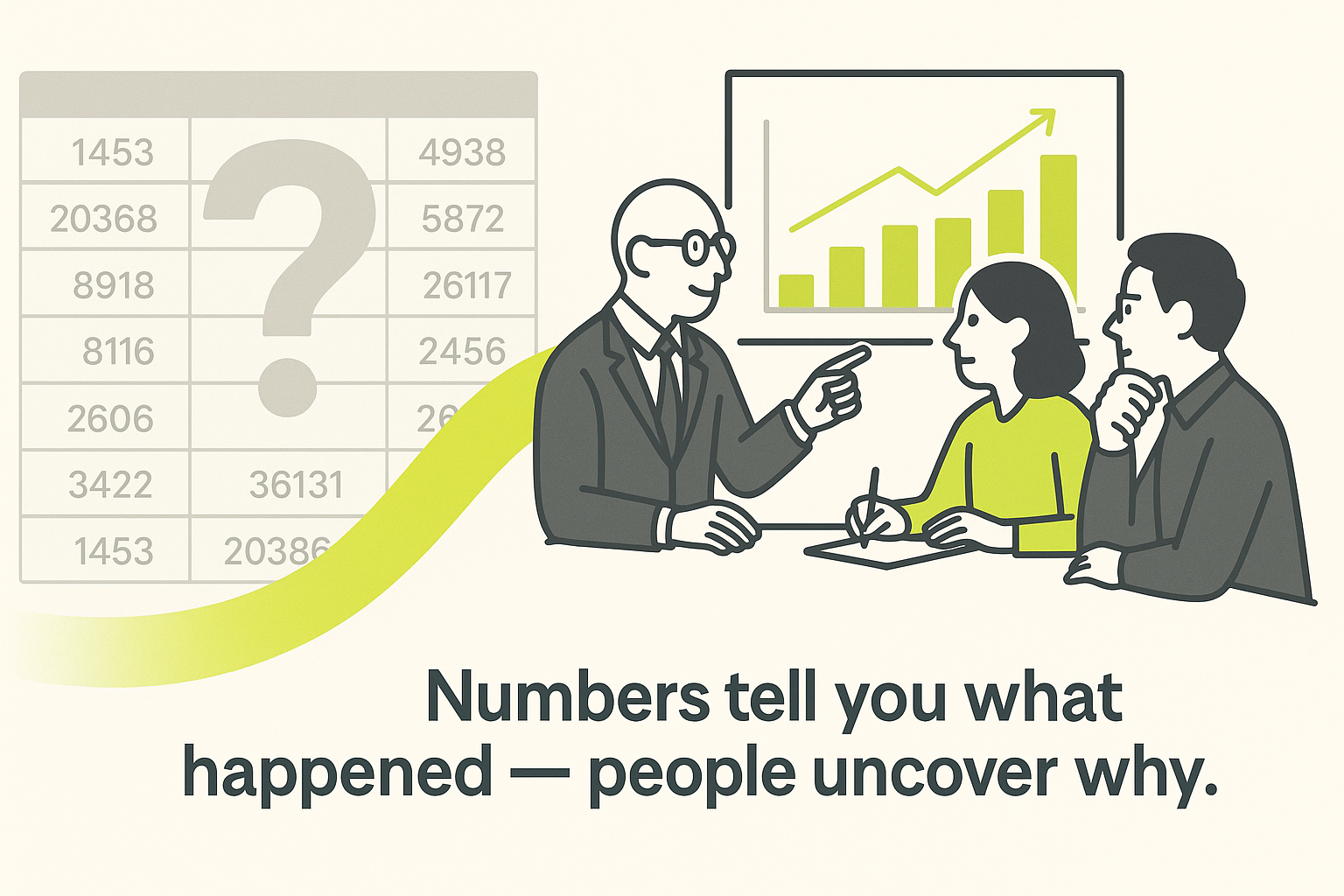
    A fractional CFO does not create value by producing better spreadsheets or cleaner reports. The value comes from understanding what the numbers are really saying about the business.

    They reveal where operations are under strain.
    They show when growth plans are disconnected from reality.
    They highlight when caution is holding a business back from its next stage.

    Most importantly, a fractional CFO is not there for a quick fix. The real impact comes from becoming part of the team, understanding the business deeply, and growing alongside the founder.

    That is when finance stops being a support function and becomes a decision making tool.

    If you are ready to use your numbers to guide how your business actually runs, rather than simply report on the past, we would love to help.

    Book a conversation with the Quantro team to explore how we can build a financial model tailored to your business. One that gives you not just numbers, but clarity, control, and confidence in every decision you make.

  • The CFO Playbook for Investor Ready Reporting and Exit Preparation

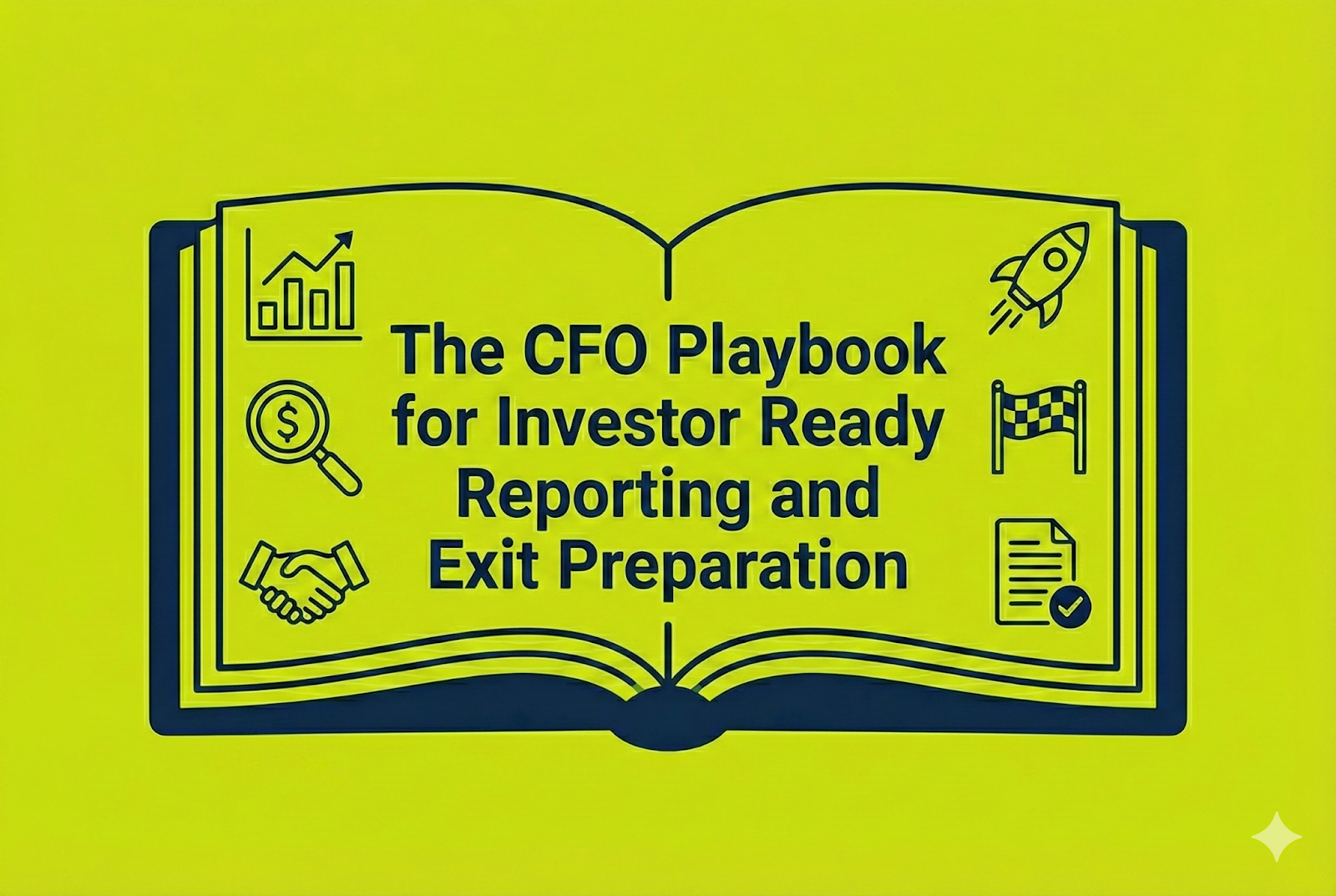
    The CFO Playbook for Investor Ready Reporting and Exit Preparation

    Preparing a business for an exit is often seen as something that happens at the end. A founder decides it is time to sell, the data room is opened, and the scramble begins. In reality, exit readiness starts long before the first conversation with a potential buyer. The foundation for a successful sale is built quietly in the background through clean reporting, consistent processes and a financial narrative that investors can trust. When these disciplines are in place, everything from valuation to deal speed improves. When they are not, even strong businesses struggle to convince buyers that their success can be repeated.

    Investor ready reporting is not simply a higher standard of accounting, it is a different way of running a business. It requires clarity in how value is created, transparency in how performance is measured and a commitment to showing the underlying economics of the company long before due diligence begins. Done well, this preparation does more than support an exit. It strengthens leadership decisions, improves operational discipline and creates a business that is easier to run and easier to buy. Exit readiness is ultimately about confidence. Buyers need to believe the future cash flows are stable and predictable, and leadership needs to believe they can explain them with clarity.

    What Investors Actually Look For.

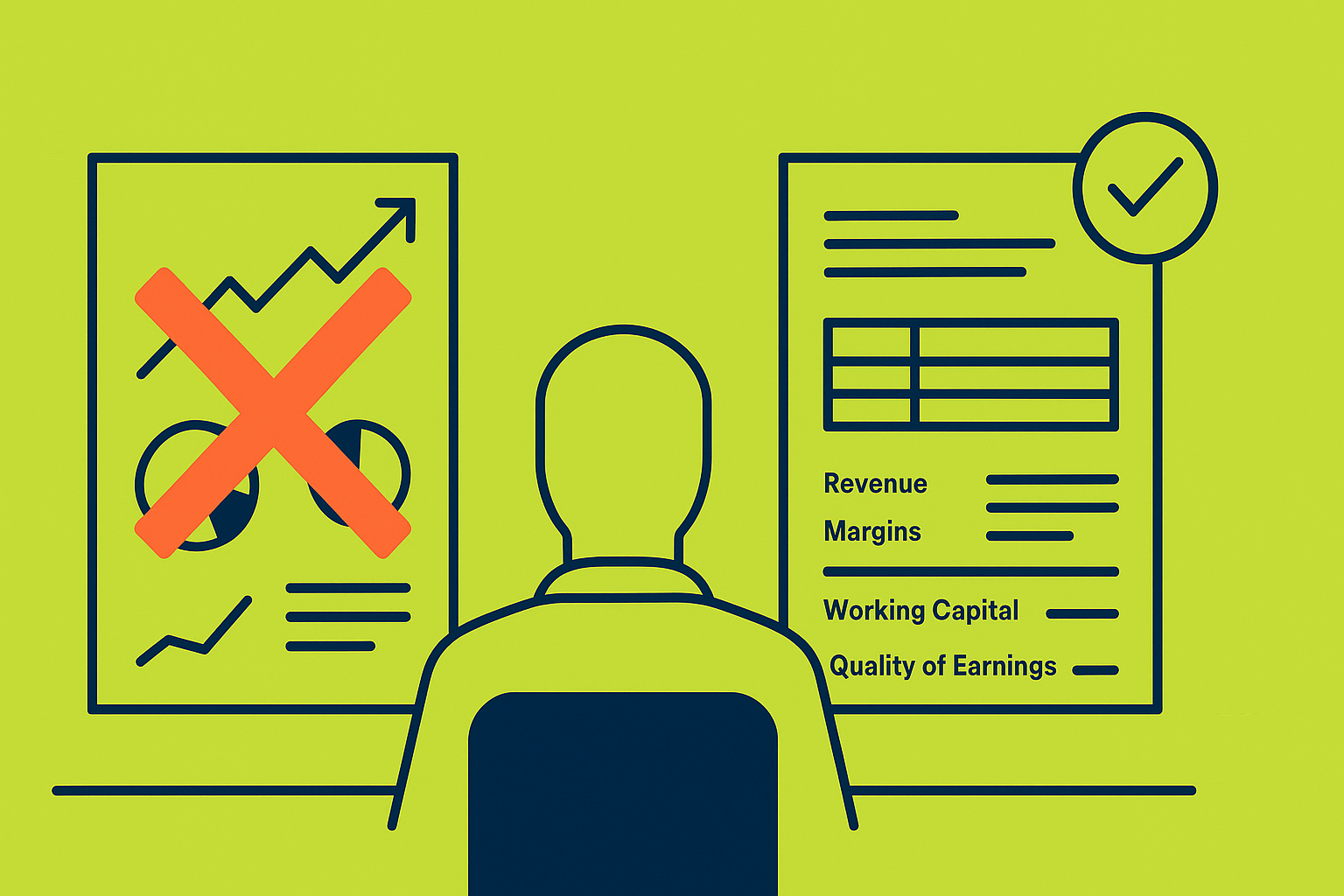
    Most founders believe investors care primarily about growth. They highlight top line performance, market opportunity and the potential of the product. But when buyers begin their assessment, they look for something very different. They want evidence that the numbers are real, repeatable and supported by a financial system that can withstand scrutiny. Investor ready reporting is not about presenting impressive figures, it is about demonstrating control. Clean accounting, consistent policies and clear documentation give buyers confidence that what they see is what they are buying.

    This is why most deals are not won on ambition, they are won on predictability. Buyers are looking for a business that can produce reliable future cash flows, and they examine every detail to determine whether those flows are at risk. They review revenue quality, margin stability, working capital movements and the integrity of financial processes. The more a company can explain, the stronger its position becomes. When reporting is fragmented or assumptions are unclear, buyers begin to apply discounts to protect themselves. Valuation becomes a reflection of uncertainty rather than potential.

    For many companies, the gap between founder expectations and buyer priorities becomes visible only when the deal is already under way. By that stage, it is often too late to correct issues that have been years in the making. Investor ready reporting closes this gap early. It ensures the business can tell a clear story about how it earns money, how it grows and how it manages risk. With this foundation in place, buyers do not just see a business with potential, they see one they can trust.

    The First Red Flag: Black Box Unit Economics

    The earliest sign that a company is not investor ready is surprisingly simple. It is the moment a founder cannot explain how the business makes money at a unit level. Many companies present impressive revenue charts and confident forecasts, yet struggle to articulate the basic mechanics behind profitability. When a founder cannot show how customer acquisition cost compares with lifetime value, or how these metrics improve with scale, investors immediately see a black box. Growth without economic clarity does not build confidence. It creates uncertainty about whether the business can scale without consuming ever increasing amounts of capital.

    Investor ready companies can break down their economics line by line. They can show how much it costs to acquire a customer, how long it takes to recover that cost and why lifetime value reliably exceeds it. More importantly, they can explain how investment will strengthen these economics rather than simply fuel expansion. Investors are not looking for parallel growth lines. They want to see a model where efficiency improves over time and where the unit economics become stronger as the business scales. When these fundamentals are missing, even impressive top line growth becomes difficult to trust.

    Clear unit economics turn a story of growth into a story of scalability. They show investors that the business is more than a set of projections. It is a system that leadership understands and can control. That clarity is often what separates companies that raise capital or exit successfully from those that struggle to justify their valuation.

    The CFO’s Core Pillars of Investor Grade Reporting

    Investor grade reporting is not about having perfect numbers, it is about having a financial foundation that buyers can rely on. The first pillar is clean and consistent accounting. This means monthly closes that are accurate and timely, revenue and cost recognition that follows clear policies, and reconciliations that tie every figure back to evidence. When financial statements are built on discipline rather than last minute adjustments, investors can immediately see that the business operates with control. Predictability begins with process, and process is what separates an investor ready company from one that relies on assumptions.

    The second pillar is the way a company presents and understands its revenue. For many businesses, correcting revenue recognition under standards such as IFRS fifteen is one of the quickest ways to strengthen valuation. When annual contracts are smoothed into monthly recurring revenue and deferred properly, the financial story becomes clearer and more dependable. Buyers pay a premium for revenue that is predictable and visible. They are far less interested in one off spikes that inflate short term performance but hide the true rhythm of the business. A refined revenue model does not just change the numbers, it changes the narrative behind them.

    Finally, investor grade reporting requires consistency in how the future is forecasted and measured. A company that can show several quarters of accurate forecasting sends a powerful signal. It demonstrates that leadership understands the levers of the business and can manage performance with intention. Variance analysis becomes a mark of credibility rather than a technical exercise. When a business can explain both the past and the future with clarity, investors begin to see not only stability but capability. That is what turns reporting into trust.

    Governance, Legal and Operational Infrastructure

    Strong governance is often overlooked during day to day operations, yet it becomes one of the first areas buyers examine. Clean corporate records, documented board decisions, clear employment agreements and well structured cap tables signal that the business has been managed with care. When these documents are incomplete or inconsistent, deals slow down and buyer confidence weakens. The operational reality is that governance work done early saves months of friction during due diligence. It also protects value, because uncertainty in legal or structural matters often results in buyer discounts.

    Legal and contractual hygiene is equally important. Investors want to see that intellectual property is properly assigned, that commercial agreements are signed and stored, and that key customer and vendor relationships are documented rather than informal. For companies in markets where informal agreements are common, this becomes even more critical. A clean legal house tells a buyer that the risks are known and controlled. When it is not clean, the burden sits with them to uncover what may be hidden. That lack of clarity becomes a valuation issue, not just an administrative one.

    Operational readiness ties all of this together. Buyers want to understand how the business runs beyond the founder, whether processes are documented and whether the organisation can sustain performance through a transition. When operations rely heavily on a few individuals or undocumented knowledge, buyers see dependency risks rather than scalability. Governance, legal discipline and operational clarity work together to show that the business is resilient, structured and ready for external scrutiny.

    The Non Negotiable Rule: Operate in a Perpetual Due Diligence State

    If a company plans to exit within the next two years, there is one rule that matters above all others. Operate as if due diligence has already begun. This mindset transforms how the business organises information, documents decisions and monitors performance. Instead of building a data room in a rush, the company maintains a live and structured repository of everything a buyer will eventually request. Financial statements, contracts, tax filings, governance documents and operational policies are updated continuously. Nothing is missing, and nothing requires last minute reconstruction.

    This perpetual state of readiness does more than reduce administrative work. It prevents deal fatigue, a common reason transactions fall apart. When buyers are forced to chase documents or wait for clarification, momentum slows and confidence erodes. A company that can respond quickly and accurately keeps the process moving and maintains control of the narrative. In competitive processes, this can be the difference between securing a premium valuation and losing the interest of a serious buyer.

    Adopting this discipline creates value even without a planned exit. It brings structure to the business, reduces risk and provides leadership with a clear view of its own operations. The companies that succeed in an exit are rarely the ones that start preparing when the opportunity appears. They are the ones that have been ready for months, sometimes years. Operating in a perpetual due diligence state is not about expecting a sale, it is about building a business that is always prepared for one.

    The Exit Timeline

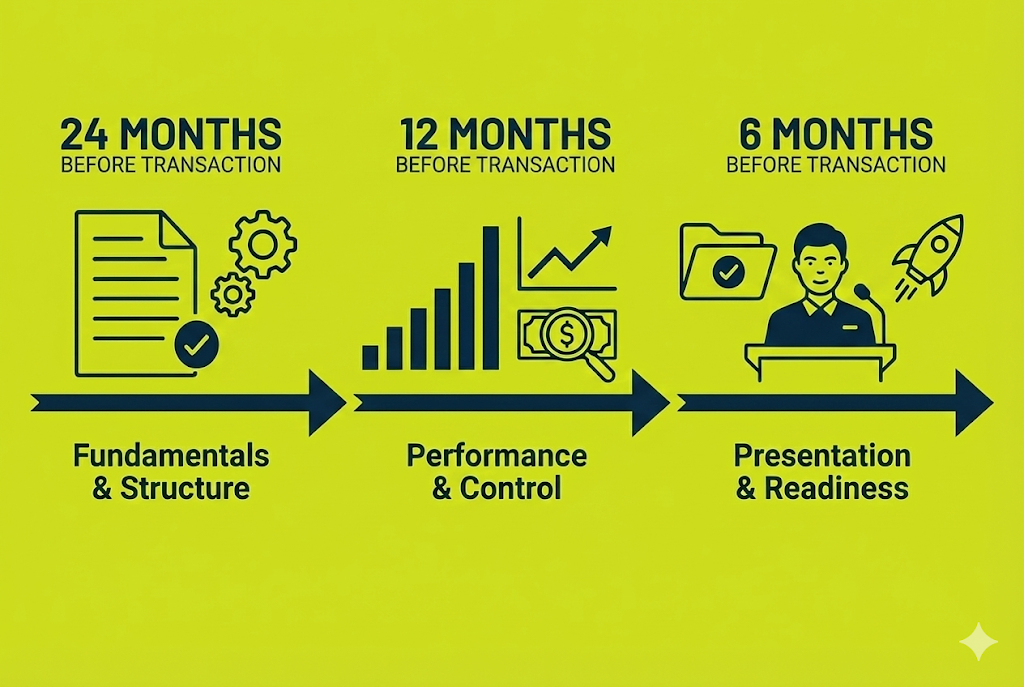
    Exit readiness is not a single project, it is a sequence of disciplines that build on one another over time. The companies that achieve the smoothest transactions begin preparing long before they appoint advisors or engage with buyers. The first stage typically begins around twenty four months before a planned exit. At this point, the focus should be on strengthening the fundamentals: formalising accounting policies, defining KPIs, building clean datasets and establishing reliable reporting cycles. This is also the period to address structural issues such as cap table clarity, contract organisation and intellectual property assignments. Early preparation creates the foundation that later valuation will depend on.

    Twelve months before a potential transaction, preparation shifts from structure to performance. Forecast accuracy becomes essential, working capital movements must be well understood and margins need to be stable and explainable. Many companies also choose to conduct an internal quality of earnings review at this stage. Doing so uncovers the issues a buyer would find and allows time to correct them. This period is also when leadership must demonstrate control. Investors want to see consistent performance and a narrative that shows how the past connects to the future.

    The final six months are about presentation rather than construction. The data room should already be live and complete, the forecast should reflect current performance and financial statements should be audit ready. The focus turns to clarity: refining the equity story, ensuring documentation is accessible and preparing the team for buyer discussions. Companies that reach this stage in a state of readiness enter the market with confidence. They are not reacting to buyer questions, they are leading the conversation. When a business reaches this point, the exit process becomes smoother, faster and far more likely to achieve a premium outcome.

    The Fractional CFO Advantage and the Path to a Confident Exit

    A successful exit is rarely the result of last minute preparation. It comes from years of building discipline into the business, strengthening its reporting, refining its metrics and creating an operation that can withstand scrutiny. This is where the fractional CFO becomes a powerful partner. With experience across multiple industries and transactions, a fractional CFO brings the structure, clarity and independence that most growing companies need. They help leadership see blind spots early, build credible forecasts, formalise financial processes and maintain the investor grade reporting that buyers expect. Above all, they ensure that when the opportunity to exit appears, the business is already prepared for the conversation.

    In many cases, the greatest value a fractional CFO provides is confidence. Confidence for the founder, who knows the story is clear and the numbers are defensible. Confidence for internal teams, who rely on structured processes rather than reactive decision making. And confidence for buyers, who see a business that is transparent, consistent and well managed. When these strengths come together, the exit process shifts from uncertainty to opportunity. Instead of trying to convince buyers of potential, the business can demonstrate readiness, resilience and value.

    Exit readiness is not only about selling a company. It is about building one that is strong enough to choose its own path. Whether the goal is a future acquisition, a funding round or long term stability, operating at investor grade elevates every part of the business. It brings clarity to leadership, discipline to operations and trust to every conversation. With the right financial foundation, an exit becomes not an aspiration, but a natural outcome of well managed performance.

    If you are ready to prepare your business for a confident exit, we would love to help. Book a meeting with our team to explore how Quantro can build the investor grade reporting, forecasting and financial structure your company needs. Not just to complete a transaction, but to build clarity, control and confidence at every stage of the journey.

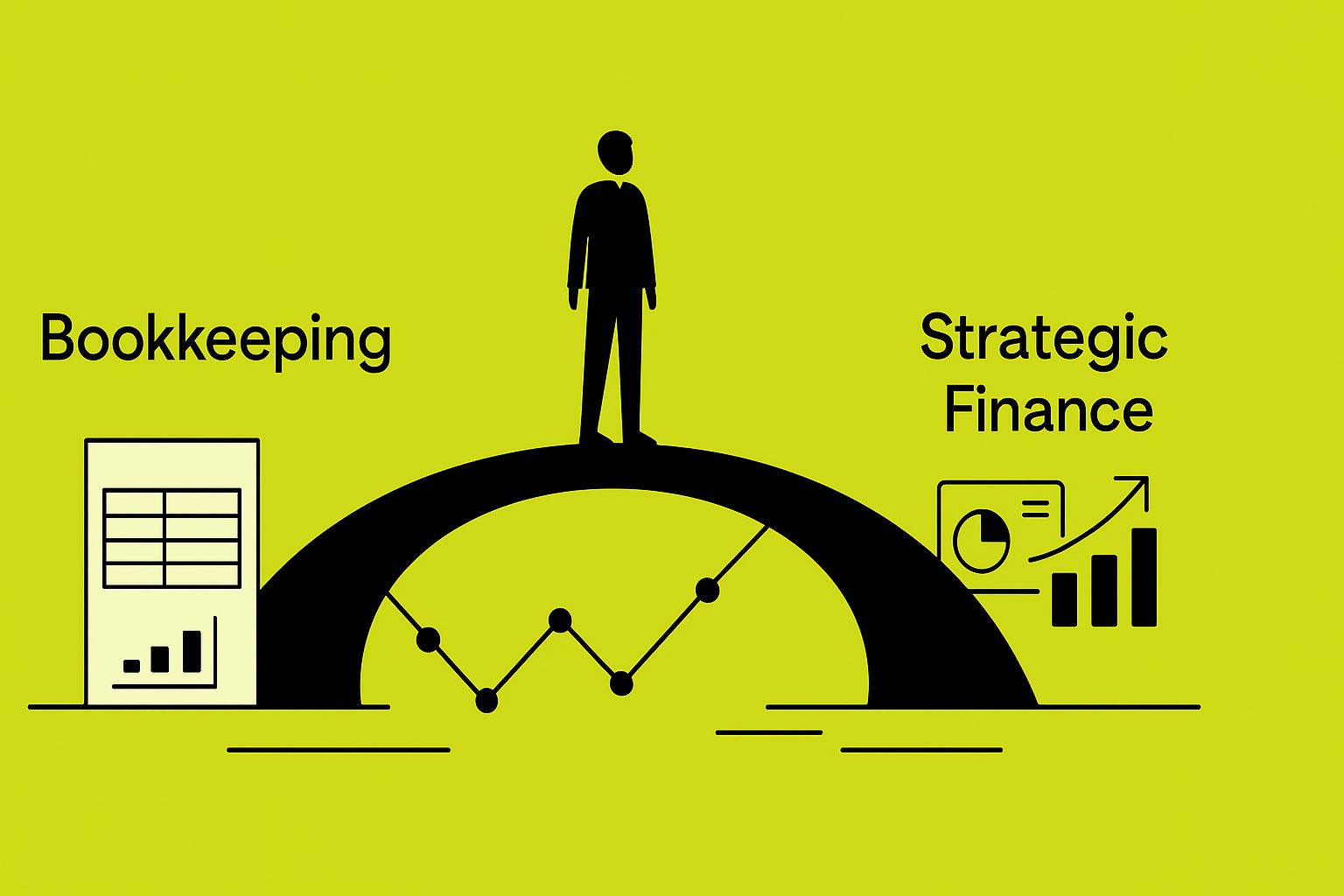
  • Scaling Pains: When to Upgrade from Bookkeeping to Strategic Finance

    Scaling Pains: When to Upgrade from Bookkeeping to Strategic Finance

    The Hidden Limits of Bookkeeping

    For most growing businesses, bookkeeping feels like enough. The numbers are clean, the accounts reconcile, and reports arrive on time. It creates a sense of order, a comfort in knowing that the financials are under control. But beneath that surface, a quiet problem begins to grow. Bookkeeping tells you where your money went, not where it should go next. It is reflective, not predictive. The moment a company begins to scale, that distinction becomes critical.

    At Quantro, we see this pattern every day. Founders invest in excellent bookkeepers who keep their accounts organised, yet still find themselves unsure about cash flow, margins, or investment timing. The numbers are technically right but strategically incomplete. That is because traditional bookkeeping was never designed to guide decisions, only to record them. When a business starts growing faster than its financial insight, bookkeeping alone stops being a safety net and starts becoming a blindfold.

    Why Bookkeeping Stops Working as You Scale

    Bookkeeping is essential for every business. It records transactions, ensures compliance and keeps financial data organised. For early-stage companies, that foundation is enough; it provides clarity and structure. But as a business grows, the limits of bookkeeping become clear. Recording what happened in the past no longer provides enough information to guide the future.

    The problem is that bookkeeping is reflective, not predictive. It explains where the money went but not what to do next. When revenues rise, costs spread and operations expand, the financial picture becomes more complex. Founders may see growth on paper but still struggle to understand cash flow, profitability or investment timing. These are strategic questions, and bookkeeping alone cannot answer them.

    Many growing businesses try to solve this by improving their systems or hiring more bookkeepers, but the real issue is not the data, it is the absence of analysis. Numbers must be connected, interpreted and projected into future scenarios. That is where strategic finance begins. It transforms financial information into insight, helping leaders plan, prioritise and grow with confidence.

    What Strategic Finance Really Means

    Strategic finance begins where bookkeeping ends. It takes the same financial data that once sat quietly in ledgers and turns it into a forward-looking decision-making tool. Instead of asking what happened last month, it asks what might happen next quarter, and what actions will shape that outcome. It connects financial understanding to business planning, allowing leaders to see the cause and effect of their choices with far greater clarity.

    At its core, strategic finance is about alignment. It aligns numbers with strategy, cash flow with growth, and ambition with capability. It gives decision-makers not only visibility over the current financial position but also the ability to model different futures. This means moving beyond the traditional reports and building tools that allow for forecasting, scenario planning and performance tracking in real time. It is a shift from recording facts to influencing direction.

    At Quantro, this process begins with simplification. We take control of a client’s financial data, clean it, and transform it into a format that is both structured and meaningful. From there, we build insights that help founders focus on what truly drives their business. We show them where they are strong, where they are exposed, and what changes will have the most significant impact on growth. The result is not just a clearer picture of the business, but a plan of action that connects day-to-day operations with long-term goals.

    When done well, strategic finance becomes part of every major decision. It informs hiring plans, pricing strategies, market expansion, and investment choices. It brings the future into every financial conversation, turning uncertainty into structure and instinct into strategy. For growing businesses, this is the difference between reacting to numbers and leading with them.

    The Signs You’ve Outgrown Bookkeeping

    At some point, every growing business reaches a stage where bookkeeping alone no longer provides the clarity it once did. The reports are accurate, but they stop being useful for decision-making. You can see what happened last month, yet you cannot tell why it happened or what will happen next. When financial data becomes purely descriptive rather than strategic, the business has already outgrown bookkeeping.

    One of the most common signs is recurring cash flow pressure despite profitability. Bookkeeping shows profit, but not timing. Without a forward-looking view of payments, costs and collections, even a profitable company can struggle to manage liquidity. This is where strategic finance adds value, linking financial information to business reality and helping founders anticipate challenges before they occur.

    Complexity is another clear signal. As a company expands into multiple products or markets, the data multiplies and simple systems begin to strain. Spreadsheets become slow, errors creep in and financial management turns reactive rather than proactive. When that happens, it is time to move from keeping records to managing the future. Strategic finance brings structure, rhythm and foresight; the tools every scaling business needs to stay in control.

    The Middle Ground — The Rise of the Fractional CFO

    Between the limits of bookkeeping and the cost of hiring a full-time Chief Financial Officer, there is a valuable middle ground. This is where the fractional CFO comes in. For many growing businesses, it offers the ideal balance between strategic insight and affordability. A fractional CFO provides the same level of financial expertise as a full-time executive but on a flexible, scalable basis that adapts to the pace of growth.

    At Quantro, we find that this model works best for companies entering their next stage of expansion. They have reliable bookkeeping and basic reporting in place but need guidance on how to plan ahead, manage cash flow and invest with confidence. We step in to translate data into strategy, building financial models, forecasts and performance dashboards that help leadership make informed decisions. The founder can stay focused on operations while knowing that the financial direction is sound.

    The advantage of a fractional CFO is that it bridges the gap between control and strategy. It turns raw numbers into insight, provides clarity where there was uncertainty, and creates a rhythm for reviewing and refining performance. Most importantly, it gives growing businesses access to the same strategic finance capabilities as larger organisations, without the full-time cost. For many founders, it is the first real step towards financial maturity.

    ​​Real Impact: From Numbers to Decisions

    The value of strategic finance becomes clear when numbers start driving real change. At Quantro, we often work with companies that are profitable on paper but still face monthly cash flow challenges. The issue is rarely about revenue; it is about timing, structure and visibility. Without a clear understanding of how money moves through the business, even successful companies can find themselves short of liquidity when they need it most.

    By taking a deeper look at their financial data, we uncover patterns that bookkeeping alone cannot show. We analyse payment cycles, supplier terms and spending behaviour, then translate those insights into action. Sometimes that means renegotiating contracts, improving credit terms or adjusting pricing strategy. Other times, it is about helping leadership decide where to invest or when to hold back. The goal is always the same: to turn financial data into meaningful decisions that improve performance.

    For many of our clients, these adjustments have a visible impact within months. Cash positions stabilise, costs reduce and planning becomes more confident. With the right strategy in place, the numbers start to tell a different story: one of control, not uncertainty. Strategic finance transforms financial management from an administrative task into a driver of growth.

    It’s Never Too Early

    Many founders wait too long to bring strategy into their finances. They see CFO support as something for later, when the business is larger or more complex. In truth, the benefits of strategic finance begin long before that stage. Having the right financial insight early allows a company to grow with intention rather than reaction. It ensures that every decision, from pricing and hiring to expansion and investment, is grounded in data, not instinct.

    At Quantro, we have seen how transformative this can be. Businesses that once struggled with cash flow, confidence or direction often find stability within months of introducing a fractional CFO. They gain visibility over their numbers, clarity around their priorities and confidence in their next steps. The result is not just better financial control, but better leadership. Strategic finance turns uncertainty into structure and transforms growth from something that happens to the business into something it actively drives.

    If you are ready to move beyond bookkeeping and bring strategic clarity to your finances, we would love to help. Book a meeting with our team to explore how Quantro can design a tailored financial strategy for your business; one that gives you not just data, but direction, focus and the confidence to grow.

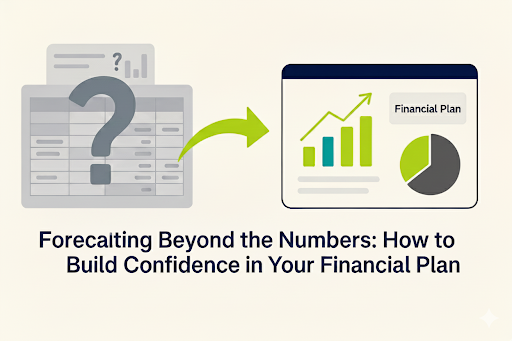
  • Forecasting Beyond the Numbers: How to Build Confidence in Your Financial Plan

    Forecasting Beyond the Numbers: How to Build Confidence in Your Financial Plan

    Forecasting is one of those things every business does, but few truly use well. In many companies, it sits in a spreadsheet, updated once a year and quietly forgotten until something goes off track. It is treated as a technical task rather than a strategic tool. The problem is, when forecasting is done this way, it rarely builds confidence. It tells you what the numbers might look like, but not what they really mean; or how to act on them.

    When forecasting is done properly, everything changes. The process forces you to look closely at what is working, what is not and what challenges are likely to appear in the year ahead. You build a plan that connects numbers to real business decisions; hiring, product development, market entry, marketing spend; and gives leadership a clear view of the road ahead. Done well, forecasting stops being a box-ticking exercise and becomes the foundation for confident decision-making. It is not just about predicting the future, it is about preparing for it with clarity and control.

    Why Numbers Alone Aren’t Enough

    Most forecasts fail not because the maths is wrong, but because the meaning is missing. A spreadsheet full of precise figures can look impressive, yet still fail to tell a useful story. Numbers alone cannot explain why performance looks the way it does or how a business can influence the outcome. Without context, even the most accurate forecast becomes little more than an estimate.

    A strong financial plan begins with conversation, not calculation. It requires the CEO, CFO, management team and finance department to sit down together and build the forecast line by line. Each number should have a story behind it; whether that is a new client pipeline, a cost-saving initiative or a market trend. When stakeholders see that every assumption is supported by data and logic, their confidence grows. They can challenge, question and understand how each figure connects to the bigger picture. That shared understanding turns a forecast into a tool that leadership can rely on, not just report on.

    The False Comfort of “Thin-Air Forecasts”

    Many companies believe they already forecast, but a closer look often tells a different story. Their numbers are built on optimism, not evidence. Growth projections are pencilled in without reference to past performance, customer acquisition costs, or conversion data. Budgets are approved with confidence, yet no one can clearly explain where the figures come from. These “thin-air forecasts” create the illusion of control while quietly eroding trust.

    We saw this first-hand with an e-commerce client whose forecasts looked strong on paper but had little connection to reality. Together, we built a model that linked every stage of the customer journey; from ad spend (€) and cost per click to website visitors, engaged sessions, add-to-cart rates, completed orders and average order value. By grounding the forecast in real data, we could clearly show how each euro spent on marketing translated into traffic, engagement and ultimately sales. The result was not just a more accurate forecast, but a model the team could actually believe in; one that turned guesswork into measurable insight.

    The problem is that when forecasts are not backed by data, the people who build them stop believing in them. Teams begin to re-budget mid-year, adjusting plans as reality catches up; a practice so common it feels normal, yet it defeats the purpose of forecasting altogether. At Quantro, we have seen that the moment a forecast becomes data-driven, everything changes. When every sales target, cost reduction or marketing spend is supported by real numbers and logical assumptions, the plan stops being an exercise in hope and becomes a foundation for decision-making. Forecasts are not just about being accurate; they must also be credible. Only then can they guide a business with confidence.

    What makes this process powerful is that it is not just about data, it is about defining the right metrics. We build tailored KPIs that reflect how each business truly operates, rather than relying on generic benchmarks. For one client, that might mean tracking cost per engaged session; for another, the ratio of repeat orders to ad spend. These bespoke indicators turn a forecast into a living management tool; one that tells the real story of performance and gives leaders the confidence to act.

    Data, Process and Discipline

    A forecast is only as good as the data and process behind it. Without reliable inputs and a consistent structure, even the most sophisticated models produce noise instead of insight. Many companies underestimate how much forecasting depends on discipline. It is not about building a single spreadsheet once a year; it is about creating a repeatable process that collects, tests and refines information over time. When your data is clean and your process is clear, your forecast becomes something the entire organisation can trust.

    Data quality is not just a technical matter; it is a cultural one. Everyone involved, from sales and marketing to operations and finance, must understand their role in maintaining it. Forecasting should sit at the centre of business performance, linking strategic planning, budgeting and reporting. When leadership treats forecasting as an ongoing management tool rather than a compliance task, accountability naturally follows. People start owning the numbers, not just producing them. Over time, this builds a forecasting culture where confidence is not assumed but earned, one accurate, transparent update at a time.

    Communicating Forecasts to Build Trust

    Numbers on their own rarely inspire confidence; it is how you communicate them that makes the difference. A forecast should not only show what the future might look like, but why and how you expect to get there. When stakeholders understand the reasoning behind the numbers, they are far more likely to believe in them. This is why storytelling is just as important as data. Clear visuals, transparent assumptions and a concise narrative turn a spreadsheet into a conversation.

    At Quantro, we find that the best forecasts don’t overwhelm with detail; they focus attention. A few well-chosen charts, a dashboard tailored to the right audience, and a story that connects financial outcomes to strategic choices; that is what builds trust. When you can walk an investor, a board member or a department head through the logic of your forecast and they can see the links for themselves, you move from reporting numbers to leading decisions. The goal is not just accuracy; it is belief.

    Conclusion: Forecasting for Confidence, Not Compliance

    Forecasting is not about predicting the future with perfect accuracy — it is about building the confidence to act in the face of uncertainty. When forecasts are treated as strategic tools rather than accounting exercises, they become a source of alignment across the business. The process itself creates value: teams debate assumptions, test ideas and understand the “why” behind every number. The result is a plan that people believe in, because they helped build it.

    The businesses that forecast best are not the ones with the most complex models, but the ones that use their forecasts to make better decisions. They connect data with insight, numbers with narrative, and plans with people. Whether it is a founder deciding when to hire or a CFO planning for growth, confidence comes not from having all the answers, but from knowing your assumptions are sound. A good forecast does not just measure progress; it gives you the clarity and courage to move forward.

    If you are ready to turn your forecasts into a tool for confident decision-making, we would love to help. Book a meeting with our team to explore how Quantro can build a model tailored to your business; one that gives you not just numbers, but clarity, control and confidence.

  • From Chaos to Clarity: How an fCFO Transforms Your Business

    From Chaos to Clarity: How an fCFO Transforms Your Business

    When most business leaders hear the term fractional CFO, they picture someone who builds budgets, forecasts revenues, and keeps an eye on cash flow. While those tasks are important, they only scratch the surface of what a true fractional CFO (fCFO) brings to the table. The real value lies not in spreadsheets alone, but in helping a business navigate growth, complexity, and strategic decisions at the highest level.

    At Quantro, we see the fCFO as far more than a financial technician. The right fCFO becomes the CEO’s closest ally, a strategic partner who understands not just the numbers, but also the story behind them. With board-level experience and a track record of scaling businesses, an fCFO can step into the role of co-pilot, guiding leaders through uncertainty, turning gut-feel management into data-driven clarity, and embedding financial rigour into every aspect of the company.

    The Traditional View vs. Reality

    For many business owners, the idea of a CFO is rooted in tradition: someone who builds budgets, monitors cash flow, prepares forecasts, and ensures compliance. This definition is not wrong, but it is limited. It frames the CFO purely as a financial controller, a guardian of the books rather than a driver of growth. Under this lens, a fractional CFO is seen simply as a lighter, part-time version of the same role.

    The reality, however, is very different. A true fCFO is not just a finance professional, they are a business partner at the highest level, as they are business owners themselves. They bring the mindset of a business owner, often with hands-on experience in building and selling companies. This allows them to step into the role of strategist as well as financier, guiding CEOs through operational challenges, employee issues, and even sales and marketing considerations. In practice, an fCFO becomes the right hand of the CEO, contributing to both financial stability and holistic business growth.

    Differentiating the True fCFO

    Not all fractional CFOs are created equal. Many professionals in the market position themselves under the same title but only deliver the basics: finance-focused oversight, cash flow monitoring, and compliance reporting. While useful, this narrow view doesn’t unlock the full potential of what a fractional CFO can do. It risks reducing the role to a part-time accountant with a new label, rather than a high-level strategic leader.

    The Quantro approach is different. A true fCFO embeds within the business, operating at the same strategic level as a full-time CFO with board experience. That means understanding how the board thinks, what investors need to see, and how to present information in a way that builds confidence and clarity. More importantly, the role extends beyond finance into every part of the company: marketing, sales, operations, and performance. By building company-wide KPIs, not just financial metrics, the fCFO ensures that every department is aligned, measurable, and accountable. This integration is what allows businesses not only to grow, but to scale sustainably.

    Trust, Accountability & Communication

    Trust is the foundation of any effective CFO–CEO relationship, and it is especially critical when the role is fractional. Unlike a full-time executive embedded in the business daily, an fCFO must create confidence quickly and sustain it over time. This begins with open communication being available when urgent issues arise, whether by phone or instant message, while also establishing structured rhythms for deeper discussions.

    At Quantro, we build trust through a clear cadence: weekly strategy calls to discuss challenges and opportunities, paired with monthly reviews that present results, key wins, and actionable next steps. This routine is more than reporting; it is about creating accountability. Many founders operate in isolation, making it easy to lose focus or drift from strategic priorities. By holding them accountable to agreed actions week after week, the fCFO becomes more than an adviser, they become a reliable partner, a sounding board, and often the only person ensuring the CEO is not alone in driving progress.

    Case Study: From Chaos to Growth

    One of the clearest examples of the power of a fractional CFO comes from our work with an over 100+ people company generating more than 8 digit million in annual revenue. On the surface, this was a successful business. Underneath, however, it was running blind: no proper reporting, no departmental visibility, and no reliable way to assess performance. Decisions were made on instinct, leaving leadership unable to identify bottlenecks or allocate resources effectively.

    When Quantro stepped in, we stripped everything back and rebuilt the reporting framework from the ground up. We introduced a comprehensive dashboard that, for the first time, gave the business full visibility into every department’s P&L. Suddenly, the leadership team could see where money was being made, where it was being lost, and which areas were dragging performance down. This clarity transformed decision-making. Within 12 months, bottlenecks were removed, accountability was embedded, and the company experienced significant growth, all because visibility turned into action.

    When to Bring in an fCFO

    The right time to bring in a fractional CFO often comes earlier than many founders expect. Businesses usually wait until they are in distress, struggling with cash flow, facing investor scrutiny, or overwhelmed by rapid growth. Yet the most value is unlocked when an fCFO is introduced proactively, to prepare the foundations before challenges escalate.

    Clear warning signs include a lack of visibility into performance, reliance on gut-feel decision-making, or financial reports that don’t explain the real story of the business. Other triggers are external: preparing to raise capital, planning for a merger or acquisition, or scaling operations into new markets. In all these cases, a fractional CFO provides board-level expertise at a fraction of the cost of a full-time hire, with the flexibility to scale involvement up or down as the business evolves. The result is senior strategic leadership without the long-term overheads.

    Conclusion

    A fractional CFO is not just a financial expert hired to tidy up the books, they are a strategic partner who helps shape the future of the business. By embedding into the organisation, aligning every department to measurable KPIs, and bringing board-level insight, the fCFO ensures that leaders have both clarity and confidence in their decisions. This role bridges the gap between numbers and strategy, ensuring that financial intelligence translates into sustainable growth.

    For founders and CEOs, the real value lies in partnership. A true fCFO is not only a guardian of cash flow and profitability but also a co-pilot, someone who understands the pressures of leadership, holds you accountable, and helps transform vision into execution. At Quantro, we believe this blend of financial rigour and strategic foresight is what allows businesses to scale with resilience. If your company is ready to move from instinct-driven decisions to data-powered growth, partnering with an fCFO may be the smartest next step.

  • The Hidden Cost of Late Reporting: Why Timing is Everything in Finance

    The Hidden Cost of Late Reporting: Why Timing is Everything in Finance

    Most founders think of late reporting as a minor inconvenience. If the numbers arrive a week or two after month-end, what’s the real harm? After all, as long as sales are growing, the business must be on track, right? In reality, the timing of financial reporting can mean the difference between having the cash to seize an opportunity and stalling out due to liquidity gaps.

    At Quantro, we’ve seen this blind spot play out repeatedly. One client was excellent at their craft but consistently struggled with cash flow. Because their reporting lagged, they didn’t notice that they were paying suppliers early while their own customers were dragging their feet on invoices. The result? A business that looked profitable on paper but was constantly short on liquidity. Late reporting didn’t just delay insights, it actively created cash problems that could have been avoided.

    For startups and small businesses especially, timing is everything. Unlike larger organisations with deeper reserves, early-stage companies don’t have the luxury of waiting weeks to understand their financial position. Late reporting doesn’t just make you slower; it narrows your options and makes every decision riskier. The hidden costs are not abstract, they show up in missed investments, eroded cash positions, and lost growth momentum.

    The Cash Flow Trap

    On paper, a business can look profitable while struggling to keep the lights on. This paradox is almost always tied to cash flow visibility, and late reporting is often at the root. When reporting lags, founders don’t see the actual movement of money in and out of the business until it’s too late to react.

    Take the case of a client who consistently paid suppliers ahead of schedule while failing to enforce timely collections from customers. Without up-to-date reporting, they had no visibility into how these mismatched payment terms were draining liquidity. The outcome was predictable: the business ran into recurring cash shortfalls, despite showing steady revenue growth. In practice, money was going out faster than it was coming in; a classic case of being “profitable but broke.”

    The real danger here is that cash tied up unnecessarily can’t be deployed into growth. For this client, the shortfall meant they couldn’t invest in marketing campaigns with proven ROI, missing a critical chance to scale. Late reporting didn’t just delay their awareness of the issue, it directly cost them opportunities to grow. In startups, where every euro of liquidity counts, this is more than a nuisance. It’s a survival threat.

    The Hidden Cost of Missed Opportunities

    One of the biggest hidden costs of late reporting is the opportunity you never get to take. On the surface, a delay of a few weeks might not seem significant, but in practice it can mean the difference between doubling down on a winning strategy and missing your chance altogether.

    We saw this first-hand with a client who, on paper, looked healthy enough to ramp up their marketing spend. But because their reporting lagged, they didn’t realise that most of their available cash was already locked up in unpaid invoices. They went ahead with their plans, only to pull the plug halfway through when liquidity ran short. By the time their updated reports revealed the gap, the high-ROI campaign was dead, and so was their growth momentum in a key market.

    In another case, a founder wanted to secure funding to expand operations. But their reporting delays meant they couldn’t show a clear picture of receivables, payables, and runway. Investors didn’t walk away because the business was bad. They walked away because the numbers weren’t ready. A late report became a late conversation, and a missed opportunity to raise capital when it mattered most.

    When the company brought Quantro on board, we rebuilt their reporting process from the ground up. Instead of relying on spreadsheets that lagged weeks behind, we implemented automated dashboards that connected directly to their accounting system and bank feeds. Within weeks, the founder had real-time visibility over cash, liabilities, and burn rate. More importantly, they had the confidence to walk into investor meetings with accurate, up-to-date numbers. The result? A funding round that had previously stalled was back on track, this time with stronger investor trust and faster decision-making.

    For startups, opportunities rarely come twice. Late reporting doesn’t just blur the financial picture, it actively robs you of the agility to invest, pitch, and grow when the timing is right. By the time the numbers catch up, the moment is usually gone.

    The Technology Gap

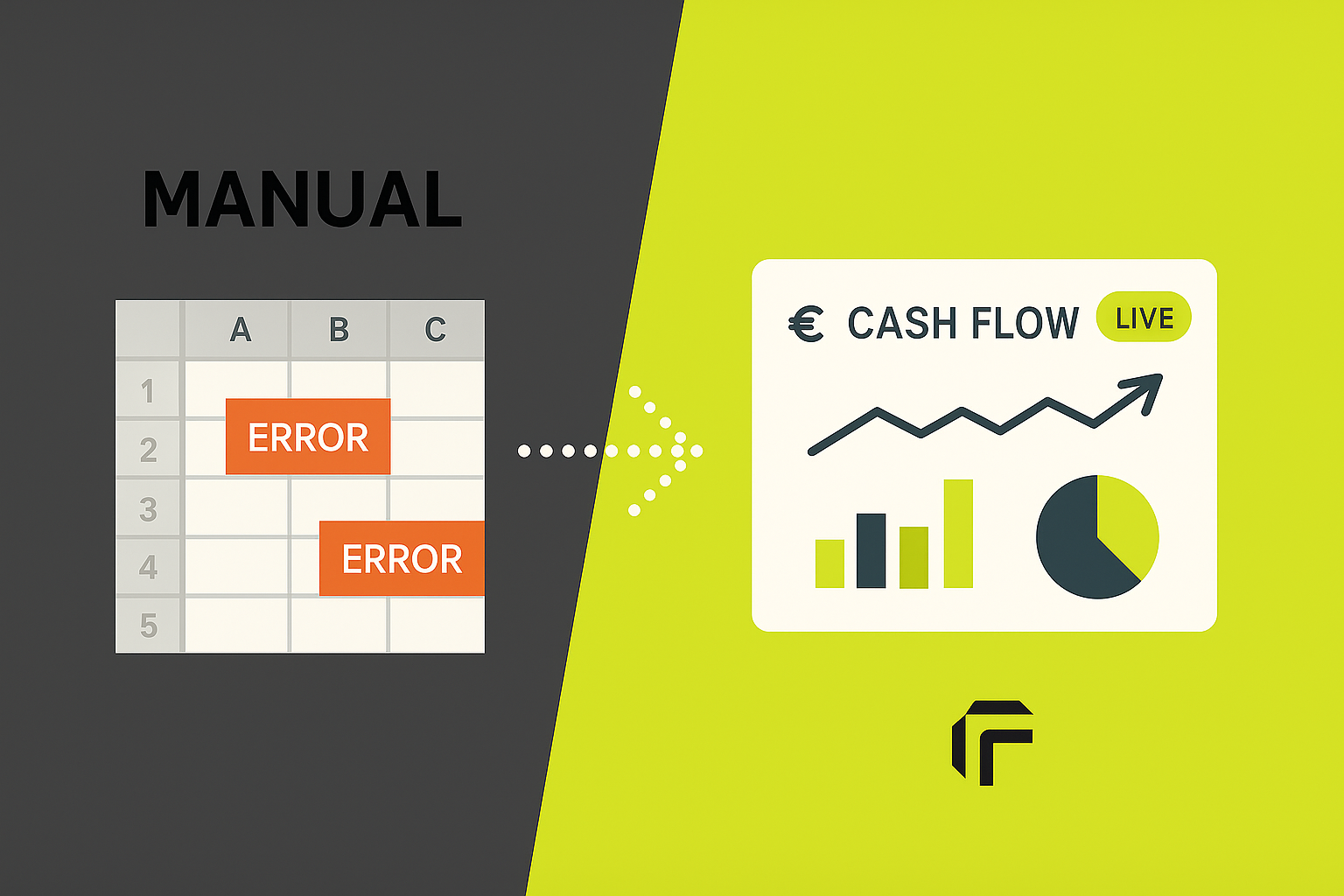
    If late reporting is the problem, outdated tools are usually the cause. Too many startups still rely on manual spreadsheets, disconnected systems, and workflows that depend on human inputs at every step. The result is predictable: numbers that are incomplete, error-prone, and always late. Finance teams spend their time chasing data instead of analysing it, and founders are left making decisions on yesterday’s picture of the business.

    The good news is that better tools already exist, and they don’t require a corporate-sized budget. We’ve seen founders transform their reporting cycles by adopting dynamic spreadsheets that pull data automatically, BI dashboards that update in real time, and bank APIs that connect accounts directly to live reporting. The difference is night and day: instead of waiting weeks for a static report, leaders can open a dashboard and see the business as it is right now.

    One client who made this switch went from struggling with constant reporting delays to having a live view of receivables, payables, and cash at hand. What once took days of reconciliation now takes minutes, freeing the finance team to focus on strategy instead of admin. More importantly, it gave the founder confidence to act quickly; whether negotiating supplier terms, greenlighting marketing spend, or engaging investors.

    Technology alone doesn’t solve every finance problem, but it does eliminate the biggest excuse for late reporting. With the right tools, startups can replace uncertainty with clarity, and reaction with proactivity.

    The “What If” Future

    Imagine opening a dashboard and instantly seeing a live snapshot of your company’s financial health, cash in the bank, receivables, payables, and runway; all in real time. No waiting for month-end closes, no reconciling spreadsheets, no chasing numbers across departments. Just clarity at your fingertips. For founders, this isn’t a luxury, it’s the difference between reacting late and acting early.

    We’ve seen how powerful this shift can be. One client, after moving to live dashboards, no longer had to second-guess whether they could invest in growth. The numbers were always there, updated by the minute, giving them the confidence to make bold decisions without hesitation. Instead of waiting weeks to discover cash flow issues, they could adjust spending instantly, renegotiate supplier terms, or accelerate collections; turning finance from a rear-view mirror into a GPS for growth.

    This is the future of reporting: finance that works at the speed of your business. When startups embrace real-time visibility, they don’t just avoid late reporting, they unlock agility, credibility with investors, and a competitive edge that slower rivals can’t match.

    Conclusion

    Late reporting is more than an operational inconvenience — it’s a strategic risk. For startups and small businesses, where every euro of liquidity and every week of momentum matters, delays in reporting can quietly drain cash, block investments, and erode growth potential. What looks like a small gap in timing often compounds into missed opportunities and costly surprises.

    The solution isn’t just “faster reports”. It's building a reporting system that works in real time. With the right tools, founders can move from uncertainty to clarity, from hesitation to confidence. Finance stops being a lagging function and becomes a driver of strategy.

    At Quantro, we’ve seen how this transformation changes businesses: the founder who no longer worries about cash shortfalls, the team that can double down on ROI-positive campaigns without hesitation, the startup that wins investor confidence with timely, accurate numbers. The principle is simple: in finance, timing really is everything.

  • KPI Cheat Sheet

    KPI Cheat Sheet

    Our article "The KPI Playbook: Strategies for Winning in Business Analytics" was the most read article in CFO.Univesity for the month of June. Many people asked us about a KPI cheat sheet for startups and SMEs.

    So we gathered the most crucial KPIs for startups and Services businesses below:

    Partnering with experts like quantro.gr can provide the guidance and resources needed to develop effective KPIs strategies and capitalise on growth opportunities. With tailored financial plans, access to funding, and dynamic dashboards, startups can confidently navigate the complexities of financial management.

    *Thumbnail image from September 3, 2025

  • Why Financial Dashboards Matter More Than Ever

    Why Financial Dashboards Matter More Than Ever

    In a startup environment, speed is essential. Decisions need to be made quickly, capital needs to be deployed smartly, and pivots must happen at the right time. Yet, without clear, real-time financial visibility, startups are often making those fast decisions half-blind. That’s where a strong financial dashboard becomes not just helpful—but essential.

    A good financial dashboard isn’t just a snapshot of your numbers. It’s your decision-making compass. It helps you understand not only how your business performed last month, but where it’s heading today—and whether you’re on track for tomorrow. In our work with founders and high-growth companies, one thing is clear: your dashboard can either guide your business forward or quietly let you drift into trouble. The difference comes down to what you track, how clearly you see it, and how quickly you can act on it.

    The Common Mistakes Startups Make with Dashboards

    For many startups, the first attempt at building a financial dashboard looks promising: a few KPIs, revenue numbers, maybe some basic costs tracked. But beneath the surface, there are often critical gaps that limit the dashboard’s value—and sometimes even create a false sense of security.

    The most common mistake? Over-focusing on the P&L and top-line revenue, while ignoring the deeper financial dynamics that drive sustainability. Metrics like cashflow forecasting, working capital movement, runway calculation, and debt-to-equity ratios are often missing entirely. Founders celebrate sales growth without seeing that their cash position is deteriorating—or that future liabilities are quietly stacking up. Add to this another frequent issue: dashboards that are too complex or technical for founders to easily understand and use, making them slow, confusing, or completely ignored.

    At Quantro, we see it every day: the wrong dashboard doesn’t just provide weak insights—it actively leads to poor decisions. If you’re only seeing half the picture, you’re making decisions based on half the truth.

    What a Proper Startup Financial Dashboard Should Show

    A real financial dashboard for a startup isn’t just a revenue tracker or a pretty graph. It’s a living decision-making tool that gives founders and leadership teams instant clarity on where the business stands—and what needs attention next. A proper dashboard connects past performance, current realities, and future risks into a single, simple view.

    At a minimum, your dashboard should track:
    Margins – Understand gross margin, contribution margin, and overall profitability.
    Admin Costs – Know your fixed cost base and how it impacts cash burn.
    Customer Acquisition and Growth Metrics – What it costs to bring in new clients and how sustainable growth really is.
    Cash Position and Runway – How much cash you have and how long it will last at current burn rates.
    Forecasted Cashflow – Predict upcoming cash gaps before they happen.
    Debt and Obligations – Understand loan repayment schedules and other future liabilities.
    Working Capital Health – Track receivables, payables, and inventory flows impacting day-to-day liquidity.

    A dashboard without these elements isn’t just incomplete—it’s dangerous. It tells only part of the story, leading founders to false confidence or late responses. Your dashboard should be your radar, your compass, and your early warning system all in one.

    We talked a lot more about the KPIs a business should monitor and a KPI cheat sheet

    Simplicity and Readability Over Complexity

    A common mistake in dashboard design is believing that more detail equals better insight. In reality, too much complexity leads to decision paralysis. Founders don’t need layers of regression analysis, endless tabs, or financial jargon—they need fast, actionable clarity. A startup financial dashboard must be simple enough that anyone in the leadership team can understand it at a glance, without needing a finance degree.

    The golden rule: If you can't explain a dashboard insight in one sentence, it's too complex. Early in my career, I built highly technical models full of econometrics, only to realise that the real audience—founders—needed something entirely different: visual simplicity and immediate readability. Good dashboards focus on what matters most: cash, margins, growth efficiency, and upcoming risks. Complexity should happen behind the scenes—not at the point of decision-making. A dashboard is there to accelerate thinking, not to slow it down.

    Automation vs. Manual Checks: Finding the Balance

    In today’s world, there’s no excuse for financial dashboards to be updated manually line by line. Automation is non-negotiable for startups that need speed and accuracy. Live integrations with accounting platforms, bank accounts, and CRM systems can feed real-time data into your dashboard—giving founders visibility without needing to chase numbers.

    However, blind trust in automation is equally risky. Systems can pull the wrong data, mapping errors can occur, and assumptions can break. That’s why at Quantro, we don’t stop at automation—we layer in manual validation checkpoints. Every dashboard needs a human eye reviewing whether the numbers align with expectations. If something looks off, it triggers an investigation before any strategy is shaped around it. Automation speeds you up, but human verification keeps you safe. Good financial leadership combines both—fast data, but even faster risk spotting.

    A Real-World Story: How the Right Dashboard Saved a Client

    Not long ago, we started working with a client that, from the outside, appeared to be in great shape. They had strong top-line growth, a healthy bank balance, and impressive client wins. But under the surface, something wasn’t right—and their dashboard wasn’t showing it. They were operating solely on revenue figures, without any live cashflow forecasting or runway visibility.

    When we rebuilt their financial dashboard, the risks became crystal clear. The business was on track to run negative within a few months, despite looking profitable today. We restructured their reporting, reforecasted based on real costs, and shifted the strategy to prioritise stabilising cashflow and rebuilding a healthy buffer. That dashboard didn’t just highlight a problem—it gave leadership the time and clarity to fix it before it became critical.

    💡 Dashboards aren’t about looking good—they’re about seeing problems early enough to solve them.

    Your Dashboard Isn’t a Report—It’s a Compass

    Startups don’t fail because they don’t have enough reports. They fail because they don’t see the real story their numbers are telling them—until it’s too late. A well-designed financial dashboard isn’t just a summary of past activity. It’s your decision-making compass, helping you navigate challenges, prioritise resources, and grow with control and confidence.

    At Quantro, we believe every founder deserves financial clarity. Not cluttered spreadsheets. Not vanity metrics. Real visibility. Real strategy. Real agility.
    The right dashboard doesn’t slow you down—it speeds up your ability to act, adjust, and grow sustainably.

    If your dashboard doesn’t give you that confidence today, maybe it’s time for an upgrade.

  • The KPI Playbook: Strategies for Winning in Business Analytics

    The KPI Playbook: Strategies for Winning in Business Analytics

    Navigating the complexities of financial metrics and Key Performance Indicators (KPIs) is crucial for any business aiming to carve out a path to success. These metrics are not just numbers complementing the company's financial statements; they represent the heartbeat of a business, indicating health, potential risks, and growth opportunities. By mastering these tools, you can gain invaluable insights into your business operations, guiding strategic decisions that propel your company forward.

    The key to effectively leveraging financial metrics and KPIs' key performance indicators lies in understanding their context and the stories they tell about your overall company’s performance and financial performance. Whether you want to streamline operations, enhance the company's profitability, or scale your business, these indicators provide a factual basis to support your decision-making.

    The Importance of Contextualising Financial Metrics

    Understanding financial metrics within their specific business context is vital for deriving actionable insights. A metric like Gross Profit Margin (GPM) tells a story about profitability but doesn't stand alone as a complete narrative. For example, a low Gross Profit Margin could result from underutilised capacity within the company. This could indicate that while products are priced appropriately, the company might not produce enough volume to cover fixed costs efficiently or be overstaffed, leading to excessive payroll expenses (operating expenses) relative to the output.

    That’s not necessarily a bad thing, as the company might have used operational leverage to meet sales demand, but again, to understand those things, you need to dig deeper. It's crucial to consider additional operational KPIs to gain a more comprehensive insight. Metrics such as capacity utilisation and operational efficiency provide context to the Gross Profit Margin figures.

    By examining these together, you can determine whether a low GPM's root cause is pricing models, production inefficiency, or perhaps both. This is crucial for solving, as you can increase your net profit margin and net profit.

    This holistic approach helps pinpoint the problems and guides you towards more strategic solutions, such as adjusting pricing strategies, optimising production processes, or even reevaluating labour needs.

    This method transforms a simple profitability metric into a powerful diagnostic tool that significantly improves operational and financial performance.

    Communicating Complex Financial Data to Stakeholders

    Effectively communicating complex financial Key Performance Indicators to stakeholders who may not have a financial background is crucial for aligning team efforts with business objectives.

    The key is to simplify these Key Performance Indicators without diluting their significance. For instance, when discussing intricate metrics like return on investment (ROI) or operating margins, it's beneficial to use analogies or visual aids that relate these concepts to everyday experiences or well-understood business processes. This helps make abstract numbers of a Key Performance Indicator (KPI) more tangible and easier to understand.

    In practice, this could involve presenting Key Performance Indicators through interactive dashboards that allow users to visualise data trends over time or using graphics to compare current performance against historical data or industry benchmarks. Visual aids can be particularly powerful, as they translate complex financial data into formats that are easily digestible at a glance.

    Tools like charts, graphs, and infographics can convey the story behind the numbers and KPIs, helping stakeholders see the bigger picture and understand how their contributions impact overall business's health, like the net profit margin or net profit. Additionally, regular, brief training sessions can help demystify these metrics for non-financial staff, ensuring everyone understands how their actions influence the overall business outcomes.

    It’s about creating a narrative around the data that connects individual roles to company-wide financial goals. For example, showing how improvements in customer service KPIs correlate with increased customer lifetime value can clarify the importance of everyday interactions to customer service teams.

    At Quantro, we have adapted new tools for our clients, and we built KPI dashboards to measure performance and track progress, which makes team collaboration much easier. That improved a lot the company's operations and eventually increased the net profit margin and net profit as well as operating cash flow.

    This communication strategy promotes transparency and fosters a culture of data-driven decision-making within the organisation. When team members from various departments understand financial outcomes and their roles in influencing those outcomes, it enhances accountability and motivates performance aligned with business strategies.

    By making KPIs accessible and understandable, you empower your team to contribute more effectively to the company's financial goals.

    Using Financial KPIs for Strategic Decision-Making

    Once financial KPIs are effectively communicated and understood across the organisation, leveraging these metrics to guide strategic decision-making is the next critical step. This involves more than just observing historical data; it requires using these insights proactively to shape future business strategies.

    For example, when I first joined Ladder, the financial KPIs revealed that the highest-paying client was actually not profitable when all factors were considered. This surprising insight led to a strategic decision to overhaul the business model and ultimately shift focus towards more profitable client segments.

    In implementing strategic decisions based on financial KPIs, it's vital to maintain a continuous feedback loop. This process involves setting specific, measurable objectives, executing changes, and reviewing the outcomes to adjust the strategy as needed.

    When we adjusted our service model at Ladder, we closely monitored the new client profitability metrics and operational efficiency. This ensured that the changes were yielding the expected benefits and highlighted new areas for improvement.

    In strategic decision-making, financial KPIs serve as both a compass and a map. They point to where adjustments are needed and guide the planning and execution of those adjustments.

    For businesses, the capability to adapt based on these metrics can mean the difference between thriving and merely surviving. This dynamic approach ensures that the organisation remains agile and responsive to internal performance and external market conditions.

    Aligning Key Performance Indicators with Evolving Business Goals

    Financial metrics and KPIs are not static; they should evolve as business goals and market conditions change. Ensuring these metrics remain relevant and aligned with your business's strategic objectives is critical for sustained success.

    It is beneficial to review and adjust your KPIs at the beginning of each fiscal quarter to reflect any shifts in business strategy or external market pressures. For instance, metrics such as market penetration rates and local customer acquisition costs become crucial if a business aims to expand into new markets. Regular alignment sessions with department heads can be instrumental in this process. These meetings should evaluate whether the current KPIs still serve the strategic goals or if adjustments are needed.

    For example, as a business shifts from growth to profitability, the emphasis might shift from revenue-based KPIs to cost management, customer satisfaction and profit margin metrics. This ensures that every team within the organisation is focused on the most relevant metrics that will drive the company towards its current objectives and strategic goals.

    This proactive approach keeps your business agile and ensures every team member understands how their work contributes to the company's goals. By continuously aligning key performance indicators with evolving goals, businesses can maintain a clear vision and execute effective strategies even as the external business environment changes.

    Extra KPIs that a services business will be targeting

    Traditional Key Performance Indicators (KPIs) often fail to capture the full business picture in service-oriented industries.

    While metrics like revenue growth, gross profit margin/net profit margin, net income, operating cash flow and customer satisfaction remain vital, modern service businesses increasingly focus on a broader spectrum of indicators to gauge performance comprehensively.

    Below are the 13 most important Key Performance Indicators KPIs for services business:

    1. Revenue per Head measures the efficiency of your business and sets a benchmark for your business

    2. Contribution per Department is set for businesses with more than one department; they can measure the Contribution Margin for each of them and then compare the profitability of each, helping them make informed decisions.

    3. Churn Ratio can be measured monthly, quarterly, or annually. It shows how much revenue you lose during that period of time and shows the stability of the business, as well as the ability to keep the revenue and build more on top. That's an important metric as every business is losing revenue. Still, in services, businesses tend to have higher churn rates, which can show the financial health of the business and the potential build-up by keeping the existing customers.

    4. New businesses it's pretty self-explanatory, but it is one of the most important sales KPIs as it shows the ability of the business to generate revenue. That can go hand in hand with sales targets and monthly recurring revenue.

    5. Website Traffic: You can measure that with many tools that exist in the market; it measures how many unique users visited your website and shows how your marketing efforts landed to your potential users. That's an important metric because it starts the customer journey. As much traffic you have, especially from organic resources, will significantly reduce your customer acquisition cost.

    6. Marketing Efficiency metrics measure the performance of your marketing efficiency and the ability to generate sales. It is a very vital metric for your marketing department and among the most important marketing KPIs.

    7. Marketing Quality: This is the number of MQls converted into SQLs, which is useful for producing your growth model and among the most important marketing KPIs. It combines your sales and marketing efforts, as those teams should work together and create an ICP score.

    8. Conversion Ratio is among the Sales KPIs and shows how efficient your sales team is. Again, it is a very important metric for building your growth model.

    9. The Employee Happiness Index is a difficult metric to measure directly. Still, different tools can measure it. It shows how much you invest in the well-being of your people (the only asset services businesses have) and is a guide for employee churn. Usually, if that metric is high, it improves gross margin, net income, and profitability ratio as people's productivity increases.

    10 .Time to Hire per Position: It measures the days you need to hire for each position, which is among the leading KPIs, especially when you are growing the business rapidly. If that is quite long, it might indicate a bottleneck in the operations, and that suggests reducing it heavily. The benchmark usually is around 30 days turnover.

    11. The client profitability ratio is super important in understanding the business's overall health; as per our example above, you always need to understand how much cash flow you can generate from each customer, meaning how much net profit you get from each one of them. It's the most important Key Performance Indicator, as it will help you either seize the best opportunities in the market or miss a few.

    12. Projected capacity is usually measured for the next 8 weeks. It shows how much capacity will be left if you add new clients. It can also show whether you need to hire new people to accommodate new revenue and your operational leverage.

    13. The Utilisation Ratio measures the efficiency of your operations and can help you understand your capacity and hire where and when it is needed. Although it is not a financial metric, it is among service businesses' leading KPIs and key performance indicators.

    Other KPIs are equally important, like debt-to-equity ratio and accounts receivable. Still, they are not for all businesses as they might not have debt or deal with receivables very well.

    For obvious reasons, we don't include the more traditional Key Performance Indicators, like monthly revenue, net profit, gross profit margin, operating cash flow, operating expenses, operating profit, and some other liquidity metrics, as those are non-negotiable and should be produced on a monthly basis among the income statement, cash flow statement and balance sheet. Numerous reporting tools can produce such metrics, so we are focusing on more modern and strategic KPIs so that you will gain valuable insights and drive your business forward.

    Measuring and Monitoring KPIs Key Performance Indicators

    Effective measurement and monitoring of Key Performance Indicators (KPIs) are foundational to any strategic management process. This requires a systematic approach to selecting KPIs and the technologies used to measure progress. Initially, selecting the right KPIs involves understanding which metrics closely align with your business goals and will provide actionable insights rather than just raw data. These KPIs should be specific, measurable, achievable, relevant, and time-bound (SMART).

    Once the KPIs are selected, the monitoring phase begins. This involves setting up KPI reports that capture data consistently and accurately. We have built numerous KPI reports and dashboards at a minimum direct cost. For instance, a dashboard that analyses KPIs might display real-time data on all the abovementioned KPIs.

    The regular review of these KPIs is crucial. It should be scheduled consistently to ensure it still serves the overarching business strategy and provides the needed insights to make informed decisions. This might include monthly reviews of operational KPIs and quarterly or annual reviews of strategic KPIs. During these reviews, it's important to question whether the KPIs need refinement, whether new KPIs should be added, or if any should be retired because they no longer serve a useful purpose.

    This systematic approach to measuring and monitoring KPIs ensures that businesses can swiftly and with informed strategies react to changes in their environment, thereby maintaining competitiveness and operational efficiency.

    The Strategic Edge of Mastering Financial KPIs

    Mastering the use of KPIs is not merely about keeping tabs on the current state of your business—it's about actively shaping its future.

    By deeply understanding and effectively applying these tools, business leaders can turn everyday data into profound insights that drive strategic decision-making.

    The ability to react to and anticipate changes in the business environment distinguishes thriving businesses from those that struggle to adapt. The journey involves continuous learning and adaptation for any business looking to leverage its data to the fullest extent.

    It’s about building a culture where data is valued and integral to the storytelling of the company's journey. Encouraging this mindset across all levels of an organization ensures that strategic decisions are well-supported by data, driving growth and innovation.

    In conclusion, Key Performance Indicators are invaluable tools that, when used correctly, provide a competitive edge in today's dynamic market. They empower organisations to track performance and anticipate and prepare for future challenges and opportunities.

    As we wrap up this exploration, remember that the true power of these metrics lies in their strategic application, transforming numbers on a page into a roadmap for sustained success.

    *Thumbnail image from September 3, 2025